
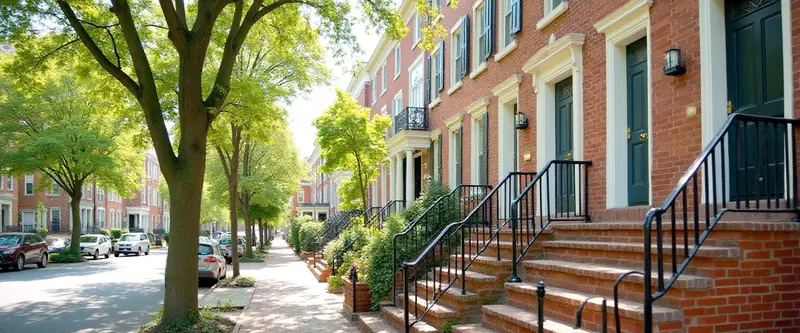
A market that finally gives buyers time
For several years, investors searching for hard money lenders in Louisville were competing for a handful of listings. That has changed. In June 2026 the Greater Louisville Association of REALTORS counted 4,193 homes for sale across its region, up 35.4 percent from 3,096 a year earlier. Supply rose from 2.5 months to 3.3 months, and the average home took 47 days to sell instead of 38.
Prices did not follow inventory up. The June median was $304,400, almost exactly the $305,000 of June 2025, and sellers received 98.4 percent of their list price on average. Closings were up 10.5 percent to 1,638, but pending sales were down 13.9 percent, which hints that the next few months may be slower.
For a flipper that cuts both ways. You have more houses to choose from and more room to negotiate. You also cannot count on rising prices to rescue a thin margin, and your finished house will sit next to more competing listings than it would have two years ago. Underwrite your resale at today's comparable sales, not at a hoped-for number, and give yourself a realistic number of months on the market when you plan how long you will carry short-term money.
Register the rental, even if you just bought it
Louisville Metro runs a rental registry under Chapter 119 of its code. Any property occupied, or offered for long-term occupancy, in exchange for rent has to be registered with the Department of Codes and Regulations. Short-term rentals, hotels and an accessory dwelling unit on an owner-occupied lot are among the exemptions.
The detail that catches investors is that a registration does not transfer with the property. When you buy a house that already has a tenant, the seller's registration does not cover you. You register again in your own name, or your LLC's, with the owner's contact details and the details of any property manager. If the owner is a company, the city wants the name and contact details of a responsible person.
The fee depends on zoning: $25 for R-4 and R-5 lots, $50 for R-5A through R-7 and several commercial zones, $100 for R-8 and OR-2, and $250 for OR-3, C-2 and C-3. The penalty for skipping it is far larger. The city can fine up to $100 a day for each housing unit, and an owner with an unregistered property is subject to inspection of all of that owner's rental units under the Property Maintenance Code.
Put the registration on your closing checklist, next to the insurance binder and the utility transfers.
The $100,000 floor and the cheaper side of town
Our lending partner will not finance a property whose after-repair value is under $100,000. In a metro where the median sale is around $300,000 that sounds like a formality, but Louisville is not one price. The median blends suburban houses in the east of the county with older, smaller houses closer to the river, and some blocks in the older city still trade for well under six figures even after a full renovation.
So the first question on a cheap Louisville house is not the purchase price. It is what the house will be worth when the work is done, backed by recent sales of renovated homes on similar streets. If those sales sit below $100,000, the deal falls outside the program however good the discount looks. If they sit just above it, keep in mind the 70 percent cap: on a $110,000 after-repair value the loan cannot exceed $77,000, purchase and rehab combined, and the loan minimum is $50,000.
When you send a deal, include three or four renovated sales near the address. It is the fastest way to show the after-repair value is real.
Looking at a Louisville house?
Tell us the address, the price, your repair budget, the renovated sales you are comparing it to and how the loan gets repaid. Our lending partner's team will say whether it fits and on what terms. The lender makes every credit decision.
Dollar houses from the Landbank come with conditions
Louisville Metro's Landbank Authority sells vacant structures and lots it has acquired, and some of the prices are famous. Under its Save Our Structures program, a house that would otherwise be a demolition candidate can sell for $1. Demo for Deed also charges $1, but the buyer must demolish the structure within 60 days of the sale. Listings are posted on the city's online property portal, and applications are reviewed in the order received, with a seven-day window for competing proposals.
Read the conditions before you think about financing:
- Save Our Structures requires proof that you have the money or financing for the structural and exterior repairs, an itemized budget and a 12-month timeline. The city's program page also lists primary-residence use and a five-year no-transfer period among the restrictions, so confirm in writing what the deed will allow before you plan a flip or a rental.
- Homeowners First sells houses at land value to buyers who will live in them as a main home for five years. It is not for rentals, and it does not fit investment-property financing, which is for property you will not live in.
- Build Back Our Blocks sells vacant lots for $500 or $1,000 depending on size, to buyers with plans and funds to build.
A $1 purchase price does not change the lending math. The loan is still sized on cost and capped at 70 percent of after-repair value, and the $100,000 after-repair floor still applies. What a dollar house really changes is your cash needs: nearly all of the cost is rehab, and the lender will want to see the repair budget, the timeline and how you will meet the city's deadline.
Historic districts add a review step
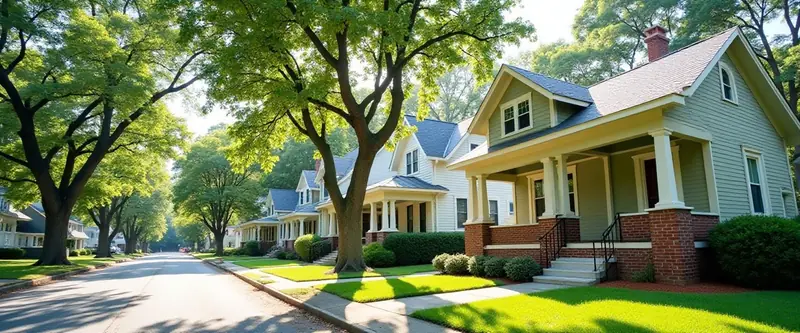
Louisville has eight local preservation districts: Butchertown, Cherokee Triangle, Chickasaw, Clifton, Limerick, Old Louisville, Parkland and West Main Street. Inside them, exterior changes generally need a Certificate of Appropriateness, approved either by city landmarks staff or by an architectural review committee against the district's design guidelines. Old Louisville has been a preservation district since 1974.
That matters for a rehab budget. New windows, siding, porch rebuilds and roof work can need approval before you start, and the materials the guidelines call for can cost more than the cheapest option. Check the address on the city's LOJIC map during your inspection period, and build the review time into your schedule. A lender reviewing your timeline will ask how long the work takes, and an approval you have not applied for yet is part of that answer.
What you will pay at closing and while you hold
Transfer tax is small. Kentucky's deed tax is 50 cents for each $500 of value, and the statute places it on the grantor, the seller. On a flip you normally pay it when you sell: $230 on a $230,000 resale, unless your contract says otherwise.
Property tax depends on where in Metro the house sits. Louisville and Jefferson County share one Metro government, but the old city limits still matter for tax. On the 2025 final rate schedule from the Jefferson County Property Valuation Administrator, the state levy was 10.6 cents per $100, Metro 11.8 cents and the JCPS school levy 71.7 cents. Inside the Urban Services District, whose boundary matches the former City of Louisville, another 31.9 cents applied. Those four lines alone come to $1.26 per $100, or $2,520 a year on a $200,000 assessment, before any other levy. Outside that district the 31.9 cents does not apply, but a parcel inside one of the county's fire districts pays that district's levy. The state's own rate fell to 10.3 cents for 2026. Get the full bill for the exact parcel from the PVA before you size a rental's payment.
Your assessment can change after you renovate. Kentucky values property at its fair cash value as of January 1. In 2026 the Jefferson County PVA reassessed residential property in Areas 8 and 9, about 54,500 parcels in eastern neighborhoods such as Anchorage, Hurstbourne, Lyndon, Middletown and Prospect. Values are based on recent arm's-length sales, and renovated homes are compared with other renovated homes. If you disagree with a value, the first step is a conference with the PVA during the inspection period; in 2026 the online window ran from April 24 to May 18. After that, an appeal goes to the Local Board of Assessment Appeals, filed through the county clerk, and then to the Kentucky Board of Tax Appeals.
A worked Louisville flip
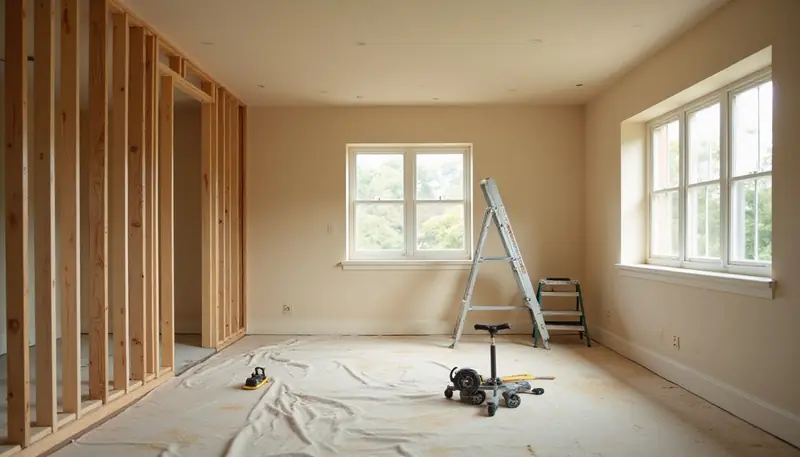
Say you buy a house for $120,000, budget $50,000 for the work and expect it to sell for $230,000 when finished.
- Total cost: $170,000.
- The 70 percent cap: 70 percent of $230,000 is $161,000, which is lower than your cost, so $161,000 is the most the loan can be. You bring the other $9,000, plus closing costs.
- Points: 2.99 points on $161,000 is about $4,814.
- Interest: at 12.99 percent, interest only, about $1,743 a month while the full $161,000 is outstanding.
- Reserves: generally at least $15,000 shown at closing, on top of what you put in.
If the house takes six months to finish and sell, the interest alone is around $10,457. That is why the slower 2026 market matters: two extra months on the market is roughly another $3,486. Run your own numbers with the hard money calculator.
Our lending partner's terms for Louisville
Fix and flip and bridge loans: standard pricing begins at 12.99 percent interest plus 2.99 points, interest only. Loans start at $50,000 and need a minimum credit score of 600. They can cover up to 100 percent of cost, but never more than 70 percent of the after-repair value. Loyalty pricing of 10.99 percent plus 1.99 points is available only after you have paid off two loans with the lending partner in good standing.
DSCR rental loans: $75,000 to $2 million, up to 80 percent of value, with no minimum credit score.
Jefferson County is not one of the counties where our lending partner caps leverage at 50 percent of value. The after-repair value has to be at least $100,000, reserves are generally at least $15,000, and the loan closes in an LLC, corporation or trust on non-owner-occupied property. Condos, townhomes and buildings of one to four units are eligible. The lender reviews every file and confirms the terms for your property before you commit.
Keeping a Louisville house as a rental? Our two free landlord books walk through what a rental really costs to carry, state by state.
Send it through the form below with your numbers, and our lending partner's team will tell you which program fits, if any.
Related guides
Kentucky · Cincinnati · Indianapolis · Columbus · Indiana · Fix and flip loans · DSCR rental loans · Rates and terms
Get your deal reviewed
Answer these and your deal goes to our lending partner's team, who will contact you about whether it is fundable and on what terms. By sending it you agree to your details being shared with them. Investment property only: our lending partners do not finance a home you will live in.
Got it.
Thank you. Your details are on their way to our lending partner's team, who will contact you shortly.
Questions Louisville investors ask
How much do hard money lenders in Louisville charge?
Our lending partner's standard pricing on fix and flip and bridge loans begins at 12.99 percent interest plus 2.99 points, interest only. Lower loyalty pricing applies only after two loans have been paid off with the lender in good standing. The lender sets final terms for each Louisville property.
Is hard money lending legal in Kentucky?
Yes. Private business-purpose lending secured by investment property is legal in Kentucky, and under KRS 360.010 parties can agree in writing to any interest rate on a loan whose original principal is over $15,000. The lender, not Dominion Hard Money, makes and funds the loan.
Where do I find hard money lenders in Louisville, KY?
You can ask local investor groups, title companies and other investors for names. You can also send your Louisville deal through the form on this page. It goes to our lending partner's team, who will tell you whether the property fits and on what terms.
Where do hard money lenders get their money?
It varies by lender, and it is a fair question to ask any lender you talk to. Dominion Hard Money does not lend its own funds; it arranges financing through a third-party lending partner, and that lender decides and funds every loan.
Can I get a hard money loan on a cheap Louisville house?
Only if the after-repair value is at least $100,000. Our lending partner does not finance properties below that, and the loan is capped at 70 percent of the after-repair value. Back your number with recent sales of renovated homes near the address.
Do I need to register a Louisville rental I just bought?
Yes. Louisville Metro requires rental properties to be registered with Codes and Regulations, and a registration does not transfer when a property is sold. The city can fine up to $100 a day per unit for failing to register.
Sources
- The Lane Report, Greater Louisville housing market posts double-digit growth in June (Greater Louisville Association of REALTORS data), June 2026 inventory, months of supply, days on market, median price, sale-to-list ratio, closed and pending sales (accessed Oct 2026)
- Louisville Metro Codes and Regulations, About Rental Registry, Chapter 119, who must register and the fine of up to $100 a day per unit (accessed Oct 2026)
- Louisville Metro Codes and Regulations, Rental Registry FAQ, exemptions, fees by zoning, required owner details, registration not transferring on sale, and inspection of an owner's units (accessed Oct 2026)
- Louisville Metro Landbank Authority, Development Programs, Save Our Structures, Demo for Deed, Homeowners First and Build Back Our Blocks prices, conditions and application process (accessed Oct 2026)
- Louisville Metro Office of Planning, Local Preservation Districts and Individual Landmarks, the eight preservation districts and Certificate of Appropriateness review (accessed Oct 2026)
- Louisville Metro Office of Planning, Old Louisville Preservation District, 1974 designation and review by staff or the architectural review committee (accessed Oct 2026)
- KRS 142.050 (Justia), transfer tax of 50 cents per $500 of value, imposed on the grantor (accessed Oct 2026)
- Jefferson County PVA, Final 2025 Jefferson County Tax Rates, state, Metro, Urban Services District and school rates per $100 (accessed Oct 2026)
- Louisville Metro Government, Urban Service District dataset (Data.gov), Urban Services District boundary matching the former City of Louisville (accessed Oct 2026)
- Kentucky Department of Revenue, State real property tax rate, 2026 state rate of 10.3 cents per $100 (accessed Oct 2026)
- Jefferson County PVA, 2026 residential reassessment presentation, 2026 reassessment of Areas 8 and 9, how values are set and the April 24 to May 18 conference window (accessed Oct 2026)
- Kentucky Department of Revenue, Property assessment appeals manual, January 1 valuation date, the PVA conference, the Local Board of Assessment Appeals and the Kentucky Board of Tax Appeals (accessed Oct 2026)
- KRS 360.010 (Justia), any agreed written rate on obligations over $15,000 (accessed Oct 2026)