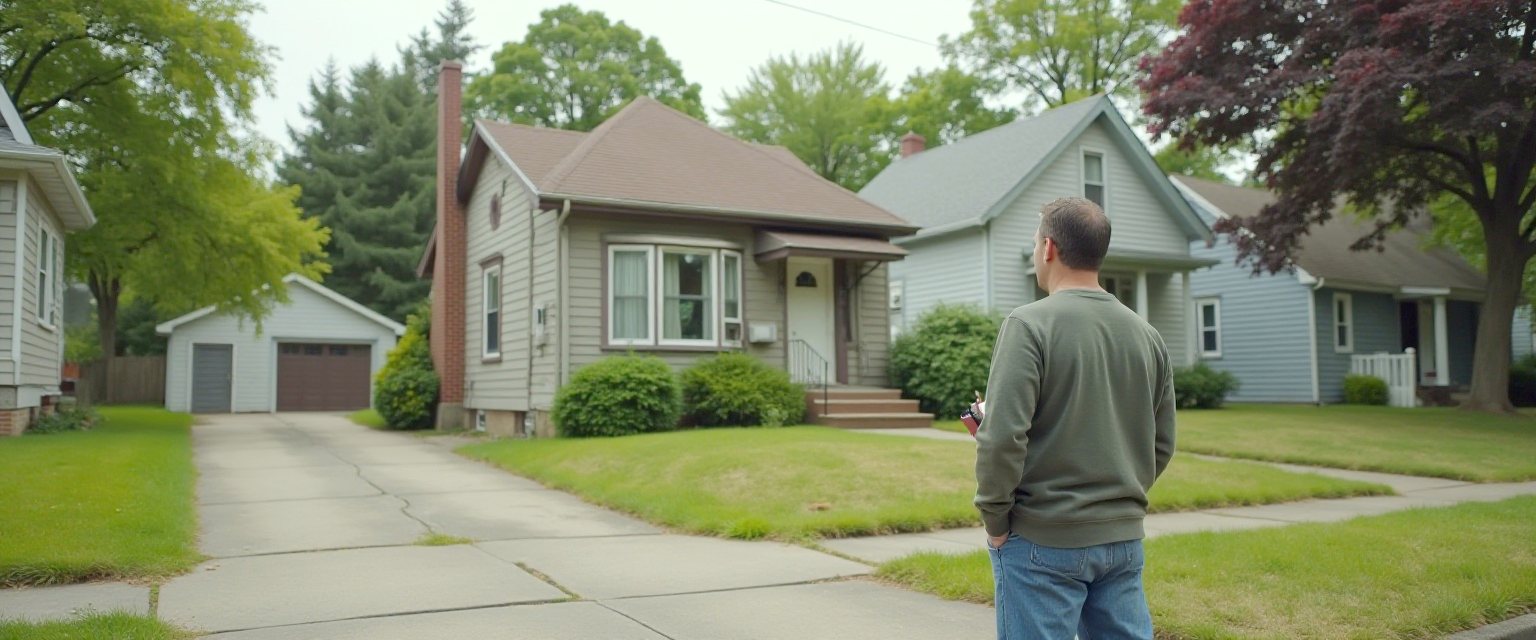
Cincinnati is one market in two states. Our lending partners finance Hamilton County and Northern Kentucky on the same standard terms, but landlord law, closing costs and rental registration change when you cross the Ohio River. This page lays out the differences, what Cincinnati's older housing means for a renovation, and our lending partners' terms.
Cincinnati is the only large metro in this part of the country that is split almost evenly by a state line. The Ohio side holds Cincinnati and Hamilton County, with Butler, Warren and Clermont counties around it. Across the river, Covington, Newport, Florence and the rest of Boone, Kenton and Campbell counties are just as much part of the market, but they sit in Kentucky.
Our lending partners finance both sides on standard terms. Neither Hamilton County nor any Northern Kentucky county is among the six counties they cap at 50 percent leverage, and the metro easily passes the location guideline. What changes at the river is the law and the closing costs, and an investor working both sides should know the differences before choosing where to buy.
Landlord law. Ohio's landlord rules apply statewide: a three-day written notice to leave before an eviction filing, deposits returned with an itemized list within 30 days, and possible interest on part of a larger deposit held six months or more. In Kentucky, the Uniform Residential Landlord and Tenant Act applies only in cities and counties that have adopted it. Covington, Newport and Florence have; some smaller Northern Kentucky cities have not, and there the lease and common law govern. Check the city before you write a Kentucky lease.
Closing costs. Ohio charges a conveyance fee set by county, at up to $4 per $1,000 of value, customarily paid by the seller. Kentucky's transfer tax is 50 cents per $500, or $1 per $1,000. On a $250,000 resale that is up to about $1,000 on the Ohio side and about $250 on the Kentucky side.
Rental registration. Ohio requires residential rentals to be registered with the county auditor; on the Ohio side, that is the Hamilton County Auditor.
Property tax. Ohio taxes 35 percent of the auditor's appraised value; Kentucky assesses at full value with state, county, city and school rates on top. Compare the actual bills for two similar houses before you assume one side is cheaper.

Much of Cincinnati's investor activity is in its older neighborhoods: brick homes and two-families on hillsides, many built long before 1978. That brings two practical points.
The renovation. Older masonry, steep lots and hillside drainage add cost and time. Get a contractor who has worked in the neighborhood to walk the house before you set a budget, and plan for lead-safe work practices on any pre-1978 home.
The value floor. Our lending partners require an after-repair value of at least $100,000. Most of the metro clears it, but some older streets do not, even after a full renovation. Pull renovated sales on the same street before you buy the cheapest house on it.

Fix and flip and bridge loans: from $50,000, up to 100 percent of cost but no more than 70 percent of after-repair value, with a 600 minimum credit score. Standard pricing under the underwriting guidelines is 12.99 percent and 2.99 points. The 10.99 percent starting rate is available after two loans have been paid off in good standing with our lending partner; a first-time borrower should expect to start above it and earn the way down.
DSCR rental loans: $75,000 to $2 million at up to 80 percent of value, qualified on the rent, with rates from 5.99 percent on the program page.
Construction loans: $100,000 to $3 million on non-owner-occupied single-family homes, from 8.5 percent.
Loans close in an entity such as an LLC, and every owner of 30 percent or more personally guarantees the loan. Terms change, so we confirm them for your property before you commit.
Yes, on standard terms. Hamilton County is not one of the six counties where our lending partners cap leverage at 50 percent, and the Cincinnati metro easily meets their location guideline. The property must be non-owner-occupied investment property with an after-repair value of at least $100,000.
Yes. Covington, Newport, Florence and the rest of Boone, Kenton and Campbell counties are part of the Cincinnati metro, and Kentucky is one of the states our lending partners finance in, on standard terms.
Landlord law and closing costs. Ohio has statewide landlord rules, including a three-day notice before eviction. In Kentucky, the Uniform Residential Landlord and Tenant Act applies only where a city or county has adopted it; Covington, Newport and Florence have. Kentucky's transfer tax is 50 cents per $500, while Ohio charges a county conveyance fee of up to $4 per $1,000.
Ohio law requires residential rental property to be registered with the county auditor. For a Cincinnati rental, that is the Hamilton County Auditor.
Ohio does not cap the amount, but the deposit and an itemized list of deductions must be returned within 30 days after the tenancy ends, and part of a larger deposit held six months or more can earn the tenant interest.
In some older neighborhoods it can. Check recent renovated sales on the same street before you buy, because our lending partners require an after-repair value of at least $100,000 however low the purchase price is.
Holding a Cincinnati rental? Our two free landlord books compare what a rental costs to carry across twelve states, including Ohio.
Answer these and your deal goes to our lending partner's team, who will contact you about whether it is fundable and on what terms. By sending it you agree to your details being shared with them. Investment property only — our lending partners do not finance a home you will live in.
Thank you. Your details are on their way to our lending partner's team, who will contact you shortly.
Dominion Hard Money does not lend its own funds; it arranges financing through third-party lending partners. All financing is arranged for business purposes only and secured by non-owner-occupied investment property. Not a commitment to lend. All loans subject to underwriting, property review, and approval by the lender. Terms vary by property, borrower experience, and exit strategy.
Ohio · Kentucky · Columbus · Indiana · DSCR rental loans