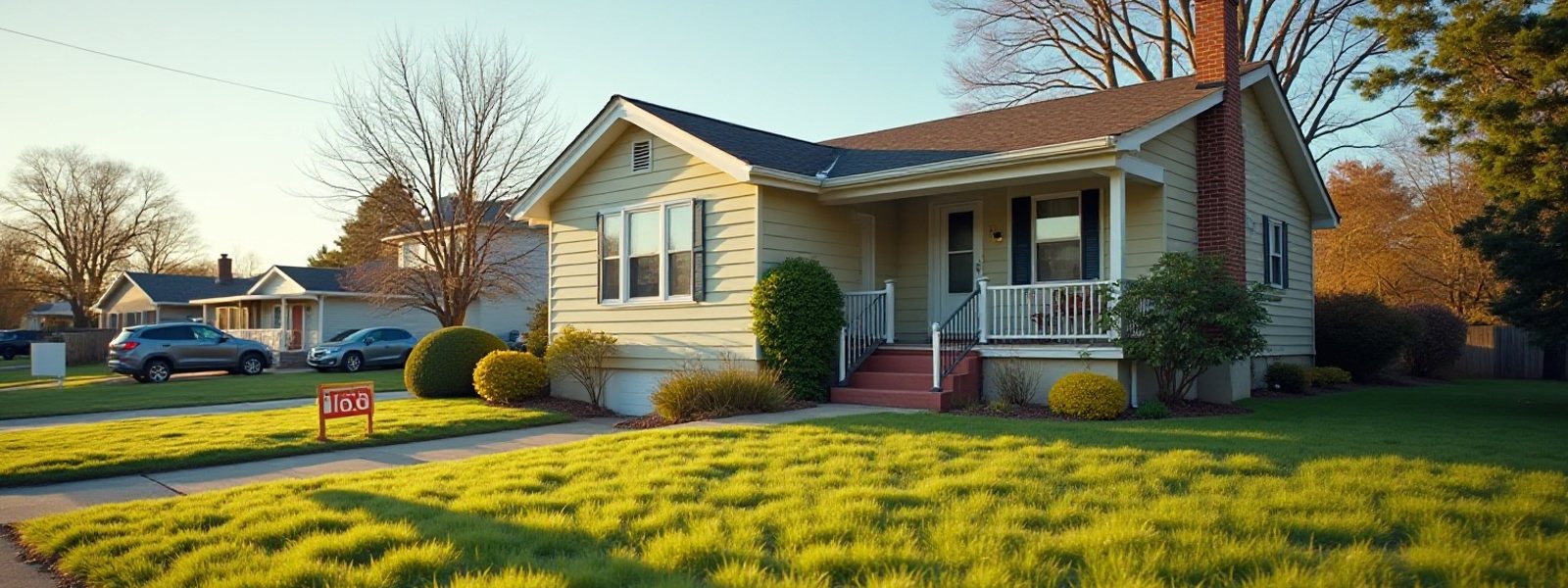
A DSCR loan rate isn't posted on a board. It is built from your file: the rent-to-payment ratio, your down payment, your credit, the prepayment penalty you accept, and the property itself. And in a DSCR loan the rate does something it doesn't do in a normal mortgage. It changes the payment the rent has to cover, so a small move in the rate can decide whether the loan qualifies at all.
The benchmark everyone quotes is Freddie Mac's weekly survey, and it is rising. The 30-year fixed averaged 6.95 percent for the week of September 17, 2026, up from 6.76 percent a week earlier and 6.26 percent a year before. That was the fourth straight weekly increase and the highest reading since January 2025.
That survey is not a DSCR rate. It measures conventional home-purchase loans for owner-occupants with excellent credit and 20 percent down. DSCR loans are investor loans outside the Fannie Mae and Freddie Mac system, and they price from the bond market plus a premium for the property and the borrower. Rate sheets published by DSCR lenders in September 2026 put strong 30-year fixed files, with good credit and around 25 percent down, roughly in the low 6s to mid 7s, with weaker files higher. Treat that as a directional range drawn from lender advertising, not a quote; the only rate that matters is the one written for your property.
1. The ratio itself. DSCR is the monthly rent divided by the full payment: principal, interest, property taxes, insurance and any association dues. A ratio of 1.25 tells the lender the rent covers the payment with room to spare, and it prices better than 1.00, where the rent only just covers it.
2. Loan-to-value. Twenty-five percent down usually prices better than twenty. Cash-out refinances generally allow less leverage than purchases and price higher.
3. Credit score. DSCR loans skip your tax returns, not your credit. Higher scores earn better pricing tiers.
4. The prepayment penalty. Most DSCR loans carry one, often a step-down such as 5, 4, 3, 2 and 1 percent of the balance in years one through five. A longer penalty earns a lower rate because the lender can count on the interest. If you might sell or refinance within three years, a shorter penalty and a slightly higher rate can be the cheaper choice.
5. Loan size. Very small loans cost the lender almost as much to close as large ones, so they tend to price higher.
6. Property type and use. A single-family long-term rental is the baseline. Two-to-four unit buildings, condos and short-term rentals can each shift the price.
7. The loan structure. A 30-year fixed, an adjustable rate, or an interest-only period all price differently, and interest-only lowers the payment the rent has to cover.

Here is the part most rate pages leave out. Take a rental worth $300,000 with a $240,000 loan, property taxes of $3,000 a year and insurance of $1,800. At 7.0 percent, principal and interest run about $1,597 a month and the full payment about $1,997. If the house rents for $2,400, the ratio is 1.20.
Now price the same loan at 7.5 percent. Principal and interest rise to about $1,678, the full payment to about $2,078, and the ratio falls to 1.15. Nothing about the house changed. But if the lender requires 1.20 on a single property, the loan no longer qualifies at the higher rate, and the fix is a bigger down payment, a lower price, or a structure that lowers the payment.
So when you shop DSCR rates, don't just compare the headline number. Ask each lender what ratio it requires, and check whether your deal still clears it at the rate you are actually offered.
A lower rate usually comes with more upfront points, a longer prepayment penalty, or both. On a $300,000 loan, the payment at 7.0 percent is about $1,996 a month, and at 6.5 percent about $1,896, a difference of about $100. If buying that half point costs one point, $3,000, it takes roughly 30 months of savings to earn it back. Keep the loan longer than that and the buy-down pays; sell or refinance sooner and it doesn't.
Prepayment penalties work the same way in reverse. A 5 percent penalty on a $300,000 balance is $15,000 if you sell in the first year. The right structure depends on your exit, so decide the plan before you pick the price.
A conventional loan on an investment property can carry a lower note rate, but it isn't free. Fannie Mae's loan-level price adjustments add a large fee for investment property, 3.375 percent of the loan at 75 to 80 percent loan-to-value on its published matrix, on top of credit-score adjustments, and lenders usually build that into the rate. Fannie Mae also caps the number of financed properties an investor can have, and conventional loans require personal income documentation and a debt-to-income test.
A DSCR loan trades a higher rate for simpler qualifying: no tax returns, no debt-to-income ratio, a loan that can close in an LLC, and no cap on how many rentals you finance. For a W-2 borrower buying a first rental, conventional often wins on cost. For a self-employed investor, or anyone past the conventional limits, the DSCR loan is often the only practical way to keep buying.
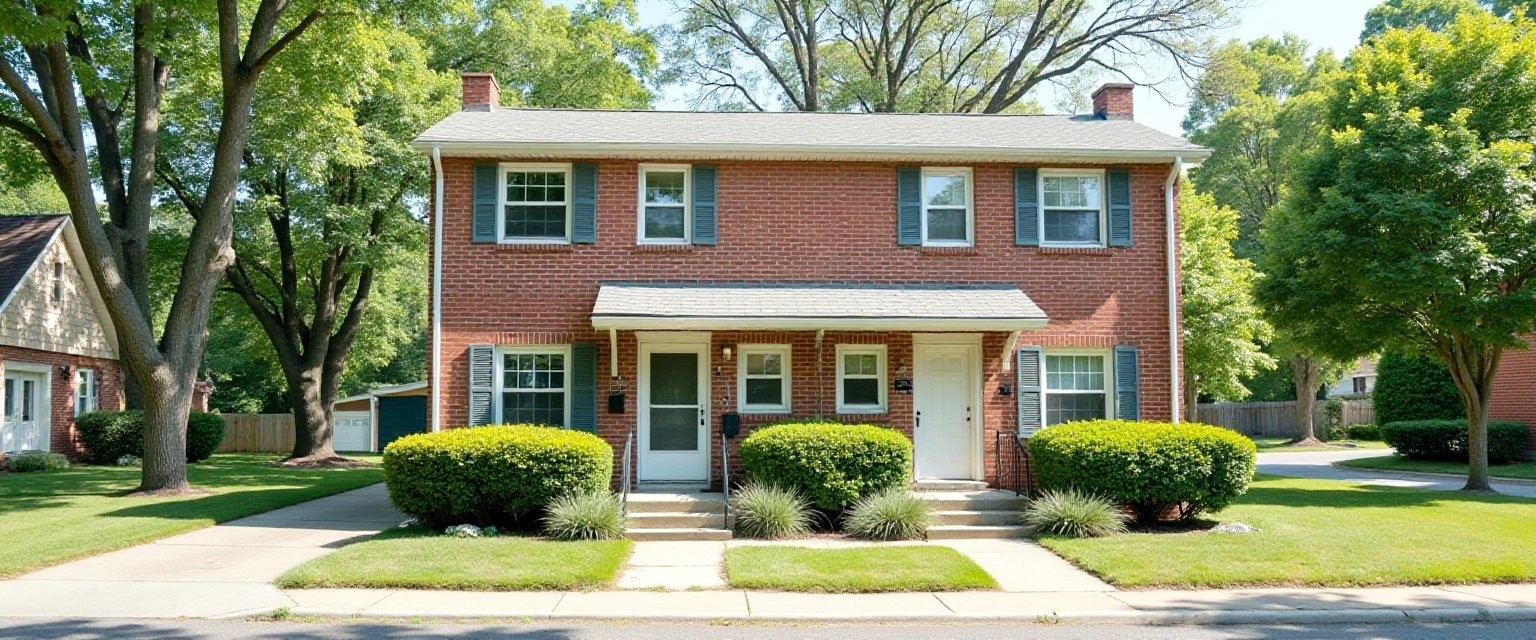
Our lending partners' published DSCR rental program starts at rates as low as 5.99 percent with origination points from 1.5 percent, for loans of $75,000 to $2 million at up to 80 percent of value. Cross-collateral loans are allowed on two or more properties, and portfolio loans are considered case by case. The lowest published rate goes to the strongest files; your quote will reflect your ratio, leverage, credit and the prepayment terms you choose.
The lender's detailed rental program sheet also shows two features worth knowing. Its guidelines have called for a ratio of about 1.20 on a single property and 1.00 on portfolios of two or more, and in some states its long-term rental product is an adjustable-rate loan with a prepayment penalty rather than a 30-year fixed. Program details change, so we confirm the current terms for your state and your property before you rely on them.
Raise the ratio. Document the real market rent with a lease or a rent survey, and shop the insurance; a lower premium raises the ratio as surely as higher rent.
Put more down if it crosses a pricing tier. Moving from 80 to 75 percent loan-to-value often buys a better price.
Match the penalty to your plan. Take the longer penalty only if you are sure you will keep the loan.
Clean up credit before you apply. A score that crosses a tier can be worth more than a point.
Compare offers at the same structure. Same loan amount, same penalty, same points. Otherwise the lowest rate may be the most expensive loan.
They move with the bond market and with your file. In September 2026, the conventional 30-year benchmark was 6.95 percent, and lender-published DSCR ranges for strong files sat roughly in the low 6s to mid 7s. Your rate depends on your ratio, leverage, credit and prepayment terms.
Usually, compared with an owner-occupied mortgage. Compared with a conventional investment-property loan, the gap is smaller once Fannie Mae's investment-property fees are counted, and the DSCR loan saves you the income documentation.
Generally, yes. A ratio of 1.25 or higher shows the lender more cushion than 1.00 and often prices better. Some lenders will still lend below 1.00, at a higher rate and lower leverage.
Often, by paying points up front. Divide the cost of the points by the monthly saving to see how many months it takes to break even, and only buy down if you will keep the loan longer than that.
A charge for paying the loan off early, commonly a step-down such as 5, 4, 3, 2 and 1 percent of the balance over five years. Longer penalties earn lower rates, so choose one that fits when you plan to sell or refinance.
Many do, usually as 30-year fixed loans, and adjustable and interest-only options are also common. Some lenders offer only certain structures in certain states, so confirm what is available where your property sits.
Want the long version? Two free landlord books cover what a rental really costs to hold and what the new federal housing law actually changed.
Answer these and we will tell you whether it is fundable, on what terms, and how fast it could close. Investment property only — our lending partners do not finance a home you will live in.
We will run the numbers and come back to you. If it is time-sensitive, call 903-636-7511.
Dominion Hard Money does not lend its own funds; it arranges financing through third-party lending partners. All financing is arranged for business purposes only and secured by non-owner-occupied investment property. Not a commitment to lend. All loans subject to underwriting, property review, and approval by the lender. Terms vary by property, borrower experience, and exit strategy.