
How a hard money loan works
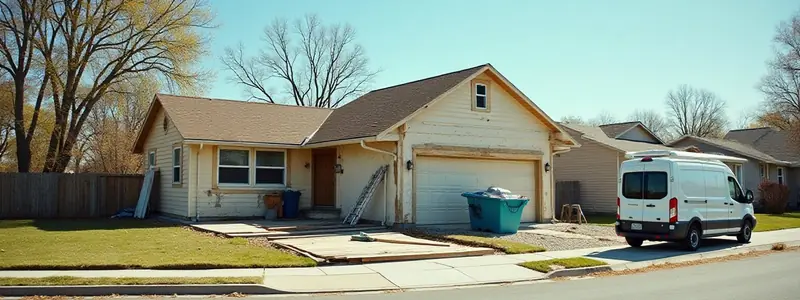
A hard money loan is short-term financing secured by an investment property. The lender sizes the loan on the property: what it is worth today, what it will be worth after the work, and how the loan gets repaid. Your income, your W-2 and your debt-to-income ratio matter far less than they do at a bank.
The usual structure is interest only, with the whole balance due at the end of the term. You pay interest each month while you renovate or stabilize the property, then repay the principal by selling it or refinancing into a long-term loan. Market terms commonly run 6 to 24 months, with 12 months the most common.
These are business-purpose loans. The borrower is normally an LLC or corporation, and the property cannot be one you live in. For a plain-English walk through the structure and the vocabulary, read what is a hard money loan.
The four types of hard money loan
Most investor financing that gets called "hard money" falls into one of four products. Each one is built for a different exit.
Not sure which hard money loan fits?
Send the address, the purchase price, the rehab budget and your exit. Our lending partner's team will tell you which program the deal fits, if any. The lender makes every credit decision.
What hard money loans cost in 2026
Across the market, short-term hard money commonly prices between about 8% and 15% interest, with 1 to 4 origination points paid at closing. One point is 1% of the loan amount. Add appraisal, processing, title and per-draw inspection fees on top.
| Loan | Our lending partners | What to know |
|---|---|---|
| Fix and flip, rehab, bridge | From 12.99% plus 2.99 points | Standard pricing. 10.99% plus 1.99 points is loyalty pricing for borrowers who have paid off two loans with the lending partner in good standing. |
| Leverage | Up to 100% of cost, 70% of ARV | Whichever limit is lower decides the loan. Leverage depends on experience documented over the past three years. |
| Loan size and credit | From $50,000, 600 score | Non-owner-occupied investment property, held in an LLC or corporation. |
| DSCR rental | Long-term rental | No minimum credit score. Up to 80% LTV on a purchase or rate-and-term refinance, from $75,000 to $2 million. |
On a $200,000 short-term loan at 12.99% and 2.99 points, the points come to $5,980 at closing and interest-only payments run about $2,165 a month. Put both into your numbers before you make an offer, not after.
For a 30-year comparison, Freddie Mac's survey put the average conventional 30-year fixed rate at 7.28% on October 1, 2026. That is a rate for owner-occupied home loans; investor pricing at a bank is higher. Hard money costs more because you are paying for speed and for a lender willing to fund a property in the condition a bank will not touch. See hard money rates for the full breakdown.
Who qualifies
- A business borrower. An LLC or corporation holds the property. If you do not have one yet, form it before you apply.
- An investment property. Non-owner-occupied only. A home you will live in, even part of the year, is a different kind of loan.
- A credit score of at least 600 for our lending partners' short-term programs. Above that, the deal does most of the talking.
- A deal with room in it. The loan cannot exceed 70% of the after-repair value, so the purchase and rehab must leave enough margin to cover the rest, your costs and a profit.
- A written exit. Sell, or refinance into a DSCR loan. The lender wants to see how the balance gets repaid before the term ends.
Requirements in more detail are on hard money requirements, and if your credit is the sticking point, read hard money with bad credit.
Choosing the right loan for the deal
Start from the exit and work backward. If the house needs work and you will sell, it is a fix and flip loan. If the house needs work and you will keep it, it is a fix and flip or rehab loan now and a DSCR refinance later, so check the rent will cover the future payment before you buy. If the house is ready but you need to close faster than a bank, it is a bridge loan. If there is no house yet, it is construction.
The common mistake is borrowing short for a long plan. A 12-month loan on a property you intend to hold for ten years only works if the refinance is lined up and the numbers support it on the day you need it.
Related guides
How hard money financing is built · Every real estate investor loan compared · Rehab loans and draws · Working with a hard money lender · Where our lending partners finance
Get your deal reviewed
Answer these and your deal goes to our lending partner's team, who will contact you about whether it is fundable and on what terms. By sending it you agree to your details being shared with them. Investment property only: our lending partners do not finance a home you will live in.
Got it.
Thank you. Your details are on their way to our lending partner's team, who will contact you shortly.
Hard money loan questions
How do hard money loans work?
A hard money loan is a short-term, interest-only loan secured by an investment property. The lender sizes it on the property's value and your exit plan rather than your income. You pay interest monthly and repay the balance at the end of the term by selling or refinancing.
What are the different types of hard money loans?
The four main products are fix and flip (purchase plus renovation, repaid by a sale), bridge (short-term money with no renovation), DSCR rental (a 30-year loan sized on rent) and construction (ground-up building). Each has its own leverage and requirements.
How much does a hard money loan cost?
Market pricing commonly runs about 8% to 15% interest plus 1 to 4 points. Our lending partners' standard fix and flip and bridge pricing is 12.99% plus 2.99 points, with 10.99% plus 1.99 points available only after two loans have been paid off with them in good standing.
What credit score do I need for a hard money loan?
Our lending partners set a 600 minimum for fix and flip, rehab and bridge loans. Their DSCR rental program has no minimum credit score, though your score still affects the terms the lender offers.
Can I get a hard money loan for a house I will live in?
No. These are business-purpose loans on non-owner-occupied investment property, held in an LLC or corporation. A home you will occupy needs a consumer mortgage.
How fast can a hard money loan close?
Faster than a bank, because the lender decides on the property rather than a full income file. The appraisal, title work and your entity documents set the pace, and the lender decides the closing date. Order the appraisal and title the day you have a term sheet.
Sources
- Freddie Mac, "Mortgage Rates Average 7.28%" (October 1, 2026), average 30-year fixed rate (accessed Oct 2026)
- Crestmont Capital, Hard Money Loan Rates 2026, market range of about 8% to 15% interest and 1 to 4 points, plus typical fees (accessed Oct 2026)
- RentalRealEstate.com, Hard money loans (updated April 2026), typical 6 to 24 month terms, 12 months most common (accessed Oct 2026)
- CFPB, Regulation Z official interpretation of 1026.3, credit for non-owner-occupied rental property treated as business purpose (accessed Oct 2026)
Dominion Hard Money does not lend its own funds; it arranges financing through third-party lending partners. All financing is arranged for business purposes only and secured by non-owner-occupied investment property. Not a commitment to lend. All loans subject to underwriting, property review, and approval by the lender. Terms vary by property, borrower experience, and exit strategy.