
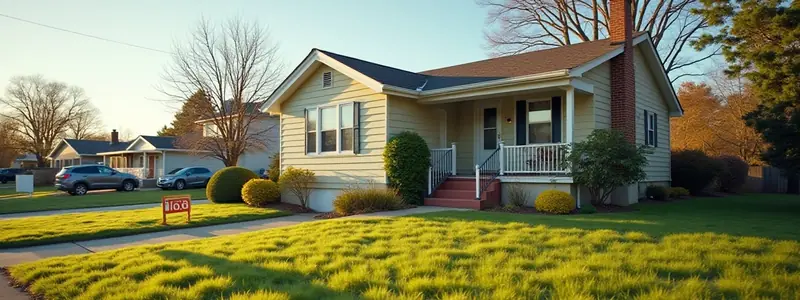
Here is what conventional, DSCR, portfolio and hard money each cost in 2026, what you need down, and how to tell which one your deal needs.
Four ways to finance a rental, and they are not interchangeable
Most investors start with a conventional investment mortgage because it is the cheapest money available, and most investors eventually stop being able to use one. Knowing which of the four fits your situation, and roughly when you will outgrow it, saves months of applying for the wrong thing. Dominion Hard Money does not lend its own funds; it arranges financing through third-party lending partners.
| Type | Down / cost | Who it actually suits |
|---|---|---|
| Conventional | 15 to 25% down Above home-loan rates | Income that documents cleanly, no more than ten financed properties, and time to go through a full underwrite. Cheapest money there is, while you still qualify. |
| DSCR | From 20% down Set by each lender | Self-employed, heavy write-offs, or scaling past what conventional will allow. Qualified on the property's rent, with no personal income documentation and no ten-property count. |
| Portfolio | Varies | Lenders holding the loan on their own books rather than selling it. Flexible where agency rules are rigid, priced accordingly. |
| Hard money | Set by cost and value caps From 12.99% + 2.99 pts | The property needs work, or the deal needs to close fast. Short-term only, with an exit planned before you start. Pricing shown is our lending partners' standard. |
For a benchmark, Freddie Mac's weekly survey put the 30-year fixed average at 7.28% on October 1, 2026. That figure is for owner-occupied home loans; an investment property loan prices above it.
The walls almost every investor hits
This is the part nobody warns you about at property one.
Your tax returns stop telling the whole story. Fannie Mae's rules have a lender add depreciation, interest, taxes, insurance and association dues back to the Schedule E figure, so a paper loss from depreciation alone is not the problem many investors fear. What does hurt is a genuine cash loss, a property bought this year with no rental history on the return, or a business return that has been written down hard. The more of your income runs through those, the harder conventional qualifying gets.
Debt-to-income tightens with every property. Each financed rental's payment enters the calculation, offset only by the rent the rules allow you to count, which is 75 percent of gross rent when it comes from a lease or the appraiser's estimate. Add properties and the ratio creeps toward the limit even when the rents plainly cover the loans.
And then there is a hard stop. Fannie Mae caps an investment property borrower at ten financed properties, counting a mortgaged home. It is a rule rather than a preference: you cannot finance an eleventh conventionally with perfect credit and a seven-figure income.
The usual path is to start conventional, hit one of those walls, and move to DSCR, which qualifies on the property's rent instead of your return and does not count how many you already own. Knowing that in advance means you can plan the transition rather than discover it mid-contract. The investment property loan requirements page walks through the conventional rules in detail.
Have a deal on the table?
Send the address, the numbers and your exit. Our lending partner's team reviews it and tells you whether it fits and on what terms. The lender makes every credit decision.
How much you actually need down
More than for a home you would live in, and the difference between the minimum and the sensible number is larger than most people realize.
| Loan | Single family | 2 to 4 unit |
|---|---|---|
| Conventional (Fannie Mae purchase) | 15% minimum | 25% minimum |
| DSCR, our lending partners | From 20% (up to 80% LTV) | Lender decides by deal |
| Hard money, our lending partners | Up to 100% of cost and 70% of after-repair value; you bring whatever the lower cap leaves | |
Reserves matter as much as the down payment and get overlooked more often. On a conventional loan, Fannie Mae requires reserves for the property you are buying plus a percentage of what you owe on your other financed properties, and that percentage climbs as you grow. DSCR and hard money lenders set their own reserve rules, and a file with a cash cushion closes where a stronger ratio with none can stall.
Using equity you already have
The most common way investors fund a down payment without draining savings is to borrow against a property they already own: a cash-out refinance or a home equity line on a primary residence or an existing rental.
There is a specific advantage to this beyond convenience. Fannie Mae accepts documented borrowed funds secured by an asset you own toward an investment property purchase, while it does not accept gift money for one. It is how a great many portfolios get past the second or third property.
The caution is real, though. That equity line or refinance adds a payment to your debt-to-income, so it brings the conventional wall closer even as it funds the next purchase. If the plan is to keep buying, map which properties you will still be able to finance conventionally afterwards before you draw on the equity, not after.
What lenders are actually pricing
On a conventional loan, the price of an investment property is built from published adjustments layered on top of the market rate. Within that, five things move your number.
- Credit score. Most conventional lenders still look for about 620 (Fannie Mae dropped its fixed 620 floor for Desktop Underwriter loans in November 2025 but keeps it for manual underwriting), and the price adjustment falls at each higher score band. The gap between the bottom and the top bands is worth more than most people assume.
- Leverage. Lower loan to value, lower adjustments. This is the lever you control most directly, and the 75% line matters most.
- Reserves. Cash after closing reduces the lender's risk, and on conventional loans the required amount grows with every property you finance.
- Property type. Two-to-four unit buildings carry an extra price adjustment on top of the investment property charge.
- How many quotes you got. Lenders fold the same published adjustments into their rates differently. Comparing quotes at the same down payment is the fastest way to find the difference.
Where our lending partners fit
Our lending partners' programs are built for exactly the situations conventional financing handles worst.
DSCR rental loans: from $75,000 to $2 million, up to 80% of value on a purchase or rate-and-term refinance, with no minimum credit score. They qualify on the rent, and they do not care whether this is your fourth rental or your fourteenth.
Fix and flip, rehab and bridge: standard pricing from 12.99% plus 2.99 points, loans from $50,000, a 600 minimum score, and up to 100% of cost and 70% of after-repair value, whichever is lower. After two loans paid off with the lending partner in good standing, loyalty pricing of 10.99% plus 1.99 points is available. Buy and renovate on short-term money, then refinance the finished, rented house into a DSCR loan.
All business purpose, non-owner-occupied, and written to an LLC or corporation. Tell us the numbers and our lending partner's team will tell you whether the deal fits their programs and on what terms. The lender decides every file.
Get your deal reviewed
Answer these and your deal goes to our lending partner's team, who will contact you about whether it is fundable and on what terms. By sending it you agree to your details being shared with them. Investment property only: our lending partners do not finance a home you will live in.
Got it.
Thank you. Your details are on their way to our lending partner's team, who will contact you shortly.
Investment property financing questions
How much do I need to put down on an investment property?
On a conventional Fannie Mae purchase, at least 15% for a single-family rental and 25% for two to four units, and putting 25% down on a single-family avoids mortgage insurance and cuts the price adjustments sharply. Our lending partners' DSCR loans go up to 80% of value, so from 20% down.
What credit score do I need for an investment property loan?
Most conventional lenders still look for about 620, although Fannie Mae no longer sets a fixed minimum for loans run through Desktop Underwriter, with better pricing at each higher band. Our lending partners require 600 on fix and flip and bridge loans and set no minimum score on their DSCR rental loans.
How many investment properties can I finance with a conventional loan?
Fannie Mae allows up to ten financed properties, counting your home if it has a mortgage. Past that you need DSCR, portfolio or private financing regardless of your credit or income.
Can I use a HELOC on my house for the down payment on a rental?
Yes. Fannie Mae accepts documented funds borrowed against an asset you own, while it does not allow gift money on an investment property. Bear in mind the new payment adds to your debt-to-income and brings the conventional limit closer.
Why are investment property rates higher than a normal mortgage?
Fannie Mae and Freddie Mac charge an extra loan-level price adjustment on investment property, from 1.125% of the loan at low leverage up to 4.125% above 80% loan to value, and lenders usually fold it into the rate. The full breakdown is on our rates page.
Should I use a conventional loan or a DSCR loan for my rental?
If your income documents cleanly, you have fewer than ten financed properties and time for a full underwrite, conventional is usually cheaper. If you are self-employed, writing off heavily, buying through an entity, or scaling past the cap, DSCR is usually what keeps you moving.
Sources
- Freddie Mac, Primary Mortgage Market Survey, 30-year fixed average of 7.28% on October 1, 2026 (accessed Oct 2026)
- Fannie Mae, Eligibility Matrix, maximum loan to value of 85% on a one-unit investment purchase and 75% on two to four units (accessed Oct 2026)
- Fannie Mae, Loan-Level Price Adjustment Matrix, investment property, credit score and two-to-four unit adjustments (accessed Oct 2026)
- Fannie Mae Selling Guide B2-2-03, multiple financed properties, the ten-property limit and how properties are counted (accessed Oct 2026)
- Fannie Mae Selling Guide B3-3.1-08, rental income, 75% of gross rent and Schedule E add-backs (accessed Oct 2026)
- Fannie Mae Selling Guide B3-4.3-04, personal gifts, gift funds not permitted on investment property (accessed Oct 2026)
- Fannie Mae Selling Guide B3-4.3-15, borrowed funds secured by an asset, documented secured borrowing as an acceptable source of funds (accessed Oct 2026)
- Fannie Mae Selling Guide B3-5.1-01, credit scores, the 620 minimum that still applies to manually underwritten loans (accessed Oct 2026)
- Orrick InfoBytes, Fannie Mae removes minimum credit score for loans using Desktop Underwriter (Nov 2025), the 620 floor dropped for DU loan casefiles created on or after November 16, 2025 (accessed Oct 2026)
Dominion Hard Money does not lend its own funds; it arranges financing through third-party lending partners. All financing is arranged for business purposes only and secured by non-owner-occupied investment property. Not a commitment to lend. All loans subject to underwriting, property review, and approval by the lender. Terms vary by property, borrower experience, and exit strategy.