
A DSCR loan skips your tax returns, your pay stubs and your debt-to-income ratio. It does not skip underwriting. It moves it: onto the property's rent, your credit, your cash, and the appraiser's opinion of what the house will rent for. Here is every requirement, what lenders typically ask for, and how a weak spot in one place is usually paid for somewhere else.
Every DSCR lender writes its own guidelines, but in 2026 the published requirements cluster in the same ranges:
Coverage ratio: usually 1.00 or higher, meaning the rent at least covers the full payment. Some lenders want 1.20 or more, and a few offer "no-ratio" programs below 1.00 at a higher price and lower leverage.
Credit score: most programs start between about 620 and 680, with the best pricing above roughly 720.
Down payment: typically 20 to 25 percent on a purchase. Cash-out refinances are usually capped lower, around 70 to 75 percent of value.
Reserves: commonly 2 to 12 months of the full payment left in the bank after closing, with more asked of short-term rentals and borrowers with many properties.
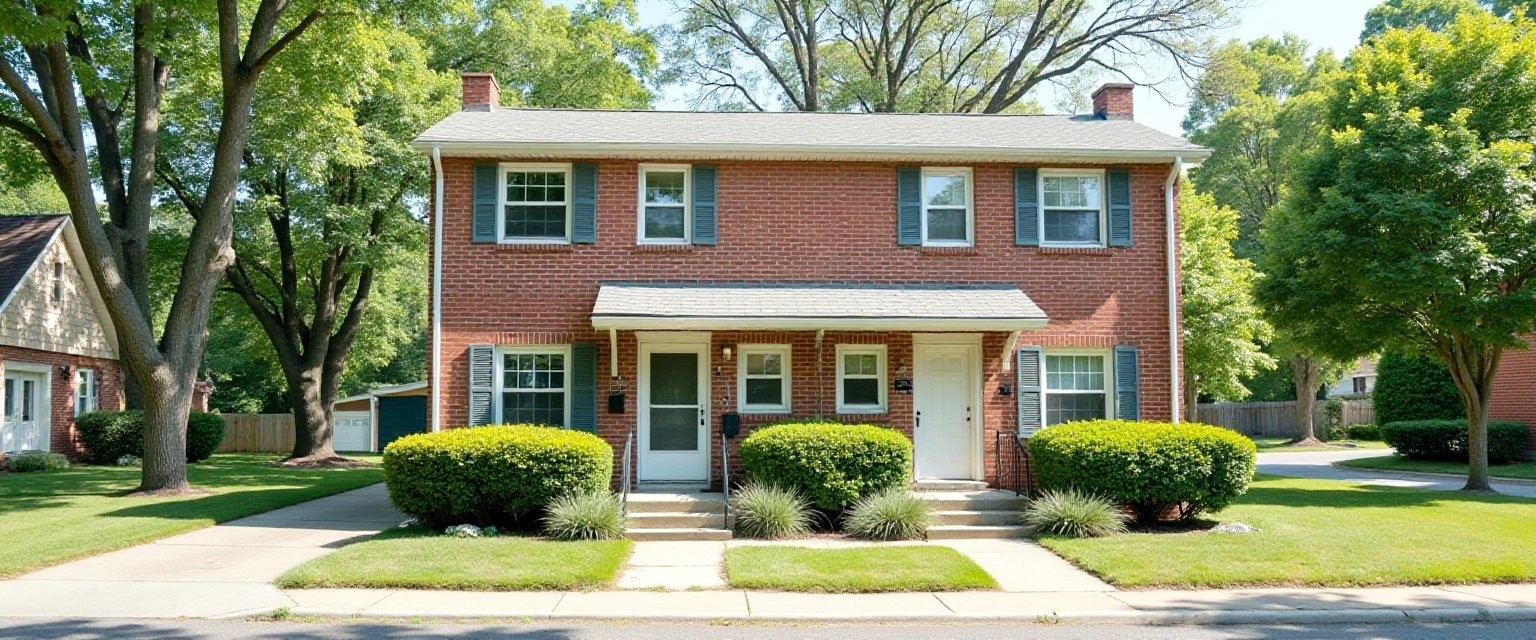
Property: a non-owner-occupied rental in rentable condition, usually one to four units, a condo or a townhome.
Appraisal: a full appraisal with a market rent schedule.
What is not on the list is the point of the loan: no tax returns, no W-2s, no employment verification and no debt-to-income calculation. These ranges are drawn from lenders' published guidelines and are directional; the lender's own sheet is what binds.
DSCR is the monthly rent divided by the monthly payment, and the payment means all of it: principal, interest, property taxes, insurance and any association dues, often written PITIA. A house renting for $2,400 against a $1,997 payment has a ratio of 1.20.
The rent in that sum is not simply the number on your lease. On a single-family rental the appraiser completes Fannie Mae's Form 1007, the single-family comparable rent schedule; on a two-to-four unit building the rent analysis is part of Form 1025, the small residential income property report. Many lenders then use the lower of the lease and the appraiser's market rent. A lease signed above market does not lift the ratio; a lease below market can drag it down.
Short-term rentals follow different rules. Lenders that accept them usually want a year of booking history or a third-party income projection, and they tend to ask for more reserves.
The down payment is only the first of three piles. Take a $300,000 rental bought with 20 percent down: $60,000 down, roughly $9,000 in closing costs at about 3 percent, and six months of a $1,997 payment in reserves, about $12,000. That is close to $81,000 of verifiable cash for a $300,000 house, before any repairs.
Lenders check where it comes from. Expect to show two months of bank statements for every account you are using, and to explain any large recent deposits. Retirement and brokerage accounts often count at a discount, and gift funds, where allowed, are usually limited to the down payment rather than reserves.
Underwriters rarely read requirements one at a time. A borderline item can often be offset by strength elsewhere, which is what lenders call compensating factors. A ratio just under the lender's line can sometimes be approved with a larger down payment and extra reserves. A lower credit score may be accepted at a lower loan-to-value. A first-time investor may need more cash in the deal than someone with a documented track record.
It works the other way too. Every weak spot usually costs you, in rate, in leverage or in cash. Before applying, list which items on your file are strong and which are borderline. That tells you where to spend money to fix the file, and where not to bother.

This is where many investors meet DSCR requirements for the first time: they buy and renovate with a short-term hard money loan, then refinance into a long-term DSCR loan and keep the property as a rental. Three requirements shape that exit.
Seasoning. Many DSCR lenders will only use the new appraised value after you have owned the property for a set period. Before that, they commonly lend against the lower of what you paid, sometimes plus documented renovation costs, and the appraised value.
Condition. The property must be finished and rentable. A DSCR loan will not fund the last of the renovation; that has to be done before the appraisal.
A tenant or a rent schedule. A signed lease helps, but the appraiser's market rent still sets the ceiling.
Plan the refinance before you buy: know the seasoning rule, the loan-to-value you'll get, and whether the rent will clear the ratio at today's rates. That is what decides whether the renovation loan has a way out.
Our lending partners' published DSCR rental program covers loans of $75,000 to $2 million at up to 80 percent of value, with rates from 5.99 percent and origination points from 1.5 percent. The lender's rental program sheet also lists up to 75 percent of value on cash-out refinances, a full appraisal, and eligible property types of single-family homes, two-to-four unit buildings, condos, planned-unit developments and townhomes. Its guidelines have called for a coverage ratio of about 1.20 on a single property and 1.00 on portfolios of two or more, with cross-collateral loans allowed on two or more properties.
Credit requirements differ between the lender's published materials, and program details change, so we confirm the current requirements for your property and your state before you apply. Our lending partners finance only non-owner-occupied investment property.
A rent schedule that comes in below the lease. The lower number usually wins, and the ratio falls with it.
Forgotten costs in the payment. Association dues and a real insurance quote belong in the ratio from the start.
Cash that can't be traced. Unexplained deposits in the last two months can disqualify the funds.
A property that isn't finished. DSCR loans are for rentable homes; renovation belongs to a different loan.
A home a borrower or family member will live in. DSCR loans are business-purpose loans for rentals only.
Most DSCR programs start somewhere between 620 and 680, with the best pricing reserved for scores above about 720. A few lenders go lower with a smaller loan and more reserves. Requirements vary by lender, so confirm the minimum on the program you are applying to.
Usually 1.00 or higher, and some lenders want 1.20 or more, particularly on a single property. Ratios of 1.25 and above generally earn better pricing, and some programs lend below 1.00 at a higher rate and lower leverage.
Typically 20 to 25 percent on a purchase. Cash-out refinances are usually limited to around 70 to 75 percent of the appraised value.
No. That is the main reason investors use them. The lender qualifies the property's rent against the payment instead of your personal income, but it still checks your credit, your cash and the property.
Commonly between 2 and 12 months of the full payment, depending on the lender, the loan size, the property type and how many properties you already own.
Usually, yes. Most DSCR lenders will close in an LLC or other business entity, and they will ask for the articles of organization, the operating agreement and the entity's EIN letter.
Want the long version? Two free landlord books cover what a rental really costs to hold and what the new federal housing law actually changed.
Answer these and your deal goes to our lending partner's team, who will contact you about whether it is fundable and on what terms. By sending it you agree to your details being shared with them. Investment property only — our lending partners do not finance a home you will live in.
Thank you. Your details are on their way to our lending partner's team, who will contact you shortly.
Dominion Hard Money does not lend its own funds; it arranges financing through third-party lending partners. All financing is arranged for business purposes only and secured by non-owner-occupied investment property. Not a commitment to lend. All loans subject to underwriting, property review, and approval by the lender. Terms vary by property, borrower experience, and exit strategy.