

What a hard money lender actually does
A hard money lender provides short-term financing for real estate investment deals. The loan is secured by the property itself, not by your income, employment or debt-to-income ratio. That is the basic difference from a bank: the property is the collateral, and the deal's numbers are what get it funded or declined.
Hard money lenders serve investors who need to close quickly, who are buying property that needs work, or whose finances do not fit a bank's box. The loan is usually interest only, with the principal repaid when you sell the property or refinance it into a long-term loan. Because the money is private, the lender writes its own rules, which is why two lenders can quote very different terms on the same deal.
For the loan products themselves, see hard money loans. This page is about the lender: what it looks at, what it charges and how the relationship works from term sheet to payoff.
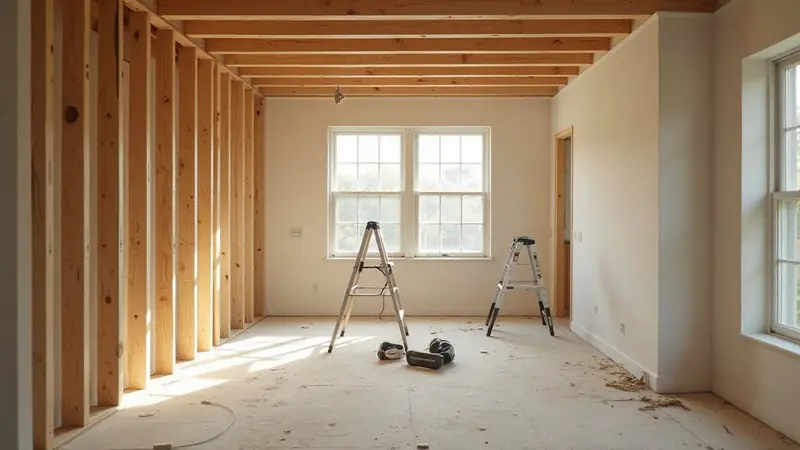
What a lender checks before funding
- The property's current value. An appraisal or the lender's own valuation sets the as-is value, the baseline for how much it will lend.
- The after-repair value. On a rehab, the lender estimates what the property will be worth once the work is done. Our lending partners lend up to 70% of that value.
- Your total cost. Purchase plus rehab. Our lending partners lend up to 100% of cost, but never above the 70% after-repair limit. Whichever limit is lower decides the loan.
- The exit. How the loan gets repaid: a sale, a refinance into a DSCR rental loan, or a conventional refinance. A realistic exit separates a fundable deal from a speculative one.
- Your experience. First-time investors can be funded, but documented completed projects earn more leverage. Our lending partners look at experience over the past three years.
- Credit. A threshold rather than the deciding factor. Our lending partners set a 600 minimum for fix and flip, rehab and bridge loans.
- Location and resale. A lender weighs how quickly the property could be sold if the loan went wrong. Thin rural markets can mean lower leverage or a decline, so ask about location rules for your address before you pay for an appraisal.

Want the lender's view of your deal?
Send the address, the numbers and your exit. Our lending partner's team reviews it and tells you whether it fits and on what terms. The lender makes every credit decision.
What a hard money lender charges
Across the market, short-term hard money commonly costs about 8% to 15% interest and 1 to 4 origination points, each point being 1% of the loan. Expect processing or underwriting fees, an appraisal, title and per-draw inspection fees on top. The interest rate is not the cost: the total of every fee over the months you hold the loan is the cost.
Through our lending partners, standard fix and flip, rehab and bridge pricing is 12.99% plus 2.99 points, from $50,000. Loyalty pricing of 10.99% plus 1.99 points is available to borrowers who have paid off two loans with the lending partner in good standing. A first-time borrower should plan around the standard pricing.
Questions to ask before you sign
These protect you from terms you did not expect, and they tell you a lot about the lender from how they are answered.
- Are you the lender, or are you placing the loan with someone else? Both can work. What matters is knowing who makes the credit decision and who you call when something goes wrong.
- What are the total costs? Rate, points, appraisal, processing, legal, draw inspections, extension fees. Get every number on a written term sheet.
- How are draws handled? How many draws are included, what each inspection costs, how long a release takes after inspection, and whether interest is charged on the full loan or only on money released.
- What does an extension cost? Projects run late. Ask what an extension costs, how long it adds, and what the lender needs to agree to one.
- Is there a prepayment penalty or minimum interest? Some loans charge a set number of months of interest even if you sell early.
- What puts me in default? Late payment, an insurance lapse, a stalled renovation, a change of use. The cure periods and penalties differ for each.
Red flags in a hard money lender
- A promise of funding before anyone has seen the deal. A real lender reviews the property, the numbers and the borrower first. The FTC warns that a lender who promises a loan before reviewing your situation and wants a fee up front is a classic advance-fee scam.
- Large fees before a written commitment. An appraisal paid to an appraiser is normal. Thousands of dollars paid to the "lender" before any commitment is not.
- No written terms. If the rate, points and draw process exist only in a phone call, you have nothing enforceable.
- No verifiable registration where one is required. Many states license lenders or brokers that arrange real estate loans. California's Financing Law, for example, covers commercial lenders and brokers. You can check a company on NMLS Consumer Access or with the state regulator.
- Pressure to skip title insurance or an appraisal. Both protect you.
The full vetting process, with the questions for a first call, is in how to find a hard money lender.
Working with a lender from term sheet to payoff
Once you sign a term sheet, order the appraisal and title the same day: they set the pace of closing. Have your LLC documents, the purchase contract, the line-item renovation budget and proof of the cash you are bringing ready before you are asked.
After closing, the relationship runs through the draws. Send clean draw requests with photos that match the scope line by line, keep the insurance current, and tell the lender early if the job is slipping. An extension requested a month ahead is a conversation; one requested the week the loan matures is a problem. Pay off on time and in good standing, and the next deal with the same lender usually gets easier.
Direct lender or an arranger
A direct hard money lender funds from its own capital or a fund it manages and makes the credit decision in-house. A placement service or broker connects you with a lender and is paid for placing the deal; the advantage is a match between your deal and a program that fits it.
Dominion Hard Money does not lend its own funds; it arranges financing through third-party lending partners. The lending partner underwrites the deal, sets the terms and makes every credit decision.
Related guides
How to find a hard money lender · Hard money lenders near you · What hard money costs · Borrowing with a credit problem · Private money lenders
Get your deal reviewed
Answer these and your deal goes to our lending partner's team, who will contact you about whether it is fundable and on what terms. By sending it you agree to your details being shared with them. Investment property only: our lending partners do not finance a home you will live in.
Got it.
Thank you. Your details are on their way to our lending partner's team, who will contact you shortly.
Hard money lender questions
What does a hard money lender look at before funding?
The property's current value, its after-repair value, your total cost, your exit plan, your experience and your credit. The property and the deal carry more weight than your personal income.
How do I know if a hard money lender is legitimate?
Ask for a written term sheet before paying anything, check the company on NMLS Consumer Access or with your state regulator where licensing applies, and ask who funds the loan. Walk away from anyone who promises funding before seeing the deal and wants a fee up front.
What should a hard money term sheet include?
The loan amount, rate, points, term, extension terms, draw schedule and inspection fees, prepayment terms, default provisions and every other fee. If something is only verbal, ask for it in writing.
How much does a hard money lender charge?
Market pricing commonly runs about 8% to 15% interest plus 1 to 4 points. Our lending partners' standard fix and flip and bridge pricing is 12.99% plus 2.99 points, with 10.99% plus 1.99 points only after two loans have been paid off with them in good standing.
Is Dominion Hard Money a hard money lender?
No. Dominion Hard Money does not lend its own funds; it arranges financing through third-party lending partners, and the lending partner makes every credit decision.
Sources
- Crestmont Capital, Hard Money Loan Rates 2026, market range of about 8% to 15% interest, 1 to 4 points, and typical fees (accessed Oct 2026)
- Federal Trade Commission, What to know about advance-fee loans, warning signs of upfront-fee loan scams (accessed Oct 2026)
- NMLS Consumer Access, free lookup of lending companies that hold state licenses (accessed Oct 2026)
- California DFPI, California Financing Law, licensing of commercial lenders and brokers (accessed Oct 2026)
Dominion Hard Money does not lend its own funds; it arranges financing through third-party lending partners. All financing is arranged for business purposes only and secured by non-owner-occupied investment property. Not a commitment to lend. All loans subject to underwriting, property review, and approval by the lender. Terms vary by property, borrower experience, and exit strategy.