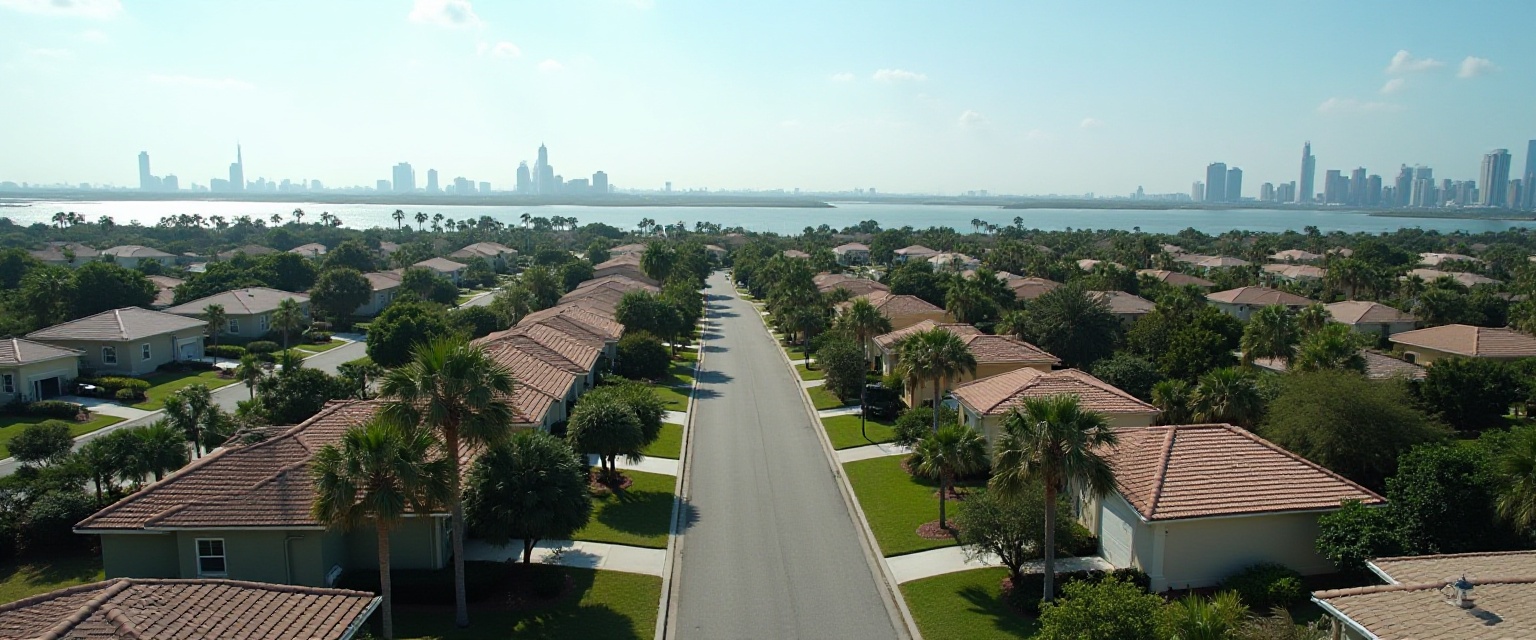
When you search for a flip lender "near me," the location that decides your loan is not yours. It is the house's. A lender two states away can fund a flip on your street, but the property has to pass a set of location tests first, and one of them can change your cash to close by tens of thousands of dollars. Here are those tests, the local numbers that decide whether a flip works, and the part of your team that really does need to be nearby.
Before anyone looks at your credit or your rehab budget, the lender looks at where the property is. Our lending partners' underwriting guidelines set five tests, and a house that fails one is either declined or financed on worse terms.
1. The state. The guidelines list every state except Nevada, Utah, South Dakota and Vermont. Anywhere else, the question is not whether a flip can be financed but on what terms.
2. The county. In six named counties, leverage drops from 70 percent of value to 50 percent: Philadelphia, Cook (Chicago), Cuyahoga (Cleveland), Baltimore, St. Louis and Wayne (Detroit). This is the test with the biggest price tag, and it is worked through below.
3. The distance to a real city. The property should sit within about 45 to 60 minutes of a metro area of 200,000 people or more. That keeps appraisals supported by enough comparable sales and resales supported by enough buyers.
4. The value floor. The after-repair value must be at least $100,000. In the cheapest neighborhoods of some cities, and in much of the rural country, finished houses simply do not reach it.
5. The lot. No more than two acres. Beyond that, a house starts to be valued as land with a building on it, and the loan is not built for that.
Pass all five and the loan terms are the same in a small Georgia city as in a big one: up to 100 percent of cost, capped at 70 percent of after-repair value.
Take one flip and put it in two places an hour apart. A house costs $120,000, needs $35,000 of work, and will be worth $220,000 finished. Total cost: $155,000.
In Canton, Ohio (Stark County), the normal cap applies. Seventy percent of $220,000 is $154,000, so the loan covers all but $1,000 of the cost. At standard pricing of 12.99 percent and 2.99 points, the points come to about $4,605 and interest to about $1,667 a month.
In Cleveland (Cuyahoga County), the 50 percent cap applies. Half of $220,000 is $110,000, so you bring $45,000 of the cost yourself. The points drop to about $3,289 and the interest to about $1,191 a month, because you are borrowing less, but your own money in the deal has gone up by $44,000.
Both cities flip heavily. ATTOM's report for the first quarter of 2026 put Canton's flipping rate at 12.3 percent of all home sales, among the highest in the country, and Cleveland's at 12.1 percent, second only to Atlanta among metros of more than a million people. The market is busy in both. The financing is not the same in both. If you invest in one of the six capped counties, check whether the same kind of house is available just outside the line.
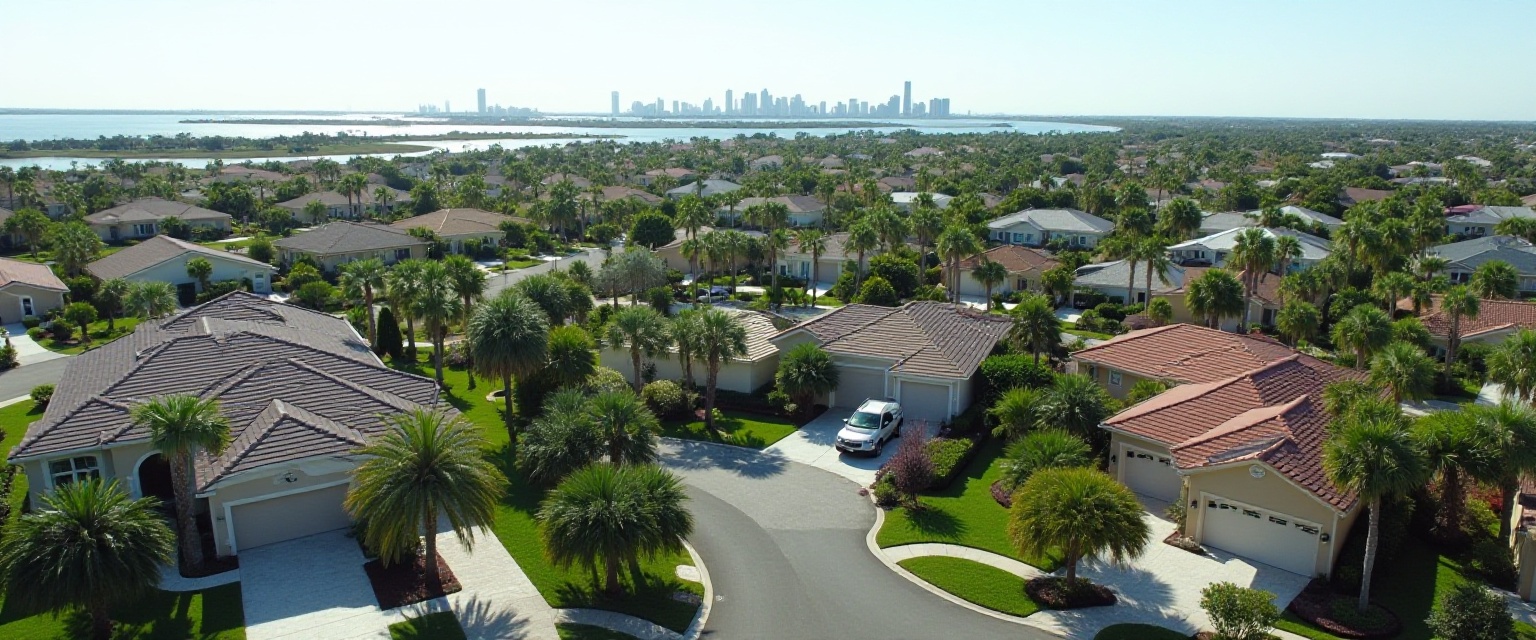
A flip is a bet on one neighborhood's resale market, and national averages hide the spread. ATTOM's first-quarter 2026 report, built from recorded deeds, shows how far apart local markets are.
Margins. Among metros of a million people or more, typical gross flipping margins ran from 85.9 percent in Pittsburgh to 2 percent in Austin. Dallas came in at 4.3 percent, San Antonio at 5.1 and Houston at 7.2. Gross means before renovation, financing and selling costs, which ATTOM notes flippers estimate at 20 to 33 percent of the resale price, so a single-digit gross margin usually means a loss. In the big Texas metros, a flip has to be bought far below the typical discount to work.
Competition. Where flipping rates are high, you are bidding against other flippers for the same houses. The highest rates were in Columbus, Georgia (15.2 percent of sales), Atlanta (12.3), Canton (12.3), York, Pennsylvania (12.2) and Spartanburg, South Carolina (12.1).
Cash buyers. Nationally, 61.1 percent of flipped homes were bought with all cash. In Flint, Michigan it was 91 percent. A borrower with a loan is competing against offers with no financing contingency, so a lender who can close quickly is part of making an offer that wins.
Pull the numbers for your own metro before you pull any house's comparables. They tell you whether your market rewards flipping at all.
The last local question is who buys the finished house, and with what loan. Federal rules on FHA-insured mortgages include a flipping restriction, 24 CFR 203.37a, and it applies to your sale, not your purchase:
Resold within 90 days of the day you acquired it, the house is not eligible for an FHA-insured loan at all.
Resold between 91 and 180 days, it is generally eligible, but if the price is 100 percent or more above what you paid, the buyer's lender must get a second appraisal from a different appraiser.
How much this matters depends on where you are. ATTOM found 10.2 percent of flipped homes nationally went to FHA buyers in early 2026, but the share was near 30 percent in Visalia, California and Fort Smith, Arkansas, and about a quarter in Spokane, Washington, Shreveport, Louisiana and Bakersfield, California. In markets like those, a fast renovation does not mean a fast sale to an FHA buyer. Count 90 days from your closing date before you set a listing date, and expect scrutiny on a big price jump before six months.
The rule is a regulation, and HUD can revise it, so confirm it is current when you plan your sale.
The money can come from anywhere. These people cannot.
The contractor. Renovation money is released in draws after the work is inspected. Someone has to run the job, document progress and fix what the inspector flags, every week. If you live more than a short drive from the house, that someone is a general contractor you have checked out, with references from jobs you can go and look at.
The title company or closing attorney. Closings follow the property's state. In some states, Georgia and South Carolina among them, a real estate attorney conducts the closing rather than a title company. Use one who closes investor purchases regularly and can move on a short timeline.
The agent who pulls your comparables. Your loan and your profit both rest on the after-repair value. A local agent who sells finished homes in that neighborhood will know which recent sales are true comparables and which were outliers, which an online estimate cannot tell you.
The local rules. Permits, contractor licensing and point-of-sale inspections vary by city and county. Ask the building department what a renovation of your scope needs before you close, because a permit delay is interest you pay every month.
Have the property address ready. With an address we can tell you, in one conversation, whether the house passes the five location tests, which leverage cap applies, and what the cash to close looks like at standard pricing. Everything after that, the rehab budget, the reserves, the profit test, follows from where the house is.
New to flipping? The rules that apply to a first flip are worth reading first. Already know your market? How to vet any lender covers the questions to ask whoever you call.
No. A fix and flip loan is a business-purpose loan secured by the property, and the appraisal, title work and closing all happen in the property's own market wherever the lender is based. What matters is whether the lender finances in that state and county, and on what terms.
The lender's underwriting guidelines list every state except Nevada, Utah, South Dakota and Vermont. Leverage is reduced in six named counties, and the property must meet the lender's location rules, so we confirm eligibility for the specific address before you make an offer.
Our lending partners cap leverage at 50 percent of value, instead of the usual 70, in six counties: Philadelphia County in Pennsylvania, Cook County in Illinois, Cuyahoga County in Ohio, Baltimore County in Maryland, St. Louis County in Missouri and Wayne County in Michigan. A property just across the county line is not affected.
Only if it sits within roughly 45 to 60 minutes of a metro area of 200,000 people or more, on a lot of two acres or less, with an after-repair value of at least $100,000, under our lending partners' guidelines. Remote houses are harder to value and slower to resell, which is why the rule exists.
It affects who can buy. Under 24 CFR 203.37a, a home resold within 90 days of the seller's purchase is not eligible for an FHA-insured mortgage. Between 91 and 180 days, a resale at double the purchase price or more requires a second appraisal. In markets where many buyers use FHA loans, list with that calendar in mind.
No, but someone you trust does. The lender releases renovation money in draws after the work is inspected, so a flipper who lives far away needs a general contractor who can run the job and document progress. If you cannot visit the house every week, price that oversight into your budget.
Market figures: ATTOM Q1 2026 U.S. Home Flipping Report, released June 18, 2026. FHA rule: 24 CFR 203.37a. Lending terms and location rules: our lending partners' published program page and underwriting guidelines; terms change, and we confirm them for your property before you commit.
Deciding between selling and holding in your market? Our two free landlord books compare what a rental costs to keep across twelve states.
Answer these and your deal goes to our lending partner's team, who will contact you about whether it is fundable and on what terms. By sending it you agree to your details being shared with them. Investment property only — our lending partners do not finance a home you will live in.
Thank you. Your details are on their way to our lending partner's team, who will contact you shortly.
Dominion Hard Money does not lend its own funds; it arranges financing through third-party lending partners. All financing is arranged for business purposes only and secured by non-owner-occupied investment property. Not a commitment to lend. All loans subject to underwriting, property review, and approval by the lender. Terms vary by property, borrower experience, and exit strategy.
Where our lending partners finance · How flip loans are sized and drawn · Texas · Ohio · Georgia · Pennsylvania