
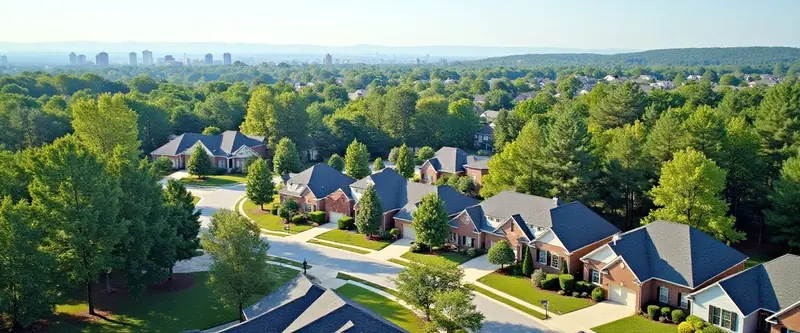
Georgia is still one of the strongest investor markets in the country, but the deal that worked a few years ago does not work now, and most guides have not caught up. Here is what changed, where the numbers still land, and how our lending partners size the loan.
Atlanta rents flattened while new supply kept coming
Metro Atlanta built apartments at a rapid pace through the early 2020s, and the units that broke ground then have been delivering since. The result is flat asking rents across much of the metro and more concessions on new buildings, a very different market from the one described in most "best places to invest in Georgia" articles, which are still working from 2021 rent growth. If your pro forma assumes rents climb five percent a year in Atlanta, the pro forma is the problem, not the market.
Two operating costs are moving the other way. Insurance premiums have risen sharply for many Georgia investors. And property tax reassessments are catching up to what properties sell for, which hits investors harder than homeowners, for reasons covered below.
Buy for cash flow at today's rents, not projected ones
The practical rule that falls out of all of it: the deal has to work on the rent you can collect this month. Appreciation is a bonus, not a plan.
That points at a specific band. Class B workforce housing has the deepest tenant pool in Georgia and the least competition from new supply, because most of what is being delivered is new, higher-rent product aimed at a different renter.
It also means underwriting the ordinary costs honestly. Vacancy at five to seven percent, not zero. Insurance at the new quote, not last year's. Taxes at reassessed value. One vacancy month plus one insurance increase plus one reassessment is enough to flip a thin deal underwater, and in a flat-rent market you cannot outgrow the mistake.
For a DSCR loan this matters directly, because taxes and insurance both sit inside the payment. Two properties at the same price and rent can land on opposite sides of the coverage line purely on the tax reassessment.
How Georgia taxes a rental, and why it bites investors
Georgia assesses property at 40 percent of fair market value, and the county, city and school millage rates are applied to that assessed value. So a millage rate in Georgia does not mean what it means in a state that taxes full value.
The homeowner protections do not reach a rental. Homestead exemptions require the owner to live in the home. Under the statewide floating homestead exemption created in 2024, many local governments now limit yearly increases in a homestead's assessed value to the rate of inflation, but that limit does not apply to an investment property. After you buy, the county can reassess to what you paid, and nothing caps the increase the way it caps the owner-occupant next door. Never budget from the seller's bill.
Transfer and recording taxes. Georgia's real estate transfer tax is $1 per $1,000 of the price, customarily paid by the seller. A new long-term mortgage carries the intangible recording tax of $1.50 per $500 of the loan amount, about 0.3 percent, capped at $25,000. Budget both on a flip.
Georgia does have a state income tax, a flat-rate personal income tax that applies to rental income and flip profits. Articles claiming there is no Georgia income tax on rental income are wrong, and a return projection built on that claim will overstate your net. The no-income-tax advantage belongs to Florida and Texas, not here.
Have a deal on the table?
Send the address, the numbers and your exit. Our lending partner's team reviews it and tells you whether it fits and on what terms. The lender makes every credit decision.
Foreclosure auctions on the first Tuesday
Georgia is a nonjudicial, power-of-sale state and one of the fastest foreclosure states in the country. Sales are held on the courthouse steps in each county on the first Tuesday of the month, after the notice runs in the county's legal newspaper once a week for four weeks. Georgia gives the former owner no right to redeem after the sale.
For an investor that is a clean, fast acquisition channel, with two caveats. You need certified funds or proof of funds on a short timeline, so talk to the lender well before the sale about whether it can fund an auction purchase and how fast. And you inherit occupants and any liens senior to the foreclosed loan, so run the title before you bid and plan for a dispossessory case if someone is still living there.

Georgia landlord rules changed in 2024
Georgia has long been one of the most landlord-friendly states, and it still is, but the Safe at Home Act of 2024 added rules that belong in every rental budget.
Fit to live in. Rental homes must be fit for human habitation at the start of the lease and kept that way, so budget the renovation to deliver a sound, working house.
Security deposits are capped at two months' rent, and must be returned within a month after the tenant moves out, less documented damage.
Nonpayment. Before filing a dispossessory case for unpaid rent, the landlord must give the tenant written notice and three business days to pay or leave.
Squatters. A 2024 law also gave owners a faster process to remove people occupying a property without any lease, which matters for vacant flips and auction purchases. Secure the house the day you close.
Where the deals are
Metro Atlanta spans more than two dozen counties, so the metro median tells you almost nothing about the deal in front of you.
South Fulton, Clayton County, East Point and College Park
The best rent-to-price ratios inside the metro, with Hartsfield-Jackson Atlanta International Airport underpinning rental demand. This is where the workforce housing thesis is easiest to execute.
Augusta
A lower entry price than Atlanta, with steady demand from Fort Gordon, the medical district and the region's employers. If cash flow is the objective, Augusta can do what intown Atlanta no longer does.
Columbus
Among the cheapest serious entries in the state, with Fort Benning nearby and a cash flow profile Atlanta proper cannot match. B and C neighborhoods, so tenant screening and management matter more.
Gwinnett, Paulding and Bartow
Growth rather than yield, with industrial investment and commuter demand driving building to the northeast and northwest of the city. These are appreciation and build-to-rent stories.
Atlanta proper
More inventory than a few years ago, more negotiating room and slower sales. Pull days on market for the exact neighborhood before you set a flip timeline. The Atlanta page covers which price figures to trust for an after-repair value.
North Georgia short-term rentals
The mountain communities around Blue Ridge are where short-term rental yields still look dramatic on paper, and Savannah supports short-term rentals on tourism with more regulation attached. Qualify any of them on long-term rent: occupancy is the first thing to move when the economy softens or an ordinance changes.
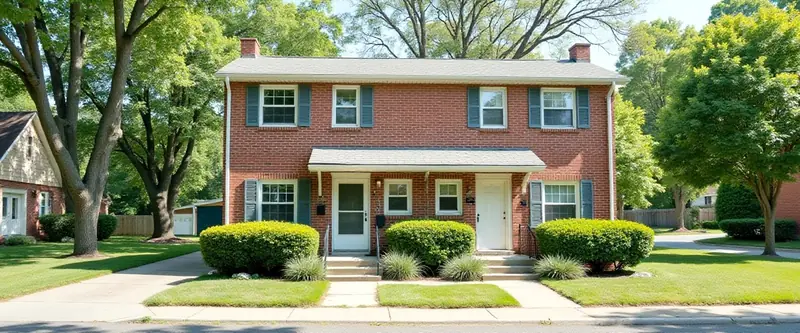
What our lending partners offer in Georgia
Dominion Hard Money does not lend its own funds; it arranges financing through third-party lending partners.
Fix and flip, rehab and bridge loans: standard pricing starts at 12.99 percent plus 2.99 points. Borrowers who have paid off two loans with the lending partner in good standing can qualify for loyalty pricing of 10.99 percent plus 1.99 points. Up to 70 percent of the after-repair value and up to 100 percent of cost, whichever limit is reached first, with leverage based on the projects you can document over the past three years. Minimum loan $50,000, minimum credit score 600.
DSCR rental loans: no minimum credit score, from $75,000 to $2 million, up to 80 percent of value on a purchase or rate-and-term refinance.
All loans are for non-owner-occupied investment property held in an LLC or corporation, and the lender makes every credit decision. For Columbus and Augusta buyers, the $50,000 minimum loan is a real floor: at the bottom of those markets a deal can be too small to finance, so check it before you go under contract.
What gets a Georgia deal declined
A rent projection built on 2022 growth. Underwrite at today's rent.
Taxes taken from the seller's bill. The homestead limits do not follow the house to you, and your first bill can reflect what you paid.
An insurance figure from last year. A stale number can move a DSCR ratio enough to change the loan.
A 60-day exit in a slow market. A flip modeled on a fast summer sale can run past its term and into extension costs.
A home you plan to live in. Our lending partners finance non-owner-occupied investment property only.
Georgia taxes 40 percent of fair market value, so a millage rate here does not mean what it means elsewhere. See what a $400,000 rental costs to hold in Georgia, compared with eleven other states.
Send it through the form above and our lending partner's team will review your deal.
Keep reading
Florida · Alabama · DSCR loans · Fix and flip loans · Loan calculator · Rates and terms
Get your deal reviewed
Answer these and your deal goes to our lending partner's team, who will contact you about whether it is fundable and on what terms. By sending it you agree to your details being shared with them. Investment property only: our lending partners do not finance a home you will live in.
Got it.
Thank you. Your details are on their way to our lending partner's team, who will contact you shortly.
Questions investors ask
Can I get a hard money loan anywhere in Georgia?
Our lending partners review deals statewide: metro Atlanta, Augusta, Columbus, Savannah, Macon and the north Georgia counties. Each deal is sized on its after-repair value, cost and your experience, and the lender decides.
Is Atlanta still a good market for rental investors?
It is a good market with a different shape. Buy in the workforce housing band, underwrite at current rent and real taxes, and it works. Buy at the metro median expecting rent growth to bail you out and it does not.
Can I finance a house I buy at a Georgia foreclosure auction?
Possibly, but plan it before the first Tuesday. Auction purchases need funds quickly, so ask the lender in advance whether it can fund an auction purchase on that timeline. Georgia has no redemption after the sale, but you still need a title search for senior liens.
Why will my Georgia rental's tax bill be higher than the seller's?
Homestead exemptions and the floating homestead limit on assessment increases are for owner-occupants only. After a sale the county can reassess a rental to the price you paid, applied at 40 percent of value.
How much security deposit can a Georgia landlord charge?
Since the Safe at Home Act of 2024, no more than two months' rent. The same law requires a three-business-day notice before filing for nonpayment and a home fit for habitation.
Can I finance a Blue Ridge cabin with a DSCR loan?
Yes, as a non-owner-occupied investment property. Expect it to be sized on long-term rental value rather than projected nightly revenue, which is usually the difference between a loan that survives a soft season and one that does not.
Sources
- Official Code of Georgia, Title 48, Chapter 5 (ad valorem taxation), assessment at 40 percent of fair market value and homestead exemptions, via Justia
- Official Code of Georgia, Title 48, Chapter 6 (transfer and intangible recording taxes), $1 per $1,000 transfer tax and intangible recording tax, via Justia
- Official Code of Georgia, Title 44, Chapter 14 (mortgages and foreclosure), power-of-sale foreclosure and first-Tuesday sales, via Justia
- Official Code of Georgia, Title 44, Chapter 7 (landlord and tenant), Safe at Home Act deposit cap, habitability and notice rules, via Justia
- Georgia Department of Revenue, the floating homestead exemption (HB 581) and local opt-outs
- Office of the Governor, HB 1017 (2024), Georgia Squatter Reform Act, faster removal of unauthorized occupants, signed April 24, 2024 (accessed Oct 2026)
Dominion Hard Money does not lend its own funds; it arranges financing through third-party lending partners. All financing is arranged for business purposes only and secured by non-owner-occupied investment property. Not a commitment to lend. All loans subject to underwriting, property review, and approval by the lender. Terms vary by property, borrower experience, and exit strategy.