

Every state has one line item that behaves nothing like the national average, and this page names it for twelve states.
What does a rental property actually cost to hold?
Far more than the mortgage payment, and the gap is wider than most investors budget for. On a $400,000 rental, the difference between two Connecticut towns on this page is over $7,000 a year in property tax alone, before insurance, before maintenance, before a single vacancy.
Most rental analysis stops at principal, interest, taxes and insurance, with taxes estimated at "about one percent" and insurance treated as a rounding error. In four of the twelve states below that assumption is roughly right. In the other eight it is wrong by the whole margin: enough to turn a deal that pencils into one that bleeds.
The pattern that matters: every state has one line item that behaves nothing like the national average, and it is a different line in each state. Florida's is insurance. Texas's is property tax. Massachusetts's is neither: it is legal exposure that never appears in a cap rate at all. Before you buy in a state you have not bought in before, find out which line is the outlier there, then get a real number for it.
What does the same $400,000 house cost in twelve states?
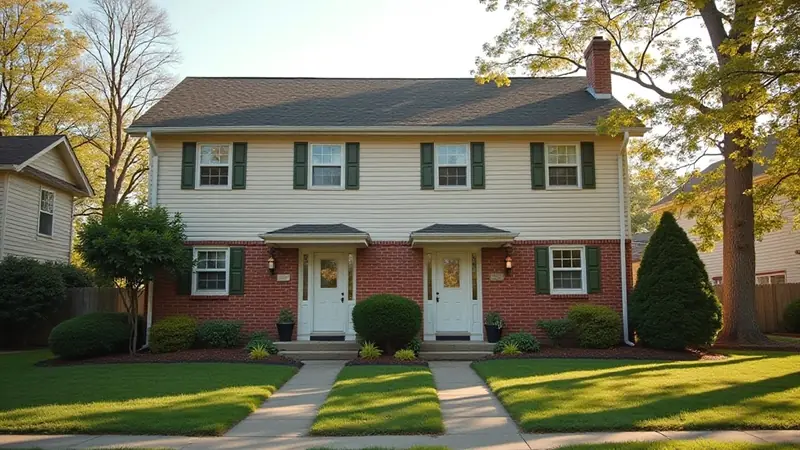
The table below runs one hypothetical property, a $400,000 single-family rental, three bedrooms, reasonable condition, rented at market, through twelve states, and names the single line item that decides deals in each.
This is a structural comparison, not a shopping list. A $400,000 house is a modest property in Boston and an expensive one in Cleveland. The point is to show how differently the same money behaves depending on which side of a state line it sits.
| State | The line that decides the deal | What it costs on a $400,000 property |
|---|---|---|
| Florida | Insurance | Published statewide averages for $300,000 of dwelling coverage run several times the national average, and vary widely by county and by source. Get a quote before you offer |
| Texas | Property tax | About 1.40% effective statewide on owner-occupied homes, or about $5,600 a year. Local rates vary widely by school district and utility district |
| Georgia | Assessment ratio | Taxed on 40% of fair market value, not 100%. The quoted millage rate means something different here than elsewhere |
| Ohio | The gross-to-net gap | Ohio taxes 35% of true value, and House Bill 920 reduction factors limit how much voted levies grow when values rise, rather than capping assessments |
| Maryland | Licensing before income | Lead registration for pre-1978 rentals and, in Baltimore City, a rental license gate the tenancy, and therefore the rent |
| Michigan | Loss of the Principal Residence Exemption | Up to 18 mills of school operating millage added the day the house stops being owner-occupied. Michigan taxes taxable value, not market value |
| Pennsylvania | The Common Level Ratio | No statewide reassessment. Allegheny County still assesses to a 2012 base year, bridged by a ratio published annually that governs appeals (49.3% for 2026 to 2027) |
| Massachusetts | Legal exposure, not arithmetic | Pre-1978 property rented to a family with a young child triggers mandatory deleading under strict liability. Security deposit rules carry treble damages for three specific violations |
| Connecticut | The town line | Assessed at 70% of value, then taxed at the town's mill rate. For fiscal 2027, Greenwich at 10.125 mills is $2,835 a year and Bridgeport at 27.95 mills is $7,826. Hartford's 69.95 mills applies to a one to three family home assessed at only 36.75% of value, about $10,280. Same house |
| Virginia | Internal spread | Assessed at 100% of fair market value. Richmond City at $1.20 per $100 against neighboring Henrico at $0.83 is about $1,480 a year on a $400,000 house |
| Colorado | Hail insurance | Property insurance costs rose an average of 57.9% from 2018 to 2023, and state insurance data put hail at 26% to 54% of homeowner premiums, depending on the county |
| Washington | The statutory rent cap | Capped at 9.683% for 2026 and 10% for 2027. Investor-owned single-family rentals are covered; units within twelve years of their first certificate of occupancy are exempt |
Figures are drawn from state and local agency sources and industry reporting, checked in October 2026 and listed under Sources below. They are a starting point for underwriting, not a quote for your property.
Found a rental where the numbers still work?
Send the address, the rent and your carrying costs. Our lending partner's team reviews whether it fits a DSCR, bridge or rehab loan. The lender makes every credit decision.
Which states have a property tax problem?
Texas, Connecticut, Michigan and Ohio, each for a different reason, and only one of them is the headline rate.
Texas charges you for the missing income tax every month. At roughly 1.40% effective statewide that is $467 a month on a $400,000 house before anything else. Texas appraises at market value, and the protest process is a real lever rather than a formality: you can argue value and unequal appraisal together, and the deadline is generally May 15 or 30 days after your notice is mailed, whichever is later.
Connecticut cannot be answered with a state-level number at all. Most towns assess at 70% of value and tax at whatever the town's mill rate happens to be. Hartford is the exception: its 69.95 mills, the highest in the state, applies to one to three family homes assessed at 36.75% of value, so the same house costs about $10,280 a year there against $2,835 in Greenwich, a spread of about $7,450. Check which assessment ratio applies before you multiply by a mill rate. County-level guidance is worse than useless: Connecticut abolished county government in 1960, and Fairfield County contains both Bridgeport at 27.95 mills, after a large cut for fiscal 2027, and Greenwich at 10.125. Mill rates are reset every year, so check the current one for the town, not last year's.
Michigan is misunderstood in both directions. The exemption a rental loses is the Principal Residence Exemption, which is a different thing from the Homestead Property Tax Credit, and it exempts a principal residence from up to 18 mills of local school operating millage. Michigan also taxes taxable value, whose annual growth is capped, rather than market value or state equalized value, which breaks most out-of-state underwriting.
Ohio is gentler than its rates look. House Bill 920 tax reduction factors cut effective rates on voted levies when values rise, so a big jump in county valuations does not produce a matching jump in bills. House Bill 126, effective in 2022, sharply restricted school boards' power to challenge property values, a tool that once chased recently sold homes upward, which makes Ohio friendlier to buyers than most summaries suggest.
Which states have an insurance problem?
Florida and Colorado most clearly, and in Florida the insurance line can rival the entire annual property tax bill in other states on this list.
Florida premiums run at several times the national average for the same coverage, and published statewide averages differ so much by source and county that only a quote on the actual house is worth underwriting. Florida also has a non-homestead assessment cap of 10% a year, which resets on a change of ownership and is lost when an improvement raises just value by 25% or more. The recapture rule means assessed value can keep climbing even when market value falls, which bites in markets that have softened.
Texas adds a second exposure along the coast: price any flood policy the property needs, separately from the homeowner policy, before you offer.
Colorado is widely described as a wildfire market. Colorado Division of Insurance data put hail at 26% to 54% of homeowner premiums depending on the county, and property insurance costs rose an average of 57.9% from 2018 to 2023. Wildfire shows up more as an availability problem: it can get homes nonrenewed rather than merely made expensive.
One thing worth knowing before you underwrite anywhere. Property tax is the only major carrying cost that a buyer can influence after closing. Every state on this page has an appeal process, and the deadlines are short: Florida gives 25 days from the mailing of the TRIM notice, Georgia 45 days from the date on the assessment notice, Texas generally until May 15. Missing the window costs a full year.
Which states have a legal problem rather than a cost problem?
Massachusetts and Maryland, where the risk is not that the numbers are high but that the property cannot legally earn a dollar until the paperwork clears.
Maryland gates the tenancy behind lead registration and, in Baltimore City, a rental license. That means it gates the income. A new owner must register a pre-1978 rental with the Maryland Department of the Environment within 30 days of acquiring it, and from January 1, 2026 a Baltimore City rental license no longer transfers on a sale: the buyer must apply for a new one within 60 days.
Massachusetts carries two separate exposures. The Lead Law imposes strict liability where a pre-1978 property is home to a child under six, until lead hazards are removed or covered and the owner holds a Letter of Compliance. Interim control is the practical middle path: a Letter of Interim Control is valid for one year and can be recertified for one more.
On security deposits, the common statement of the rule is broader than the law. It is often said that any violation triggers automatic treble damages. The Supreme Judicial Court held otherwise in Phillips v. Equity Residential Management, 478 Mass. 251 (2017): paperwork violations, such as a defective itemized list of deductions, do not carry treble damages. The failures that do are the ones that suggest the money was never held properly: not keeping it in a separate account, not returning it within thirty days of the tenancy ending, and not transferring it when the property is sold. That last one catches investors at closing.
Where do these figures come from?
They come from The Landlord's Cost Map, a book that runs the same $400,000 property through all twelve states, chapter by chapter, with every tax mechanism traced to the state agency or statute that governs it.

The Landlord's Cost Map: What a Rental Really Costs to Hold in Twelve States. Twelve state chapters, each leading with the one factor that decides deals there and ending with a checklist. Plus the mechanics most analysis skips: the three loan ceilings and which one actually binds, what belongs in a carrying cost, why gross yield lies, and where the seventy percent rule breaks. Three worked deals, start to finish. Roughly 30,000 words, 131 pages, with figures sourced and dated.
Paperback: $24.99 · Kindle: $9.99
Published by Dominion Publishing.
Get your deal reviewed
Answer these and your deal goes to our lending partner's team, who will contact you about whether it is fundable and on what terms. By sending it you agree to your details being shared with them. Investment property only: our lending partners do not finance a home you will live in.
Got it.
Thank you. Your details are on their way to our lending partner's team, who will contact you shortly.
Questions investors ask
What percentage of rent should I budget for expenses on a rental?
The fifty percent rule is a starting point, not an answer, and it fails hardest in exactly the states where the money is. In Florida the insurance line alone can eat a large share of gross rent. In Hartford the tax line can do the same. Build the number from actual line items for the specific state rather than applying a national ratio.
Why is my property tax higher than the previous owner's?
Usually one of three mechanisms. In Michigan the property lost its Principal Residence Exemption when it stopped being owner-occupied, adding up to 18 mills of school operating tax. In Florida the non-homestead assessment cap reset on the change of ownership, so you are taxed on current value rather than the seller's capped basis. In Pennsylvania, a sale can prompt a taxing district appeal that resets the assessment.
Which state is best for buying rental property?
There is no single answer. Massachusetts and Maryland carry the heaviest compliance burden on this list. Texas and Connecticut's high-rate towns carry the heaviest tax. Florida and Colorado carry the heaviest insurance. The right question is not which state is best but which line item in a given state you are equipped to manage.
Does Washington's rent cap apply to my single-family rental?
Usually, yes, if you are an investor. The exemptions cover units within twelve years of their first certificate of occupancy, certain owner-occupied properties, and some nonprofit and public housing, not investor-owned single-family homes generally.
How do I finance a rental property in these states?
Dominion Hard Money arranges purchase, rehab and refinance funding for non-owner-occupied investment property through third-party lending partners, including fix and flip, bridge and DSCR rental loans. Send the deal through the form on this page and the lending partner's team will review it. The lender makes every credit decision.
Sources
- Washington State Department of Commerce, 9.683% rent cap for 2026, the 2026 cap and the 7% plus inflation or 10% formula (accessed Oct 2026)
- NBC Right Now, Washington sets 10% rent increase cap for 2027, the 2027 cap (accessed Oct 2026)
- RCW 59.18.710, exemptions from Washington's rent increase limit (accessed Oct 2026)
- Citizen Portal, Hartford council approves FY27 budget, Hartford's fiscal 2027 mill rate of 69.95 (accessed Oct 2026)
- Connecticut General Assembly, Public Act 14-174 summary, Hartford's separate assessment ratio for one to three family residential property (accessed Oct 2026)
- SmartMLS, Hartford assessment and mill rate, residential property in Hartford assessed at 36.75% of fair market value (accessed Oct 2026)
- Citizen Portal, Greenwich BET sets 2026 to 2027 mill rate, Greenwich's mill rate of 10.125 (accessed Oct 2026)
- City of Bridgeport, general tax information, the fiscal 2027 real estate mill rate of 27.95 (accessed Oct 2026)
- VPM News, Richmond's 2026 real estate tax rate, Richmond's $1.20 per $100 rate (accessed Oct 2026)
- Henrico Citizen, County of Henrico real property tax notice, Henrico's $0.83 per $100 rate (accessed Oct 2026)
- Michigan Department of Treasury, Principal Residence Exemption, exemption from up to 18 mills of school operating tax (accessed Oct 2026)
- Ohio Department of Taxation, real property tax, assessment at 35% of true value and tax reduction factors (accessed Oct 2026)
- Fairfield County Board of Revision, House Bill 126 summary, limits on school board value complaints from 2022 (accessed Oct 2026)
- Allegheny Institute, Allegheny County's CLR continues its decline, the 2012 base year and the annual common level ratio (accessed Oct 2026)
- Florida Statutes 193.1554, the 10% non-homestead assessment cap, reset on change of ownership and on improvements of 25% or more (accessed Oct 2026)
- Florida Department of Revenue, PT-101, the 25-day petition window after the TRIM notice (accessed Oct 2026)
- Ownwell, Georgia property tax appeal deadlines, assessment at 40% of fair market value and the 45-day appeal window (accessed Oct 2026)
- Community Impact, May 15 Texas property tax protest deadline, the protest deadline under Tax Code 41.44 (accessed Oct 2026)
- FOX 4, Texas property tax rankings, context for Texas's effective property tax rate on owner-occupied homes (accessed Oct 2026)
- KUNC, Colorado homeowners insurance increased nearly 60% in five years, the 57.9% rise from 2018 to 2023 and hail's share of premiums (accessed Oct 2026)
- Maryland Department of the Environment, rental property owner requirements, registration of pre-1978 rentals within 30 days of acquisition (accessed Oct 2026)
- Baltimore City DHCD, property registration and rental licensing, licenses no longer transfer on sale from 2026 and the 60-day window for a new owner (accessed Oct 2026)
- Mass.gov, interim control of lead paint hazards, the one-year Letter of Interim Control and recertification (accessed Oct 2026)
- Mass.gov, Massachusetts Lead Law, owner duties where a child under six lives in pre-1978 housing (accessed Oct 2026)
- FindLaw, Phillips v. Equity Residential Management case record, which security deposit violations carry treble damages (accessed Oct 2026)
Dominion Hard Money does not lend its own funds; it arranges financing through third-party lending partners. All financing is arranged for business purposes only and secured by non-owner-occupied investment property. Not a commitment to lend. All loans subject to underwriting, property review, and approval by the lender. Terms vary by property, borrower experience, and exit strategy.