
Dominion Hard Money arranges these loans through third-party lending partners; working capital, SBA loans, equipment finance and merchant advances are a different market.
Which kind of business loan are you looking for?
If you need capital to run a business, such as payroll, inventory, equipment, a line of credit or an SBA 7(a) loan, that is bank and SBA territory, and we will say so rather than send you round in circles. The Small Business Administration's own lender match tool is a sensible first stop.
If you need money to buy, renovate or refinance investment real estate, that is business-purpose lending secured by property, and it is what our lending partners do: fix and flip, rehab, bridge and DSCR rental loans on non-owner-occupied property held in an entity.
The distinction is not marketing. It is a legal category with specific consequences, and understanding it is genuinely useful to an investor, so the rest of this page is about what business-purpose actually means, what it buys you, and the one rule that quietly changes it.
What makes a loan business-purpose
Under Regulation Z at 12 CFR 1026.3, credit extended primarily for a business, commercial or agricultural purpose is exempt from the Truth in Lending disclosure and protection requirements that govern consumer mortgages. The rules that make a home purchase slow and heavily documented were written to protect someone buying a place to live. An investor is doing something else.
Two routes into the exemption matter in practice.
The rental property rule. The official interpretation of Regulation Z treats credit to acquire, improve or maintain rental property that is not owner-occupied as business purpose, whatever the number of units. Not argued case by case: deemed. That is why almost every rental and flip loan in the country is written this way.
The entity rule. Credit extended to a borrower that is not a natural person, such as an LLC or corporation, sits outside Regulation Z altogether. This is one reason lenders ask you to hold title in an entity, and why it is standard rather than exotic.
Where a loan does not fall cleanly into either, the official interpretation sets out factors to weigh: how the purchase relates to the borrower's primary occupation, how much the borrower will personally manage it, the ratio of income from it to the borrower's total income, the size of the transaction, and the borrower's own statement of purpose. That last one is why lenders ask you to state, in writing, what the money is for, and why answering it loosely is a bad idea.
Have a deal on the table?
Send the address, the numbers and your exit. Our lending partner's team reviews it and tells you whether it fits and on what terms. The lender makes every credit decision.
The fourteen-day rule
This is the detail that catches people, and it is written into the official interpretation.
The rental property rule depends on the property genuinely being non-owner-occupied. If the owner expects to occupy it for more than fourteen days during the coming year, it is treated as owner-occupied. Then the deemed business treatment narrows: credit to acquire an owner-occupied rental is automatically deemed business purpose only if the building has more than two housing units, and credit to improve or maintain one only if it has more than four.
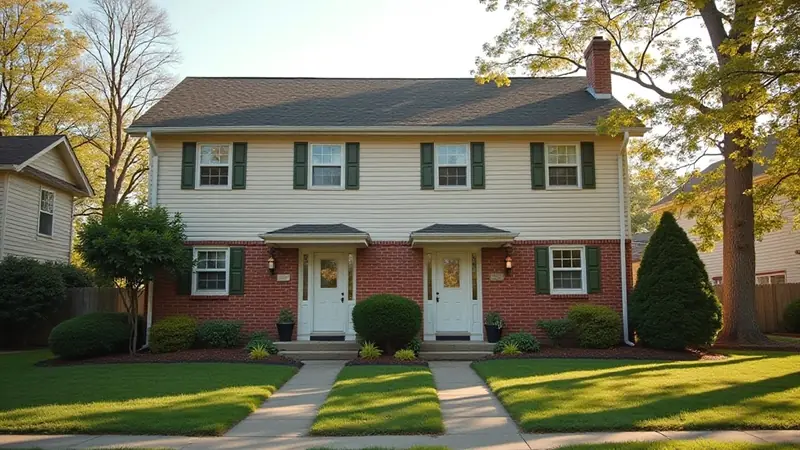
So the beach condo you will rent out but use for three weeks each summer is not the straightforward business-purpose file you assumed. Regulation Z's own example is a beach house the owner uses for a month. Nor is the duplex where you will live in one side, which is owner-occupied regardless of the rental income from the other.
Say so at application. A borrower who discloses intended personal use up front gets routed to the right product. A borrower who discloses it later, or not at all, creates a compliance problem for the lender and a dead deal for himself, and our lending partners' programs are for non-owner-occupied property only.
What the exemption buys you, and what it costs
What you get. No pay stubs, no W-2s, no employment verification, and usually no debt-to-income test. Qualification runs on the deal: the purchase contract, the renovation budget, the rent, the reserves and the exit. Title vests in an entity as a matter of course. Interest-only structures are common on short-term loans. And the file can move quickly, because a large share of what slows a home mortgage is consumer-disclosure timing that does not apply.
For a self-employed borrower, a contractor, or an investor with heavy depreciation write-offs, this is often the difference between financing and no financing. Your tax return understates your position by design; the property does not.
What it costs. The consumer protections come off with the paperwork. There is no standardized Loan Estimate within three business days of application and no Closing Disclosure three business days before signing. Most lenders behave well anyway; some use that gap to keep terms vague until you are committed. The defense is to demand the full terms in a written term sheet early: rate, points, prepayment penalty, reserves, maximum leverage, extension cost. We wrote the longer version of that on comparing lenders and on how to vet one.
What does not come off. Business-purpose lending is not unregulated lending, and anyone implying otherwise is telling you something about themselves. The Equal Credit Opportunity Act and its Regulation B cover business credit as well as consumer credit. The Fair Housing Act covers residential real estate transactions whether the borrower is a person or a company. The Fair Credit Reporting Act still governs how your credit report is pulled and used. Exempt from Truth in Lending is not exempt from the law.
What our lending partners finance
Dominion Hard Money does not lend its own funds; it arranges financing through third-party lending partners. For a business-purpose borrower, their programs break down like this.
Fix and flip, rehab and bridge. Standard pricing starts at 12.99 percent plus 2.99 points, on loans from $50,000, with a 600 minimum credit score. Leverage runs up to 100 percent of cost and up to 70 percent of after-repair value, whichever comes first, and depends on the experience your entity can document over the past three years. After two loans paid off with the lending partner in good standing, loyalty pricing of 10.99 percent plus 1.99 points becomes available.
DSCR rental loans. From $75,000 to $2 million, up to 80 percent of value on a purchase or rate-and-term refinance, with no minimum credit score.
All of it is for non-owner-occupied investment property held in an LLC or corporation. If your business wants to buy or refinance the building it operates from, that is a commercial real estate loan rather than working capital, and a different conversation: send the details and you will get a straight answer on whether it fits.
What gets a business-purpose file declined
Undisclosed personal use. The fourteen-day rule is not negotiable, and personal use surfacing late is the fastest way to lose a deal.
A working capital request wearing a real estate costume. Borrowing against a property to fund an unrelated operating business is a different transaction. Be straight about what the money is for.
A vague statement of purpose. "Investment" is not a purpose. What the money buys, improves or refinances is.
A primary residence. Our lending partners do not finance a home you will live in, in any structure or entity. That is consumer lending, with its own federal rules.
Keep reading
What lenders require · DSCR loans · Loan calculator · How to vet a lender
Get your deal reviewed
Answer these and your deal goes to our lending partner's team, who will contact you about whether it is fundable and on what terms. By sending it you agree to your details being shared with them. Investment property only: our lending partners do not finance a home you will live in.
Got it.
Thank you. Your details are on their way to our lending partner's team, who will contact you shortly.
Business-purpose loan questions
Do I need an LLC to get a business-purpose real estate loan?
Our lending partners lend to an LLC or corporation, and title vesting in an entity is standard. Lenders commonly still ask the owners for a personal guaranty, so the entity protects your other assets rather than removing your obligation.
Will a hard money lender look at my business revenue?
Not the way an SBA or bank lender would. Qualification runs on the property: its value, its rent, the renovation budget, your reserves and your exit. Your operating business is largely beside the point unless it is the occupant of the building.
Can I use a hard money loan for payroll or working capital?
Not through our lending partners. Their loans finance investment real estate. For operating capital, a bank or an SBA-backed loan is the right place to start.
Is a duplex where I live in one unit a business-purpose loan?
No. Living in it for more than fourteen days a year makes it owner-occupied, and Regulation Z only deems an owner-occupied rental purchase business purpose when the building has more than two units. Our lending partners finance non-owner-occupied property only.
Can I cash-out refinance a rental to fund something else?
Our lending partners' DSCR loans can be used for a cash-out refinance, and the lender sets the cash-out limit for your file. What you do with the proceeds can affect how the loan is classified, so state the intended use at the start and let the lender structure it correctly.
Why does the lender ask me to sign a statement of business purpose?
Because your stated purpose is one of the factors that decides whether the loan is business credit at all. Answer it accurately and specifically: what the money buys, improves or refinances, and that you will not live in the property.
Sources
- CFPB, Regulation Z 12 CFR 1026.3, exempt transactions, the business-purpose exemption and the exemption for credit to entities (accessed Oct 2026)
- CFPB, Official interpretation of 1026.3(a), the factors for business purpose, non-owner-occupied rental property, the 14-day rule, the beach house example and the two-unit and four-unit thresholds (accessed Oct 2026)
- CFPB, Regulation B 12 CFR 1002 (Equal Credit Opportunity Act), coverage of business credit (accessed Oct 2026)
- HUD, Fair Housing Act overview, coverage of residential real estate-related transactions (accessed Oct 2026)
- U.S. Small Business Administration, loans, SBA-backed loans and Lender Match for working capital (accessed Oct 2026)
- CFPB, Loan Estimate explainer, the three-business-day disclosure timing on consumer mortgages (accessed Oct 2026)
Dominion Hard Money does not lend its own funds; it arranges financing through third-party lending partners. All financing is arranged for business purposes only and secured by non-owner-occupied investment property. Not a commitment to lend. All loans subject to underwriting, property review, and approval by the lender. Terms vary by property, borrower experience, and exit strategy.