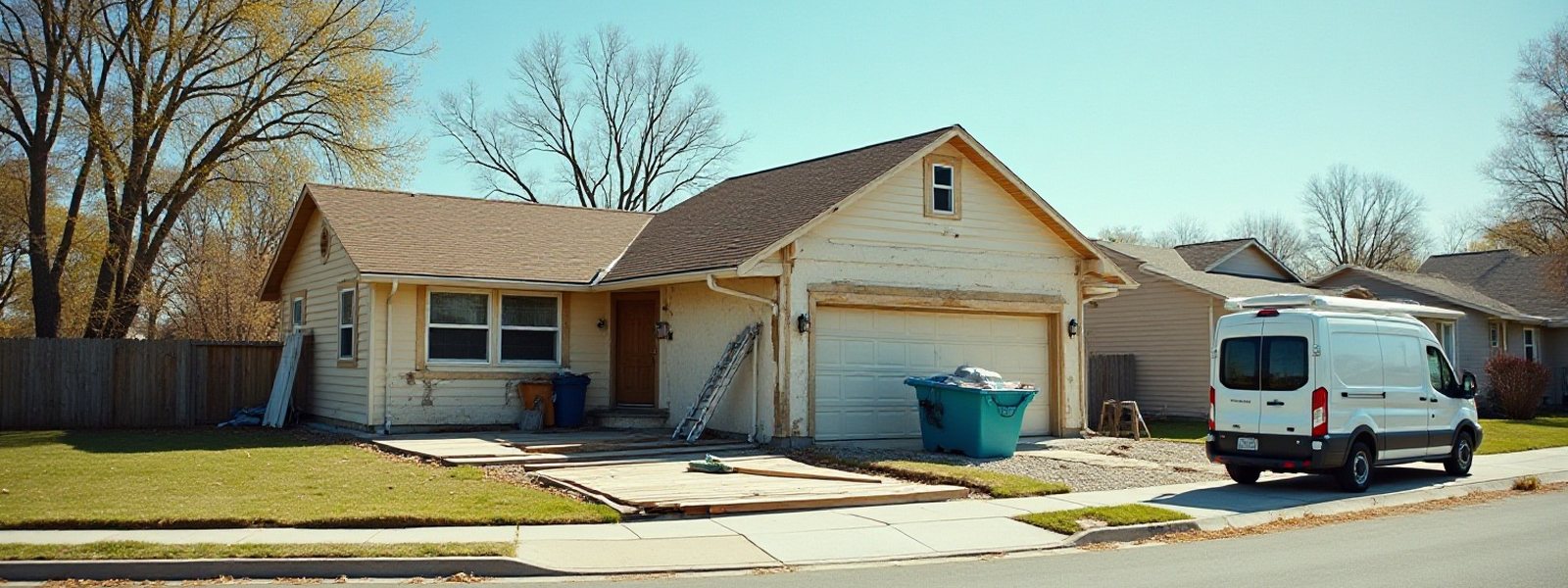
Kentucky is a good state for a real estate investor who knows its quirks. Houses cost less than the national average in much of the state, the transfer tax is small, and the big markets, Louisville, Lexington and the Kentucky side of Cincinnati, are active. But its landlord law changes from county to county, and a lender's location rules leave parts of the state hard to finance. Here is how both work, and what our lending partners offer across the rest.
Our lending partners finance investment property across Kentucky, but their underwriting guidelines add a location test: the property should sit within about 45 to 60 minutes of a metro area of 200,000 people or more. That rule exists so the appraisal has enough recent sales behind it and the finished house has enough buyers or renters. In Kentucky it draws a fairly clear map.
Louisville and its suburbs, the largest market in the state, clear it easily, as does much of the ring around it, from Shelbyville to Elizabethtown.
Lexington and the Bluegrass counties around it, including Georgetown, Nicholasville, Richmond and Winchester, fit comfortably.
Northern Kentucky, Covington, Newport, Florence and the rest of Boone, Kenton and Campbell counties, sits inside the Cincinnati metro, one of the largest in the region.
The state's edges borrow neighbors' metros. Ashland sits with Huntington across the Ohio River, Henderson with Evansville, and Hopkinsville with Clarksville, Tennessee. Bowling Green is roughly an hour from Nashville.
Where the test bites is the eastern coalfield. Towns such as Hazard and Pikeville are roughly two hours from Lexington or Huntington, beyond what the guideline describes. Check any address there before you count on financing. Two other rules narrow things further anywhere in the state: the finished value must be at least $100,000, and the lot no bigger than two acres.
This is the Kentucky fact that most out-of-state investors miss. The state has a Uniform Residential Landlord and Tenant Act, but under KRS 383.500 it applies only where a city or county has adopted it, and it must be adopted in its entirety and without amendment. Jefferson County (Louisville) and Fayette County (Lexington) have adopted it, as have Oldham and Pulaski counties and a list of cities that includes Covington, Newport, Florence, Georgetown and Shelbyville.
Inside an adopting area, the statute sets the rules: a seven-day written notice for unpaid rent, a fourteen-day notice with a chance to cure for other material breaches, specific handling of security deposits, and a statutory duty on the landlord to maintain the property.
Outside one, the lease, Kentucky's forcible detainer statutes and common law govern instead. Kentucky's Supreme Court held in Miles v. Shauntee (1983) that there is no common-law implied warranty of habitability in the state, so outside the act the lease does far more of the work.
For a buy-and-hold investor, this changes how you write leases and how long a problem tenant takes to resolve. Before you buy, confirm whether the property's city or county has adopted the act, and use a lease written for that rule set. Kentucky also bars local governments from controlling private rents, so the rent is set by the market wherever you buy.
Property tax. Kentucky assesses real property at its full cash value. The state's own rate for 2026 is 10.3 cents per $100 of assessed value, down from 10.6 cents in 2025, and state law forces it down whenever total assessments rise more than 4 percent in a year. On a $200,000 house that state portion is about $206. The county, city, school and special district rates stacked on top are the bulk of the bill, and they vary widely, so get the actual rates for the property's district from the county property valuation administrator before you estimate your holding costs.
Transfer tax. Kentucky's real estate transfer tax is 50 cents per $500 of value, or 0.1 percent. On a $200,000 flip that is about $200 when you buy, and again when you sell, depending on who the contract makes pay it. It is small next to Pennsylvania's or Delaware's, which helps a flip's margin.
Foreclosure goes through the courts. Kentucky forecloses judicially, which takes longer than the trustee sales used in some neighboring states. That matters to a lender's view of risk everywhere in the state, and it is one reason every lender cares so much about a realistic exit plan.
None of Kentucky's counties are on the list of six where our lending partners cap leverage at 50 percent, so the standard terms apply statewide wherever the location test is met.
Fix and flip and bridge loans: from $50,000, up to 100 percent of cost but no more than 70 percent of after-repair value, with a 600 minimum credit score. Standard pricing under the underwriting guidelines is 12.99 percent and 2.99 points, with nine months as the standard term. The 10.99 percent starting rate is available after two loans have been paid off in good standing with our lending partner; a first-time borrower should expect to start above it and earn the way down.
DSCR rental loans: $75,000 to $2 million at up to 80 percent of value, qualified on the rent rather than your income, with rates from 5.99 percent on the program page.
Construction loans: $100,000 to $3 million on non-owner-occupied single-family homes, from 8.5 percent.
Borrowers close in an entity such as an LLC, and every owner of 30 percent or more personally guarantees the loan. Terms change, so we confirm them for your property before you commit.
Yes. Kentucky is one of the states our lending partners finance in. The property must meet their location rules, including sitting within roughly 45 to 60 minutes of a metro area of 200,000 people or more, and it must be non-owner-occupied investment property.
No. Kentucky's Uniform Residential Landlord and Tenant Act applies only in cities and counties that have adopted it, and state law requires them to adopt it whole and without changes. Jefferson and Fayette counties are among those that have. Elsewhere, the lease, the forcible detainer statutes and common law govern.
Kentucky assesses real property at full value. The state portion for 2026 is 10.3 cents per $100 of assessed value, and county, city, school and special district rates are added on top and make up most of the bill. Check the property valuation administrator's office for the county where the house sits.
Yes. Kentucky's real estate transfer tax is 50 cents per $500 of value, about $200 on a $200,000 sale. A flip pays it when you buy and your buyer's side pays it again when you sell, unless your contract says otherwise.
It depends on the location. Our lending partners' guidelines look for property within about 45 to 60 minutes of a metro area of 200,000 people or more. Parts of the eastern coalfield sit well beyond that from Lexington, Louisville or the Huntington-Ashland area, so check the exact address first.
No. Kentucky law prevents cities and counties from controlling rents on private property, so rent levels are set by the market and the lease. What local governments can do is adopt the landlord-tenant act, which changes notice periods and deposit rules.
Holding a Kentucky rental long term? Our two free landlord books compare what a rental costs to carry across the states.
Answer these and your deal goes to our lending partner's team, who will contact you about whether it is fundable and on what terms. By sending it you agree to your details being shared with them. Investment property only — our lending partners do not finance a home you will live in.
Thank you. Your details are on their way to our lending partner's team, who will contact you shortly.
Dominion Hard Money does not lend its own funds; it arranges financing through third-party lending partners. All financing is arranged for business purposes only and secured by non-owner-occupied investment property. Not a commitment to lend. All loans subject to underwriting, property review, and approval by the lender. Terms vary by property, borrower experience, and exit strategy.
Indiana · Ohio · Tennessee · Location rules for flip loans · DSCR rental loans