
Wide margins on paper
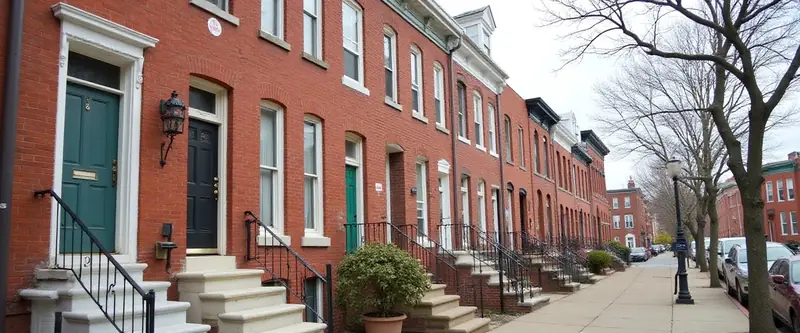
Philadelphia is one of the most profitable flipping markets in the country on paper. ATTOM's report on the second quarter of 2026 put the typical gross flipping margin in the Philadelphia metro at 62.8 percent, fifth among large metros and nearly three times the national figure of 21.5 percent. Rowhouses bought cheaply, renovated and sold to a steady stream of buyers can still produce real profit here.
Gross margin is the gap between the purchase price and the resale price, before renovation, points, interest, insurance, taxes and commissions. In Philadelphia two local costs take a larger share of that gap than they would almost anywhere else: the transfer tax and the paperwork that comes with renting.
The financing side works on the same terms as elsewhere. Take a rowhouse bought for $150,000 with $60,000 of work and an after-repair value of $300,000. Seventy percent of $300,000 is $210,000, which would cover the whole cost under our lending partners' standard limits of 100 percent of cost and 70 percent of after-repair value. Leverage still depends on your documented experience and on the property, so confirm the maximum loan for your Philadelphia address with the lender before you go under contract.
The transfer tax is 4.578 percent
The city's realty transfer tax rose on July 1, 2025 to 3.578 percent for the city plus 1 percent for Pennsylvania: 4.578 percent of the price in total, one of the highest rates in the country. By custom it is split between buyer and seller, though the city can collect all of it from either side.
On that same flip, your buyer's half at purchase is about $3,430 and your seller's half at resale is about $6,870: roughly $10,300 in transfer tax on one project. Across the city line in Delaware, Montgomery, Bucks or Chester County, the combined rate is usually far lower, so a suburban rowhouse or twin with a thinner spread can net the same money. Check the exact rate for the municipality and school district.
Renting in Philadelphia takes paperwork
Philadelphia regulates rentals more closely than most cities. Anyone renting a housing unit needs a Housing Rental License. Before a new tenant moves in, the landlord must give them a Certificate of Rental Suitability issued by Licenses and Inspections no more than 60 days before the lease starts. For properties built before 1978, which describes much of the city, the landlord also needs a lead-safe or lead-free certificate from a state-certified lead inspector or certified dust-wipe technician, based on an inspection no more than four years old, submitted to the Department of Public Health. Missing paperwork can keep a landlord from collecting rent or evicting.
For an investor who plans to hold, build those steps into the renovation: schedule the lead dust-wipe test after the work is done and before the tenant signs, and apply for the license early. A rental with its license and certifications in place is also a cleaner file for a DSCR loan, which qualifies on the rent.
Have a deal on the table?
Send the address, the numbers and your exit. Our lending partner's team reviews it and tells you whether it fits and on what terms. The lender makes every credit decision.
Property tax and the 2027 values
Philadelphia's real estate tax rate is 1.3998 percent of assessed value, a rate unchanged since 2016: 0.6159 percent for the city and 0.7839 percent for the School District. The Office of Property Assessment mailed new tax year 2027 values in summer 2026, effective January 1, 2027.
Look up the property's 2027 assessed value on the city's property site and multiply by 1.3998 percent. That, not the seller's old bill, is the figure for a rental budget and a DSCR payment. Homestead relief applies only to an owner-occupant, so an investor should not count on it.
Our lending partners' terms around Philadelphia
Fix and flip and bridge loans: standard pricing starts at 12.99 percent plus 2.99 points. Loans start at $50,000 with a 600 minimum credit score, and cover up to 100 percent of cost but no more than 70 percent of after-repair value, whichever comes first. Leverage depends on experience documented over the past three years. Loyalty pricing of 10.99 percent plus 1.99 points applies only after two loans have been paid off with the lending partner in good standing.
DSCR rental loans: no minimum credit score, from $75,000 to $2 million, up to 80 percent of value on a purchase or rate-and-term refinance.
Loans are for non-owner-occupied investment property and close in an entity such as an LLC or corporation. The lender decides each file and confirms the terms for your property, including the maximum leverage on a Philadelphia County address, before you commit.
Holding a Philadelphia rental? Our two free landlord books compare what a rental costs to carry across twelve states, including Pennsylvania.
Send it through the form above and our lending partner's team will tell you which program fits.
Related guides
Pennsylvania · Pittsburgh · Fix and flip loans near you · Delaware · Maryland · DSCR rental loans
Get your deal reviewed
Answer these and your deal goes to our lending partner's team, who will contact you about whether it is fundable and on what terms. By sending it you agree to your details being shared with them. Investment property only: our lending partners do not finance a home you will live in.
Got it.
Thank you. Your details are on their way to our lending partner's team, who will contact you shortly.
Questions Philadelphia investors ask
Can I get a hard money loan to flip a Philadelphia rowhouse?
Yes, for non-owner-occupied investment property. Our lending partners' short-term loans start at $50,000 with a 600 minimum credit score, priced from 12.99 percent plus 2.99 points, up to 100 percent of cost and 70 percent of after-repair value. Confirm the maximum leverage for your Philadelphia address with the lender, who decides each file.
How much is the Philadelphia transfer tax?
Since July 1, 2025, 4.578 percent of the price: 3.578 percent for the city and 1 percent for Pennsylvania. It is customarily split between buyer and seller, so a flip pays about half going in and half coming out.
Are Philadelphia flip margins still good in 2026?
On gross numbers, yes. ATTOM put the typical gross flipping margin in the Philadelphia metro at 62.8 percent in the second quarter of 2026, fifth among large metros. Gross margin is before renovation, financing, taxes and selling costs, and the transfer tax takes a real share.
Do I need a rental license to rent out a house in Philadelphia?
Yes. You need a Housing Rental License, a Certificate of Rental Suitability for each new tenant, and for most properties built before 1978, a lead-safe or lead-free certificate based on an inspection no more than four years old.
What property tax will I pay on a Philadelphia rental?
The rate is 1.3998 percent of assessed value. Use the property's new tax year 2027 assessment from the city's property site, not the seller's old bill.
Is the transfer tax lower in the Philadelphia suburbs?
Usually, yes. Municipalities in Delaware, Montgomery, Bucks and Chester counties generally charge far less than the city's 3.578 percent local share. Check the exact rate for the municipality and school district before you offer.
Sources
- ATTOM, Q2 2026 home flipping report, the 62.8 percent Philadelphia margin and 21.5 percent national margin (accessed Oct 2026)
- City of Philadelphia, Philly's realty transfer tax rate is now 4.578%, the rate effective July 1, 2025 (accessed Oct 2026)
- City of Philadelphia, Realty transfer tax, how the tax is charged and collected (accessed Oct 2026)
- City of Philadelphia, Rent your property long term, the Housing Rental License, Certificate of Rental Suitability and lead certification (accessed Oct 2026)
- City of Philadelphia, Learn how to lower your property tax bill ahead of the 2027 valuations, the 1.3998 percent rate and its city and school shares (accessed Oct 2026)
- City of Philadelphia, 2027 property assessments mailed, tax year 2027 values (accessed Oct 2026)
Dominion Hard Money does not lend its own funds; it arranges financing through third-party lending partners. All financing is arranged for business purposes only and secured by non-owner-occupied investment property. Not a commitment to lend. All loans subject to underwriting, property review, and approval by the lender. Terms vary by property, borrower experience, and exit strategy.