
The first number in a Chicago deal is the county, not the price
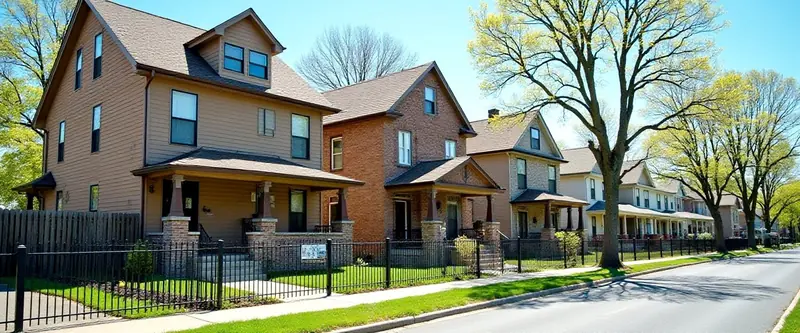
Most investors searching for hard money lenders in Chicago arrive with a two-flat, a frame cottage or a brick bungalow and a rehab budget. Before any of that matters, check one line on the property record: the county. Almost all of Chicago sits in Cook County, and Cook County is one of the counties where our lending partner caps leverage at 50 percent of value.
That single rule changes the whole plan. Across most of the country, the lending partner's fix and flip loans can cover up to 100 percent of cost, capped at 70 percent of the after-repair value. In Cook County that 70 percent figure does not apply. The loan stops at half of value, so the cash you bring is often several times what the same deal would need in DuPage or Will County, or across the state line in Indiana.
None of this makes Chicago a bad place to invest. It means a Chicago flip is planned around equity and cash, not around borrowed money, and the investors who do well here know that before they write the offer.
Plan the cash first: a Cook County worked example
Take a Chicago two-flat bought for $300,000, with $80,000 of renovation and an after-repair value of $480,000. Total cost is $380,000.
- Under the standard program outside the capped counties: 70 percent of $480,000 is $336,000. That is less than the $380,000 cost, so $336,000 is the most the loan could be, and the investor brings $44,000 plus closing costs, taxes and carrying costs.
- In Cook County at 50 percent of value: if the lender measures against the $480,000 after-repair value, half is $240,000, and the investor brings $140,000 before closing costs. If it measures against the $300,000 purchase value instead, half is $150,000 and the cash needed climbs to $230,000.
Ask the lender which value it will use for your file before you sign a contract. Then decide whether the deal still works with that much of your own money in it, and for how long. A Chicago plan built this way usually looks like one of three things: a buyer with real savings or a partner, a lighter cosmetic project where the cost is close to the purchase price, or a hold where the property is refinanced into a long-term rental loan after the work is done.
Keep at least $15,000 in reserves on top of all of it, since borrowers generally need to show that much. The lender decides every file and confirms the loan size for your address.
Why so many Chicago deals are two-flats and three-flats
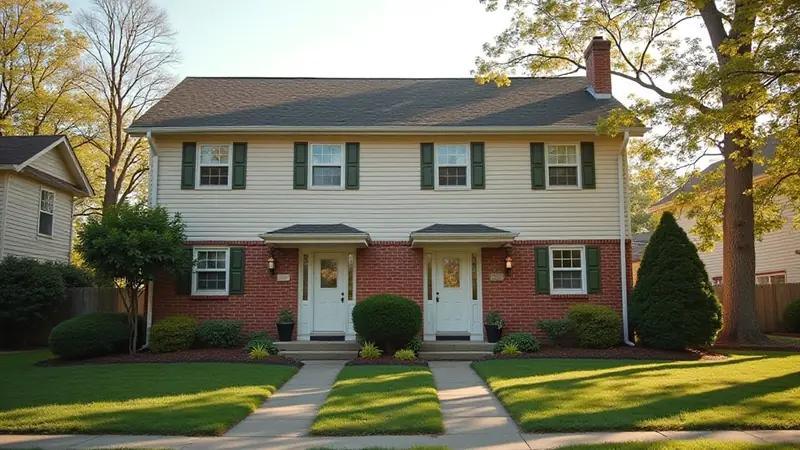
Chicago is a city of small apartment buildings. DePaul University's Institute for Housing Studies found that buildings with two to four units made up about 35 percent of the city's rental housing supply, and that the city lost more than 4,800 of them between 2013 and 2019. For an investor, that makes each remaining two-flat or three-flat part of a shrinking supply.
That is why these buildings attract investors, and why they are worth more as rentals than as quick flips under a 50 percent cap. A renovated two-flat that rents both units can be refinanced into a DSCR loan, which our lending partner sizes up to 80 percent of value with no minimum credit score. The Cook County cap is described for leverage generally, so confirm with the lender how it applies to a rental loan on your address before you count on that refinance.
One more check before you price a small building: the city's zoning certification. When a residential property with five or fewer dwelling units is sold in Chicago, a Certificate of Zoning Compliance confirming the number of legal units is required, and the filing fee is $120. If the listing shows three units and zoning allows two, underwrite the rent on two.
Working a Chicago two-flat or bungalow?
Send the address, the price, the renovation budget and the cash you plan to bring. Our lending partner's team will look at it with Cook County's leverage rule in mind and tell you whether it fits. Every credit decision is the lender's.
Three layers of transfer tax, on both ends of a flip
A Chicago sale is stamped by the city, the county and the state. The City of Chicago's Real Property Transfer Tax totals $5.25 per $500 of the price. In general the buyer pays $3.75 per $500, and the seller pays the $1.50 per $500 transit portion. The seller is also primarily liable for the Illinois tax of 50 cents per $500 and the Cook County tax of 25 cents per $500.
A flip pays the buyer's share going in and the seller's share coming out. On the example above:
- Buying at $300,000: the city buyer tax is $2,250.
- Selling at $480,000: the city transit portion is $1,440, the state tax $480 and the county tax $240, for $2,160.
- Total across both closings: $4,410 in transfer taxes on one project.
You may have read about a tiered "mansion tax" on Chicago sales. The Bring Chicago Home measure would have raised the city rate on higher-priced sales, but it was defeated at the March 2024 ballot, and the city's published rates remain flat.
Two paperwork items can hold up a Chicago closing. The city will not issue transfer stamps without a Full Payment Certificate showing the water and utility account is paid, and the Department of Finance says to allow up to 10 business days for one. The zoning certificate above is the other. Order both early so the lender's closing date is not the one that slips.
The property tax a Chicago rental really pays
Cook County assesses residential property at 10 percent of market value, then multiplies that by a state equalization factor to reach the value that is taxed. The county reassesses on a three-year cycle by region. The City of Chicago was reassessed in 2024 and is next scheduled for 2027, so a property you buy now and hold will likely be revalued during your ownership.
Two more details catch out new investors. The homeowner exemption, which lowers the taxed value by $10,000, is only for an owner who lives in the home as a principal residence, so a seller's bill that includes it understates what your rental will pay. And the first installment each year is 55 percent of the previous year's total, with the second installment carrying any increase, so a jump in taxes can land late in the year.
Budget the tax on the renovated value with no owner exemptions. If you plan a DSCR refinance, that higher tax line is part of the payment the rent has to cover.

An empty building has its own clock in Chicago
Many rehab properties are vacant when you buy them, and Chicago treats that as something to register. For a single-family home or a building with fewer than 10 units, the city considers it vacant when no one is legally living there and no former occupant intends to return within six months. A vacant building must be registered within 30 days.
Registration carries a fee of $250 to $500, must be renewed every six months, and requires proof of liability insurance. The owner must secure every opening, post a sign visible from the street with the owner's contact details and registration number, and visit to keep the property clean and secure. If permitted construction stops, the site must be registered as a vacant building within 30 days. Deregister within 20 days once the building is reoccupied or sold.
Put the fee, the insurance and the site visits in the budget, and keep the renovation moving. A stalled job costs carrying interest and can add a registration you were not planning on.
Renting it out: the city's landlord ordinance comes with the building
Chicago's Residential Landlord and Tenant Ordinance covers most rental units in the city. The main exception that matters to small-building owners is an owner-occupied building with six or fewer units, and an investor property is not owner-occupied. Our lending partner only finances non-owner-occupied investment property, so expect the ordinance to apply to anything you rent out with this financing.
The rules most likely to cost a new landlord money are about deposits. The city's summary says a deposit must be returned, less unpaid rent and damage, within 45 days of move-out, and interest must be paid each year on deposits held more than six months. If a landlord does not follow the deposit rules, the tenant can be awarded two times the deposit plus interest. The city's summary of the ordinance must also be attached to every written lease and renewal offer.
What the Chicago market is doing in 2026
Chicago's prices are still rising while the number of homes for sale keeps falling. Illinois REALTORS reported a City of Chicago median sale price of $405,000 in August 2026, up 8.0 percent on a year earlier. Closed sales dipped 2.7 percent to 1,907, and only 3,541 homes were for sale, down 23.3 percent. The Chicago Association of REALTORS president called the market competitive.
For a flipper, low inventory supports resale prices but makes discounted purchases harder to find. For a landlord, it means renovated units are scarce. Either way, price your after-repair value from renovated sales of the same building type on nearby blocks. A citywide median mixes condos, bungalows and greystones, and tells you little about one address.
Our lending partner's terms for Chicago deals
Dominion Hard Money does not lend its own funds; it arranges financing through third-party lending partners.
Fix and flip and bridge loans: standard pricing begins at 12.99 percent interest plus 2.99 points, interest only. Loans start at $50,000 and need a minimum 600 credit score. Outside the capped counties they can cover up to 100 percent of cost, capped at 70 percent of after-repair value. Loyalty pricing of 10.99 percent plus 1.99 points is available only after two loans have been paid off with the lending partner in good standing.
DSCR rental loans: $75,000 to $2 million, up to 80 percent of value, with no minimum credit score.
Cook County: leverage is capped at 50 percent of value, so the 70 percent after-repair figure does not apply to Chicago addresses in Cook County. Plan for more cash in the deal.
Properties need an after-repair value of at least $100,000, borrowers generally show at least $15,000 in reserves, and the borrower must be an LLC, corporation or trust. Eligible property is non-owner-occupied: single-family homes, condos, townhomes and buildings of one to four units. The lender decides every file and confirms terms for your property before you commit.
Planning to hold a Chicago two-flat as a rental? Our two free landlord books compare what a rental costs to carry across twelve states, and walk through taxes, insurance and repairs line by line.
Send it through the form below with the cash you can bring, and our lending partner's team will tell you which program fits.
Related guides
Illinois · Indianapolis · Cleveland · Philadelphia · Columbus · Fix and flip loans · DSCR rental loans · Rates and terms
Get your deal reviewed
Answer these and your deal goes to our lending partner's team, who will contact you about whether it is fundable and on what terms. By sending it you agree to your details being shared with them. Investment property only: our lending partners do not finance a home you will live in.
Got it.
Thank you. Your details are on their way to our lending partner's team, who will contact you shortly.
Questions Chicago investors ask
How much do hard money lenders in Chicago charge?
Our lending partner's standard pricing on fix and flip and bridge loans begins at 12.99 percent interest plus 2.99 points, interest only. Lower loyalty pricing applies only after two loans have been paid off with the lender. In Chicago, also budget the city's buyer transfer tax of $3.75 per $500 of the price.
How much cash do I need for a Chicago hard money loan?
More than in most markets. Chicago is in Cook County, where our lending partner caps leverage at 50 percent of value, so the usual 70 percent of after-repair value does not apply. Plan to bring the rest of the cost yourself, plus closing costs and at least $15,000 in reserves.
Do hard money lenders check credit?
Our lending partner does. Fix and flip and bridge loans need a minimum credit score of 600. The DSCR rental program has no minimum credit score, because it qualifies on the property's rent, but the lender still reviews the file.
Is hard money lending legal in Illinois?
Yes. Hard money is private, business-purpose lending secured by investment real estate. Our lending partner finances non-owner-occupied investment property held in an LLC, corporation or trust, not a home you will live in. Dominion Hard Money does not lend its own funds.
Are hard money loans dangerous?
They carry more risk than a bank mortgage because they are short-term, interest-only and priced higher. The danger is running out of cash or time. In Cook County, where leverage is capped at 50 percent, a realistic budget, reserves and a clear exit matter even more.
Sources
- City of Chicago, Real Property Transfer Tax, the $5.25 per $500 total, the $3.75 buyer and $1.50 seller transit portions (accessed Oct 2026)
- Illinois Compiled Statutes, 35 ILCS 200/31-10, the state transfer tax of 50 cents per $500 (accessed Oct 2026)
- Illinois Department of Revenue, Real estate transfer tax, the county tax of 25 cents per $500 (accessed Oct 2026)
- Chicago Title, Transfer tax list (July 1, 2026), Cook County's 25 cent rate, seller liability for state and county taxes, and Chicago's buyer and seller rates (accessed Oct 2026)
- Chicago Association of REALTORS, Real estate transfer tax, the proposed tiered rates and the defeat of the March 2024 referendum (accessed Oct 2026)
- City of Chicago, Full Payment Certificates, the certificate needed for transfer stamps and the 10 business day processing guidance (accessed Oct 2026)
- City of Chicago, Certificate of Zoning Compliance, the requirement for residential sales of five or fewer units and the $120 fee (accessed Oct 2026)
- Cook County Assessor, Your assessment notice and tax bill, the 10 percent residential assessment level, the state equalizer and the 55 percent first installment (accessed Oct 2026)
- Cook County Assessor, The Cook County property tax system, the triennial cycle and Chicago's 2024 and 2027 reassessment years (accessed Oct 2026)
- Cook County Assessor, Homeowner exemption, the principal residence requirement and the $10,000 reduction (accessed Oct 2026)
- City of Chicago, Vacant buildings FAQ, the vacancy definition, 30 day registration, fees, six month renewal, insurance and deregistration (accessed Oct 2026)
- City of Chicago, Residential Landlord and Tenant Ordinance summary (revised December 2023), exclusions, the 45 day deposit return, the two times deposit penalty and the lease attachment rule (accessed Oct 2026)
- City of Chicago, Security deposit interest notice, annual interest on deposits held more than six months (accessed Oct 2026)
- DePaul Institute for Housing Studies, Patterns of lost 2 to 4 unit buildings in Chicago, the 35 percent rental share and the 4,800 buildings lost from 2013 to 2019 (accessed Oct 2026)
- Illinois REALTORS, August 2026 home sales report, Chicago median price, closed sales and inventory (accessed Oct 2026)