
A big, spread-out market
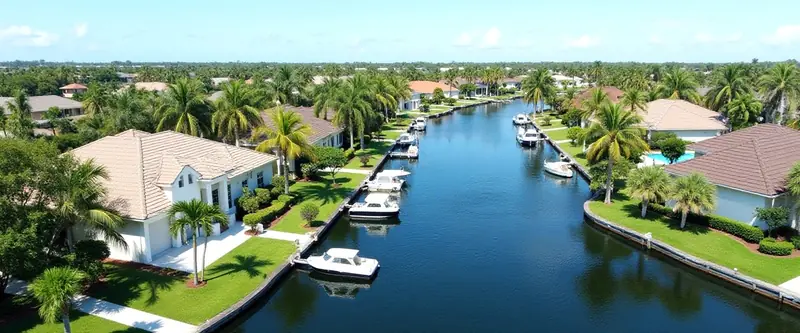
Jacksonville is the largest city by land area in the continental United States, because the city and Duval County consolidated into one government in 1968. The wider metro, with Clay, St. Johns and Nassau counties, runs from older urban neighborhoods to beach towns to new suburbs.
That size is part of the opportunity: prices vary a great deal from neighborhood to neighborhood, and the renter base is broad, including military households tied to Naval Air Station Jacksonville and Naval Station Mayport. It is also why the property-level checks matter more here than in a compact city. Two houses at the same price can carry very different insurance bills depending on how close they sit to the river, a creek or the marsh.
Check the water first
Jacksonville sits on the St. Johns River, the Intracoastal Waterway and the Atlantic, with a great deal of low-lying land and tidal creeks in between. A property in a mapped high-risk flood zone will need flood insurance for any lender, and wind coverage is a significant cost across coastal Northeast Florida.
Look up the flood zone before you make an offer, and get actual flood and homeowners quotes during your inspection period. If the house will be insured through Citizens, Florida's insurer of last resort, plan on a flood policy even outside a mapped zone: the Legislature's phased requirement reaches all Citizens personal residential policies with wind coverage by January 1, 2027.
For a rental on a DSCR loan, both premiums go into the payment the rent has to cover, and in some Jacksonville neighborhoods they decide whether the deal works.
Florida landlord rules, flood disclosure and the squatter law
Unpaid rent: a three-day notice to pay or leave, counting business days only, before an eviction filing.
Security deposits: returned within 15 days if the landlord makes no claim, or a written notice of claim sent by certified mail within 30 days.
Flood disclosure to tenants. For leases of one year or longer signed since October 1, 2025, a Florida landlord must hand the tenant a separate flood disclosure covering known flooding, flood insurance claims and federal flood assistance during the landlord's ownership. In a river and coastal city, keep records of every claim.
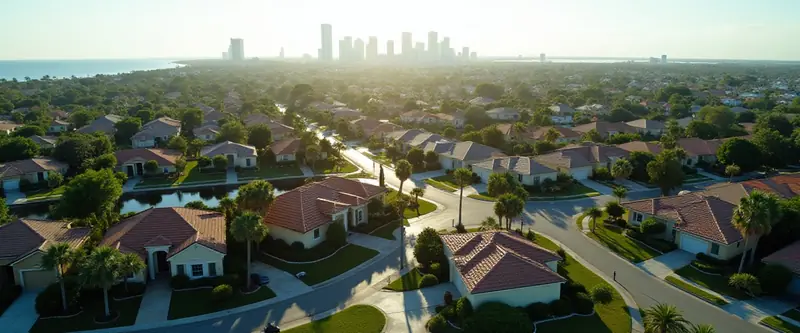
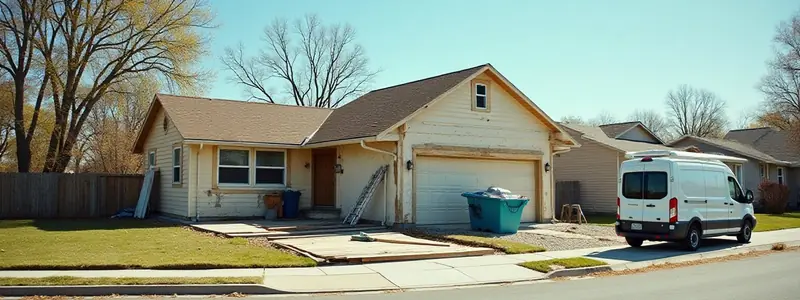
Squatters. A 2024 Florida law lets a property owner ask the county sheriff to remove unauthorized occupants from a residential property quickly, if the conditions in the statute are met, rather than going through a full eviction. For an investor holding a vacant house during a renovation, that is a meaningful protection. Keep the house secured and visited anyway.
Have a deal on the table?
Send the address, the numbers and your exit. Our lending partner's team reviews it and tells you whether it fits and on what terms. The lender makes every credit decision.
Florida's taxes on the deal
On the loan: documentary stamp tax of 35 cents per $100 on the note and a 0.2 percent intangible tax on the mortgage, usually paid by the borrower. On a $200,000 hard money loan that is about $700 plus $400.
On the deed: 70 cents per $100 of price, customarily paid by the seller outside Miami-Dade. On a $300,000 resale, $2,100.
Property tax: Florida's 10 percent annual limit on assessment increases for non-homestead property resets when the property changes hands, so estimate a rental's tax on what you paid, not on the seller's bill.
Our lending partners' terms in Jacksonville
Fix and flip, bridge and short-term construction: standard pricing starts at 12.99 percent plus 2.99 points. Loans start at $50,000 with a 600 minimum credit score, and cover up to 100 percent of cost but no more than 70 percent of after-repair value, whichever comes first. Leverage depends on documented experience over the past three years. Loyalty pricing of 10.99 percent plus 1.99 points applies only after two loans have been paid off with the lending partner in good standing.
DSCR rental loans: no minimum credit score, from $75,000 to $2 million, up to 80 percent of value on a purchase or rate-and-term refinance.
Loans are for non-owner-occupied investment property and close in an entity such as an LLC or corporation. The lender decides each file, and terms are confirmed for your property before you commit.
Holding a Jacksonville rental? Our two free landlord books compare what a rental costs to carry across twelve states, including Florida.
Send it through the form above and our lending partner's team will tell you which program fits.
Related guides
Florida · Orlando · Tampa · Georgia · DSCR rental loans
Get your deal reviewed
Answer these and your deal goes to our lending partner's team, who will contact you about whether it is fundable and on what terms. By sending it you agree to your details being shared with them. Investment property only: our lending partners do not finance a home you will live in.
Got it.
Thank you. Your details are on their way to our lending partner's team, who will contact you shortly.
Questions Jacksonville investors ask
Can I get a hard money loan in Jacksonville?
Yes, for non-owner-occupied investment property. Our lending partners' short-term loans start at $50,000 with a 600 minimum credit score, priced from 12.99 percent plus 2.99 points. The lender decides each file.
Do I need flood insurance for a Jacksonville rental?
In a mapped high-risk flood zone, a lender will require it. Outside one, you may still need it if the house is insured through Citizens, whose flood requirement reaches all personal residential policies with wind coverage by January 1, 2027. Get quotes during your inspection period.
How fast can I start an eviction in Florida for unpaid rent?
After a three-day notice to pay or leave that counts only business days, excluding weekends and legal holidays.
How long do I have to return a security deposit in Florida?
Fifteen days if you make no claim on it, or 30 days to send written notice of a claim by certified mail, after which the tenant has 15 days to object.
Can the sheriff remove squatters from my vacant Jacksonville rehab?
Under a 2024 Florida law, an owner can ask the county sheriff to remove unauthorized occupants from a residential property quickly, if the statute's conditions are met, instead of going through a full eviction.
What Florida taxes come with a hard money loan?
Documentary stamp tax of 35 cents per $100 on the note and an intangible tax of 0.2 percent on the mortgage, usually paid by the borrower. On a $200,000 loan, that is about $700 plus $400.
Sources
- Citizens Property Insurance, Flood insurance requirement, the phased flood coverage requirement for Citizens policies (accessed Oct 2026)
- News4JAX, Flood insurance will be mandatory for most Citizens policyholders by 2027, the January 1, 2027 final phase (accessed Oct 2026)
- Florida Statutes section 83.512, the landlord flood disclosure for leases of one year or longer (accessed Oct 2026)
- Florida Statutes section 83.56, the three-day notice for nonpayment of rent (accessed Oct 2026)
- Florida Statutes section 83.49, security deposit return and notice of claim (accessed Oct 2026)
- Florida Statutes section 82.036, removal of unauthorized persons from residential property (accessed Oct 2026)
- Florida Department of Revenue, Documentary stamp tax, the rates on deeds and notes (accessed Oct 2026)
- Florida Department of Revenue, Nonrecurring intangible tax, the 2 mill tax on mortgages (accessed Oct 2026)
- Florida Statutes section 193.1554, the 10 percent assessment limit on non-homestead residential property and its reset on change of ownership (accessed Oct 2026)
Dominion Hard Money does not lend its own funds; it arranges financing through third-party lending partners. All financing is arranged for business purposes only and secured by non-owner-occupied investment property. Not a commitment to lend. All loans subject to underwriting, property review, and approval by the lender. Terms vary by property, borrower experience, and exit strategy.