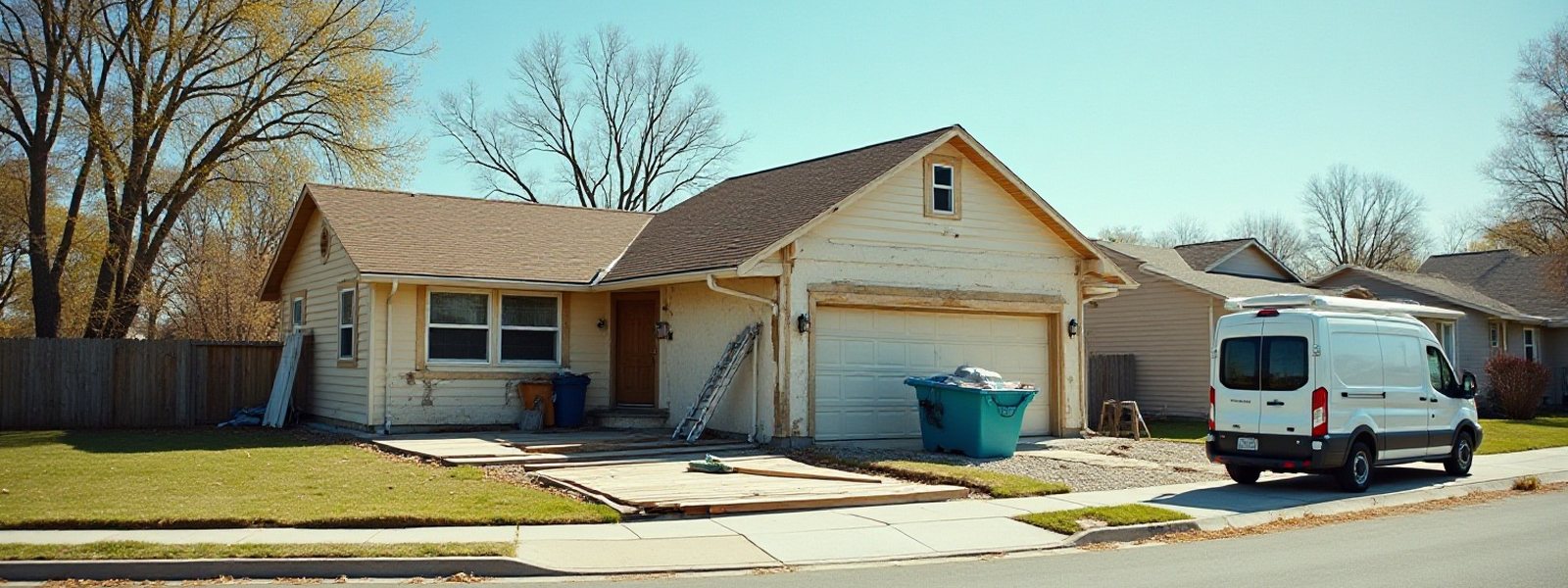
Cleveland is one of the busiest flipping markets in the country, with cheap entry prices and solid older houses. It is also inside one of the six counties where our lending partners lend only half of value, and the city requires lead-safe certification for older rentals. This page shows what those two rules do to a deal, where the county line changes the answer, and the Ohio rules that apply.
Cleveland is one of the most active flipping markets in the country. ATTOM's report on the first quarter of 2026 found that flips made up 12.1 percent of all home sales in the Cleveland metro, second only to Atlanta among metros of a million people or more. Low prices and old, solid housing draw investors from everywhere.
The financing catch is the county. Cuyahoga County, which holds Cleveland and its inner suburbs, is one of six counties where our lending partners' underwriting guidelines cap loans at 50 percent of value instead of the usual 70.
Take a house bought for $110,000 with $70,000 of work and an after-repair value of $260,000. Under the standard cap, 70 percent of $260,000 is $182,000, enough to cover the whole $180,000 cost. In Cuyahoga County, 50 percent is $130,000, so you bring $50,000 of the cost yourself, plus points and closing costs. That is the difference between a flip you can do with little cash and one that needs a real bankroll.
The cap stops at the county line. Lake, Lorain, Medina, Summit and Geauga counties are financed on standard terms, and Akron and Canton, an hour or less away, are busy flipping markets of their own.
Most of Cleveland's housing was built before 1978, and the city has made lead a condition of renting. Rental properties built before 1978 must obtain a Lead Safe Certificate, based on an inspection by a qualified inspector, and rentals must be registered with the city.
For an investor who plans to hold, that belongs in the renovation plan: the lead-safe work, the inspection and the registration before the first tenant moves in. For a flipper whose buyer is a landlord, a house that already has its certificate is worth more to that buyer. Either way, any renovation crew working on a pre-1978 Cleveland house needs to follow lead-safe work practices.

Evictions: a three-day written notice to leave, then a case in municipal or county court.
Security deposits: no cap, but the deposit and an itemized list of deductions must go back within 30 days after the tenancy ends, and part of a larger deposit held six months or more can earn the tenant interest.
Property tax: Ohio taxes 35 percent of a property's appraised value, and counties reappraise on a set cycle. A 2022 state law sharply limited school districts' ability to challenge a property's value, which makes Ohio friendlier to buyers than Pennsylvania on this point. Estimate taxes on the county auditor's current value, not an old listing figure.
Conveyance fee: Ohio charges a conveyance fee on each sale, set by county at up to $4 per $1,000 of value, customarily paid by the seller. Small next to Pennsylvania's transfer taxes.
In Cuyahoga County: leverage is capped at 50 percent of value under our lending partners' guidelines.
In the surrounding counties, fix and flip and bridge loans: from $50,000, up to 100 percent of cost but no more than 70 percent of after-repair value, with a 600 minimum credit score. Standard pricing under the underwriting guidelines is 12.99 percent and 2.99 points. The 10.99 percent starting rate is available after two loans have been paid off in good standing with our lending partner; a first-time borrower should expect to start above it and earn the way down.
DSCR rental loans: $75,000 to $2 million at up to 80 percent of value outside the capped county, qualified on the rent.
All loans also require an after-repair value of at least $100,000, which rules out some of Cleveland's lowest-priced streets. Loans close in an entity such as an LLC, and every owner of 30 percent or more personally guarantees the loan. Terms change, so we confirm them for your property before you commit.
Yes, with a lower leverage limit than most places. Cuyahoga County, which includes Cleveland, is one of six counties where our lending partners cap loans at 50 percent of value instead of the usual 70. Neighboring counties such as Lake, Lorain, Medina, Summit and Geauga are not on that list.
Very. ATTOM's report on the first quarter of 2026 put flips at 12.1 percent of all home sales in the Cleveland metro, second only to Atlanta among metros of a million people or more. You are competing with many other investors for the same houses.
Most do. Cleveland requires rental properties built before 1978 to obtain a Lead Safe Certificate, based on an inspection by a qualified inspector, and to register as rentals with the city. Plan the inspection and any lead work into your renovation.
Ohio does not cap the amount. A landlord must return the deposit, with an itemized list of deductions, within 30 days after the tenancy ends, and may owe interest on part of a deposit that is larger than one month's rent or $50 and held for six months or more.
A three-day written notice to leave the premises before filing an eviction case in municipal or county court.
If it is outside Cuyahoga County, generally yes. Properties in Lake, Lorain, Medina, Summit and Geauga counties can be financed up to 100 percent of cost and 70 percent of after-repair value, subject to the rest of our lending partners' guidelines.
Holding a Cleveland rental? Our two free landlord books compare what a rental costs to carry across twelve states, including Ohio.
Answer these and your deal goes to our lending partner's team, who will contact you about whether it is fundable and on what terms. By sending it you agree to your details being shared with them. Investment property only — our lending partners do not finance a home you will live in.
Thank you. Your details are on their way to our lending partner's team, who will contact you shortly.
Dominion Hard Money does not lend its own funds; it arranges financing through third-party lending partners. All financing is arranged for business purposes only and secured by non-owner-occupied investment property. Not a commitment to lend. All loans subject to underwriting, property review, and approval by the lender. Terms vary by property, borrower experience, and exit strategy.
Ohio · How county lines change a loan · Pittsburgh · Michigan · DSCR rental loans