
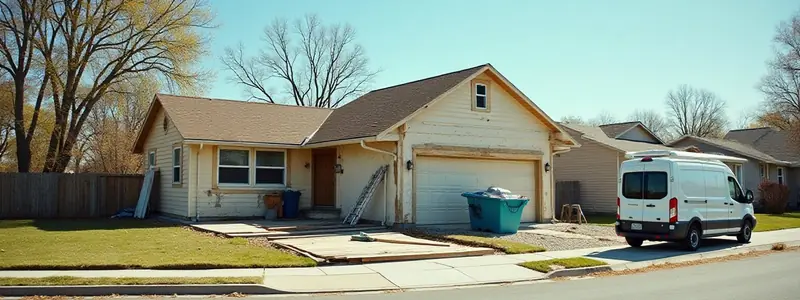
Builder sentiment is at its worst reading since the last housing bust was still unwinding. The NAHB/Wells Fargo Housing Market Index fell three points to 29 in October 2026, according to the National Association of Home Builders, which released the number on October 19. Anything below 50 means more builders call conditions poor than good. The last time the index was this low was June 2012.
That matters to you even if you never pour a foundation. Builders are the most price-flexible sellers in any market, they sit on the same buyer pool you do, and when they get pessimistic they do not wait. They discount. Your resale exit this quarter is being priced against whatever the builder three miles away is willing to give away.

What builders are actually doing right now
The October survey found 43 percent of builders cut prices, the highest share in the 2020 to 2026 period. The average cut held at 6 percent for the seventh straight month. Sixty-five percent used sales incentives, the nineteenth consecutive month in which at least 60 percent did.
The components underneath the headline are worse than the headline. Current sales conditions fell two points to 33. Sales expectations for the next six months dropped five points to 32. Traffic of prospective buyers fell five points to 18. A traffic reading of 18 is not a soft market. It is an empty model home on a Saturday.
The rate backdrop explains most of it. Freddie Mac's Primary Mortgage Market Survey put the 30-year fixed at 7.32 percent on October 22, 2026, down from 7.40 percent the week before. Eight basis points of relief does not move a payment-constrained buyer.
The incentive problem in your comps
Here is the underwriting trap. A builder's 6 percent price cut shows up in the recorded sale price. A builder's incentive package often does not. Rate buydowns, closing cost credits, paid HOA dues and free upgrades all come off the buyer's real cost without touching the number your appraiser pulls.
So when you run new-construction comps for a flip or a BRRRR refinance, the recorded prices are overstating the true market. The buyer comparing your rehabbed 1998 colonial to a new build down the street is comparing your asking price to the builder's net price, not the builder's recorded price. Two practical moves:
- Call the sales office in any subdivision within your comp radius and ask what the current incentive is in dollars. Write it down with the date. Subtract it from the new-construction comps before you set ARV.
- Assume you cannot match a 2-1 buydown. You are a one-off seller without a mortgage affiliate. Price the gap instead of trying to close it with concessions at the table.
- Shorten your marketing time assumption. Competing against 65 percent incentive usage, days on market stretches, and carry at hard money rates compounds fast.
The pipeline for 2027 is thinning
The supply side cuts the other direction over a longer horizon. The Census Bureau and HUD reported on October 20, 2026 that privately owned housing starts ran at a seasonally adjusted annual rate of 1,221,000 in September 2026, down 5.2 percent from August and 7.4 percent below September 2025. Single-family starts fell 4.6 percent to 859,000, the lowest in a year. Single-family permits came in at 845,000, down 4.8 percent from a year earlier.
Completions are the number to watch. September completions ran at 1,192,000, which is 14 percent below September 2025. Multifamily completions were at a 339,000 rate with 677,000 units still under construction. Apartment deliveries have been the main thing holding rent growth down in Sun Belt metros. That wave is receding.
Translation for a rental hold: today's rent comps reflect peak delivery. Deliveries in late 2027 will not. If your five-year model assumes flat rents because the last two years were flat, you are extrapolating a supply condition that is already reversing. Underwrite today's rent for year one and be honest that years three through five have more upside than the last two years suggest.
New-home inventory is still heavy
None of that helps your exit this quarter. Census and HUD reported on October 27, 2026 that new single-family home sales ran at a 676,000 annual rate in September, 5.3 percent below a year earlier, with 476,000 homes for sale. That is 8.4 months of supply against a normal range of four to six. Median new-home price was $400,400, down 3.9 percent year over year.
Eight and a half months of standing new inventory is the reason the discounting is happening and the reason it continues into spring. Builders carry that inventory on bank lines with covenants. They will clear it.
Ground-up underwriting got harder, not easier
If you build spec, the credit side deserves a hard look. NAHB's AD&C Financing Survey for the second quarter of 2026, published in August, posted a net easing index of -12.0, the eighteenth consecutive quarter of reported tightening. Among builders who said credit tightened, 53 percent said lenders required personal guarantees or collateral unrelated to the project. Forty-seven percent each cited higher interest rates, lower loan-to-value or loan-to-cost ratios, and outright refusal to lend.
Collateral outside the project is the line to read twice. It converts a single bad spec into a balance-sheet event. If a term sheet reaches past the subject property, price that risk or restructure the deal.
What to change this month
- Haircut new-construction comps by the current incentive, in dollars, verified by phone.
- Add 30 days to your resale timeline in any submarket with active builder inventory, and carry the interest.
- Favor product builders do not make. Infill, small lots, older walkable neighborhoods, anything under the entry-level new-build price point.
- Treat 2027 rents as a different regime than 2026 rents, because the delivery pipeline says they are.
- Read guarantee language on any ground-up term sheet before you read the rate.
The short version: builders are losing the pricing fight right now, which hurts your exit, and they are building less, which helps your hold. Make sure the deal you sign this month is the kind that survives the first half and benefits from the second.
Ready to Work With a Team That's Built for Investors?
Submit your deal and get a straightforward review from a team that places investor financing every day.
Submit Your DealFigures come from the NAHB/Wells Fargo Housing Market Index released October 19, 2026, Census Bureau and HUD new residential construction and new residential sales releases dated October 20 and October 27, 2026, Freddie Mac's October 22, 2026 survey, and NAHB's second-quarter 2026 AD&C Financing Survey.