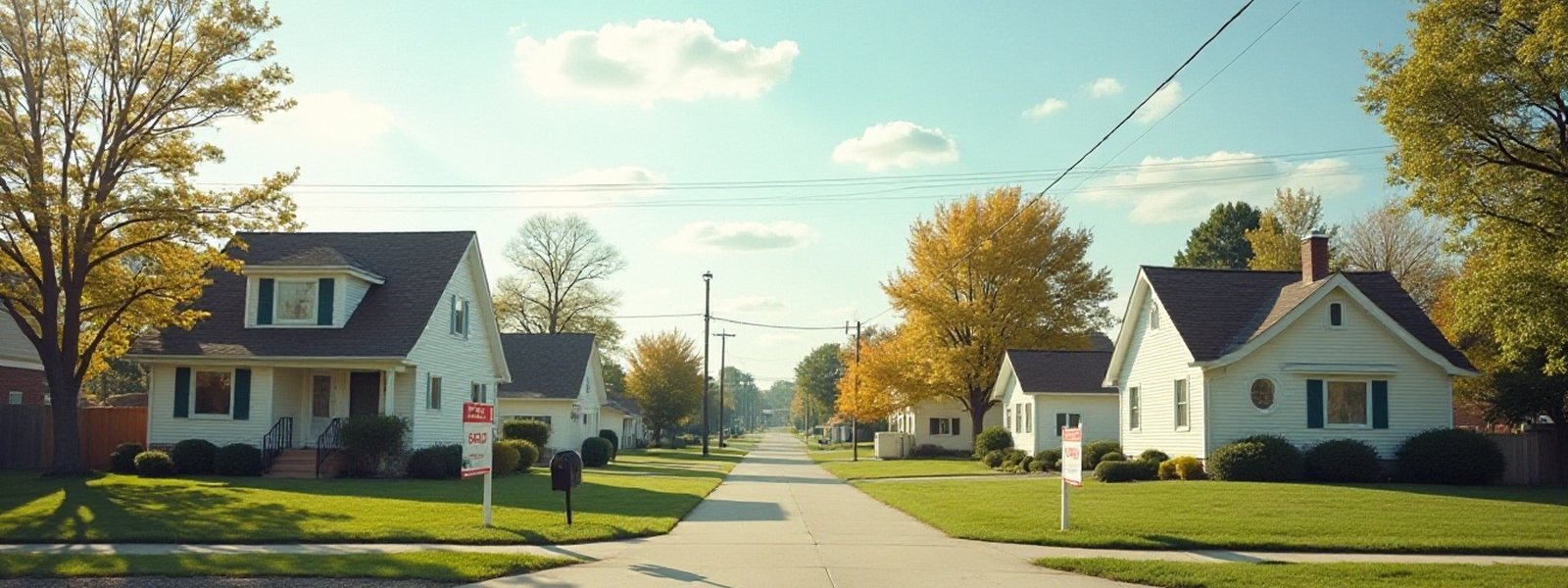
Southern New Hampshire is one of New England's steadier investor markets, close to Boston and financeable from Nashua to Portsmouth. Two state rules change the math: a transfer tax charged to both buyer and seller, and a good-cause requirement for ending most tenancies. This page covers both, where lending location rules apply, and our lending partners' terms.
Our lending partners' underwriting guidelines look for property within about 45 to 60 minutes of a metro area of 200,000 people or more. New Hampshire's southern tier is inside that range on two counts: the Manchester-Nashua metro, and the northern edge of the Boston metro.
Manchester and Nashua, with Bedford, Merrimack, Hudson, Londonderry and Derry.
The Seacoast and the Boston-facing towns: Portsmouth, Dover, Rochester, Exeter, Salem and Windham.
Concord, about half an hour north of Manchester.
Where it gets harder: the Lakes Region around Laconia sits near the edge of the hour, Keene is borderline, and the Upper Valley around Lebanon and Hanover and the North Country beyond the White Mountains are generally outside it. Check an address north of Concord before you commit. Two rules apply everywhere: a finished value of at least $100,000, which most of southern New Hampshire clears easily, and a lot of two acres or less, which excludes a good share of rural parcels.
New Hampshire has no general sales tax and no tax on wages, but it does tax real estate transfers, and it charges both sides. The rate is 75 cents per $100 of the price for the buyer and the same for the seller, 1.5 percent in total.
That matters on a flip, because you are the buyer at the start and the seller at the end. Buy for $300,000 and sell for $420,000, and your share is about $2,250 on the purchase and $3,150 on the sale: roughly $5,400 in transfer tax on one project. Put it in your numbers alongside commissions from the first day.
Property taxes are the other large cost. With no broad sales or income tax, New Hampshire relies heavily on property tax, and rates vary widely from town to town. Get the town's current rate and the latest bill for the exact address before you estimate a rental's holding costs or size a DSCR loan.
This is the New Hampshire rule most out-of-state investors do not expect. The state divides rental property into restricted and nonrestricted property. For restricted property, which covers most residential rentals, a landlord may end a tenancy only for a reason the statute lists: nonpayment, substantial damage, a lease violation, behavior that threatens health or safety, or other good cause, which can include a legitimate business reason. Some small rentals are nonrestricted and can be ended without cause. Check which category your property falls into before you plan to reposition a building.
Unpaid rent: a seven-day eviction notice after a demand for rent. The tenant can stop the eviction by paying everything owed plus a $15 fee, but only three times in 12 months.
Other lease violations: generally a 30-day notice that states the reason.
Security deposits: no more than one month's rent or $100, whichever is greater, returned within 30 days after the tenancy ends with an itemized list of deductions.
No New Hampshire county is on the list where our lending partners cap leverage at 50 percent, so standard terms apply wherever the location test is met. New Hampshire forecloses under a power of sale rather than through the courts.
Fix and flip and bridge loans: from $50,000, up to 100 percent of cost but no more than 70 percent of after-repair value, with a 600 minimum credit score. Standard pricing under the underwriting guidelines is 12.99 percent and 2.99 points. The 10.99 percent starting rate is available after two loans have been paid off in good standing with our lending partner; a first-time borrower should expect to start above it and earn the way down.
DSCR rental loans: $75,000 to $2 million at up to 80 percent of value, qualified on the rent, with rates from 5.99 percent on the program page.
Construction loans: $100,000 to $3 million on non-owner-occupied single-family homes, from 8.5 percent.
Loans close in an entity such as an LLC, and every owner of 30 percent or more personally guarantees the loan. Terms change, so we confirm them for your property before you commit.
Yes. New Hampshire is one of the states our lending partners finance in. The property must be non-owner-occupied, have an after-repair value of at least $100,000, and sit within roughly 45 to 60 minutes of a metro area of 200,000 people or more, which covers southern New Hampshire and the Seacoast.
New Hampshire's real estate transfer tax is 75 cents per $100 of the price, charged to both the buyer and the seller, so 1.5 percent in total. On a flip you pay the buyer's share when you buy and the seller's share when you sell.
For most rental property, yes. New Hampshire divides rentals into restricted and nonrestricted property, and for restricted property, which covers most residential rentals, a landlord may end a tenancy only for a reason listed in the statute, such as nonpayment, damage, a lease violation or other good cause.
With a seven-day eviction notice after a demand for rent. The tenant can stop the eviction by paying everything owed plus a $15 fee, but only three times in a 12-month period.
No more than one month's rent or $100, whichever is greater. The deposit must be returned within 30 days after the tenancy ends, with an itemized list of any deductions.
Check the exact address. Our lending partners' guidelines look for property within about 45 to 60 minutes of a metro area of 200,000 people or more. The Upper Valley and the North Country sit more than an hour from Manchester or the Boston metro, so many properties there fall outside the guideline.
Holding a New Hampshire rental? Our two free landlord books compare what a rental costs to carry across the states.
Answer these and your deal goes to our lending partner's team, who will contact you about whether it is fundable and on what terms. By sending it you agree to your details being shared with them. Investment property only — our lending partners do not finance a home you will live in.
Thank you. Your details are on their way to our lending partner's team, who will contact you shortly.
Dominion Hard Money does not lend its own funds; it arranges financing through third-party lending partners. All financing is arranged for business purposes only and secured by non-owner-occupied investment property. Not a commitment to lend. All loans subject to underwriting, property review, and approval by the lender. Terms vary by property, borrower experience, and exit strategy.
Massachusetts · Maine · Location rules for flip loans · DSCR rental loans · All states