
Two statutes that create liability for procedure
Two Massachusetts statutes impose liability for getting the procedure wrong, whatever the owner intended, and both of them hit exactly the older multifamily buildings investors want to buy.
The Lead Law
Massachusetts requires lead paint hazards to be removed or covered in any home built before 1978 where a child under six lives (General Laws chapter 111, section 197). Not disclosure, as under federal law: removal or covering, by licensed deleaders. A new owner of a pre-1978 home where a child under six lives or will live must have it deleaded or brought under interim control within 90 days of taking title.
The relief valve is a Letter of Interim Control. The owner addresses the urgent hazards right away and then has up to two years from the letter to fully remove or cover the rest. It buys time; it does not remove the obligation. On a triple-decker with an occupied unit, that letter can be the difference between a workable timeline and an impossible one.
Three things follow that surprise out-of-state buyers. You cannot refuse to rent to a family with young children because the property contains lead: that is discrimination. If deleading cannot be done safely with the unit occupied, the household must be relocated during the work. And an agreement in which the tenant accepts the lead paint does not protect you. If a child is poisoned by lead hazards in the home, the owner faces strict liability.
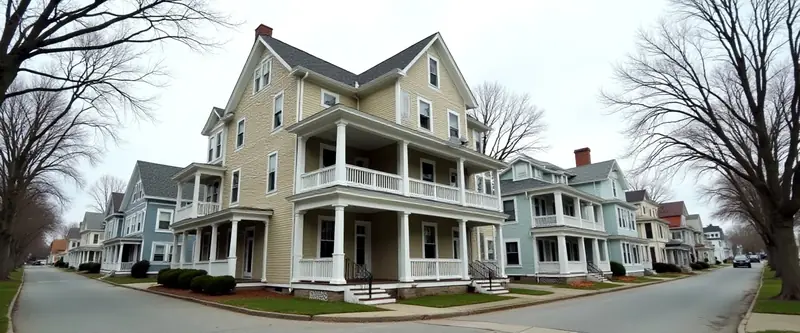
Weigh that against the housing stock. Triple-deckers and Victorians are what investors buy in Worcester, Springfield, New Bedford and Fall River, and nearly all of it predates 1978. The lead question is not an edge case. It is the normal condition of the asset.
The security deposit statute
Chapter 186, section 15B is among the strictest deposit laws in the country. The deposit is capped at one month's rent. It must sit in a separate interest-bearing account at a Massachusetts bank, beyond the reach of your creditors. A written statement of condition is due within ten days of move-in, interest is payable annually, and at the end of the tenancy you have thirty days to return the deposit or deliver an itemized statement of damages signed under the pains and penalties of perjury with written proof of the costs.
The penalty is severe but narrower than it is often described. Section 15B(7) makes treble damages plus interest, costs and attorney's fees mandatory for specific failures: not holding the deposit in a separate Massachusetts interest-bearing account, not returning it within thirty days, and not transferring it when the property is sold. In Phillips v. Equity Residential Management (2017), the Supreme Judicial Court held that the treble damages provision does not reach every violation of the act. A defective itemized list still forfeits your right to keep any of the deposit.
Which is why many experienced Massachusetts landlords simply do not take a security deposit at all. First month's rent, last month's rent and a lock fee are permitted and carry far less exposure.

Closing costs, property tax and foreclosure
The deeds excise. Massachusetts charges a deeds excise of $2.28 per $500 of consideration everywhere except Barnstable County, which sets its own rate (General Laws chapter 64D). The seller pays it, so on a flip you meet it at the resale: about $1,824 on a $400,000 sale outside the Cape.
Property tax and the residential exemption. Each city and town sets its own rate. Boston, Cambridge, Somerville and some other communities offer a residential exemption that cuts the bill on an owner's principal residence. A rental never gets it, and in those cities a two- or three-family that the seller lived in can carry a much larger bill once you own it as an investor. Ask the assessor what the bill will be without the exemption before you size a DSCR loan.
Foreclosure by power of sale. Massachusetts lenders generally foreclose outside court under the statutory power of sale (chapter 183, section 21), after a court proceeding that only checks the borrower's military status. There is no redemption period once the sale is complete, which shortens the risk window for a buyer at a foreclosure sale compared with judicial states.
Notice for unpaid rent. Ending a tenancy for nonpayment starts with a 14-day notice to quit (chapter 186, section 11), and a tenant at will can generally cure by paying what is owed. The eviction itself goes through the Housing Court or District Court.
Where the income deals are
Greater Boston prices are among the highest in the country, and rents have not kept pace with prices, so inner-ring purchases are usually appreciation and preservation plays rather than income ones. Cambridge and Somerville are university and biotech markets bought for tenant quality and long-run value.
The income deals are west and south. Worcester, the second-largest city in New England, has rents supported by its universities, hospitals and Boston commuters at prices well below Route 128. Springfield and the Pioneer Valley are cheaper still. New Bedford and Fall River carry some of the lowest entry prices in the state. Lowell and Quincy sit in between, with commuter demand and prices below Boston.
Whatever the city, price the deal from comparable rents and sales on that street, not from a citywide median, and run the Lead Law, deposit rules and tax bill into the numbers before you offer.
Have a deal on the table?
Send the address, the numbers and your exit. Our lending partner's team reviews it and tells you whether it fits and on what terms. The lender makes every credit decision.
How our lending partners size a Massachusetts loan
Fix and flip, rehab and bridge pricing starts at 12.99 percent plus 2.99 points. Borrowers who have paid off two loans with the lending partner in good standing can qualify for loyalty pricing of 10.99 percent plus 1.99 points. Loans start at $50,000, the minimum credit score is 600, and the loan can cover up to 100 percent of cost but no more than 70 percent of after-repair value, whichever binds first. Leverage depends on the projects you can document from the past three years.
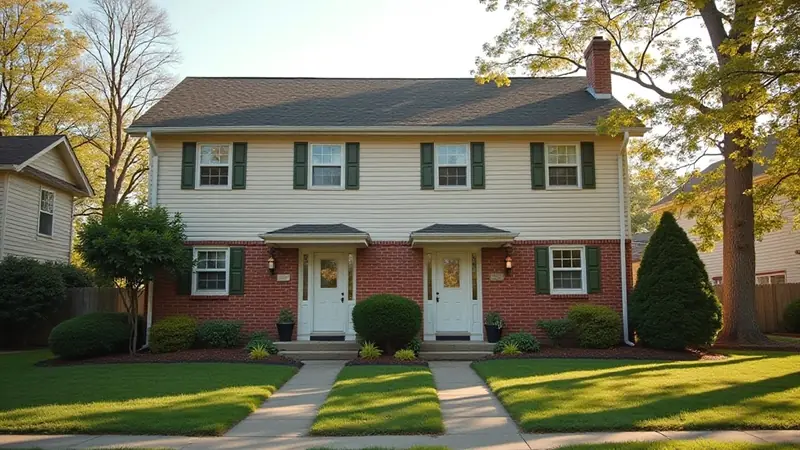
For a rental, the DSCR program lends from $75,000 to $2 million, up to 80 percent of value on a purchase or rate-and-term refinance, with no minimum credit score. Triple-deckers are the Massachusetts asset worth naming: three rents from one roof and one tax bill often cover a payment more comfortably than a single-family at the same price.
The compliance calendar belongs in the loan term. On a pre-1978 building you intend to rent to families, the sequence is inspection by a licensed lead inspector, deleading by a licensed deleader, then a letter of compliance. Ask the lender about the term before closing, not in the last months of the loan. Property must be non-owner-occupied and held in an LLC or corporation, and the lender decides every deal.
What gets a Massachusetts deal declined
A pre-1978 rental with no lead plan. The defining Massachusetts error, with strict liability attached.
A rehab budget with deleading buried in contingency. Get a licensed deleader's quote and put it on its own line.
Taxes taken from an owner-occupant's bill. In cities with a residential exemption, the rental bill can be much higher.
A Boston purchase underwritten for cash flow. Buy Boston for appreciation, knowingly, or buy west.
A primary residence. Our lending partners do not finance a home you intend to live in.
In Massachusetts the exposure is legal rather than arithmetic, and it never shows up in a cap rate. See what a $400,000 rental costs to hold in Massachusetts, alongside eleven other states.
Send it through the form above and our lending partner's team will review your deal.
Keep reading
New Hampshire · Connecticut · Maine · DSCR loans · Loan calculator · How to vet a lender
Get your deal reviewed
Answer these and your deal goes to our lending partner's team, who will contact you about whether it is fundable and on what terms. By sending it you agree to your details being shared with them. Investment property only: our lending partners do not finance a home you will live in.
Got it.
Thank you. Your details are on their way to our lending partner's team, who will contact you shortly.
Questions investors ask
Can I get a hard money loan in Massachusetts?
Yes. Our lending partners review non-owner-occupied investment property across Massachusetts, from Greater Boston to Worcester, Springfield, the South Coast and the North Shore, held in an LLC or corporation. The lender decides each deal on its numbers.
Can I finance a triple-decker with a DSCR loan?
Yes. Two to four units is residential for most lending purposes, and the DSCR program qualifies the building on its rents. Three tenancies spread the income risk, which often helps the ratio.
How long do I have to delead after buying a Massachusetts rental?
If a child under six lives or will live there, a new owner of a pre-1978 home has 90 days from taking title to delead or obtain a Letter of Interim Control. Interim control then allows up to two years to finish the work.
Should I take a security deposit in Massachusetts?
That is a decision for you and your attorney. Many operators skip it, because section 15B forfeits the deposit for paperwork errors and makes treble damages mandatory for specific failures such as missing the separate account or the thirty-day return. First and last month's rent and a lock fee carry far less exposure.
Who pays the deeds excise on a Massachusetts sale?
The seller. Outside Barnstable County it is $2.28 per $500 of the price, so on a flip you pay it when you sell.
Is there a redemption period after a Massachusetts foreclosure?
No. Most Massachusetts foreclosures use the statutory power of sale, and once the sale is complete the former owner has no right to redeem.
Sources
- Massachusetts General Laws chapter 111, section 197, deleading duty for pre-1978 homes with a child under six (accessed Oct 2026)
- Trust for America's Health, Massachusetts efforts on childhood lead exposure, 90 days from taking title and the two-year Letter of Interim Control (accessed Oct 2026)
- Massachusetts General Laws chapter 186, section 15B, deposit cap, separate account, 30-day return and treble damages (accessed Oct 2026)
- MassLandlords, changes to security deposit law explained, scope of treble damages after Phillips v. Equity Residential (accessed Oct 2026)
- Massachusetts DOR, Directive 95-4, deeds excise of $2.28 per $500 outside Barnstable County, paid by the grantor (accessed Oct 2026)
- Massachusetts General Laws chapter 183, section 21, statutory power of sale (accessed Oct 2026)
- Massachusetts General Laws chapter 186, section 11, 14-day notice to quit for nonpayment of rent (accessed Oct 2026)
Dominion Hard Money does not lend its own funds; it arranges financing through third-party lending partners. All financing is arranged for business purposes only and secured by non-owner-occupied investment property. Not a commitment to lend. All loans subject to underwriting, property review, and approval by the lender. Terms vary by property, borrower experience, and exit strategy.