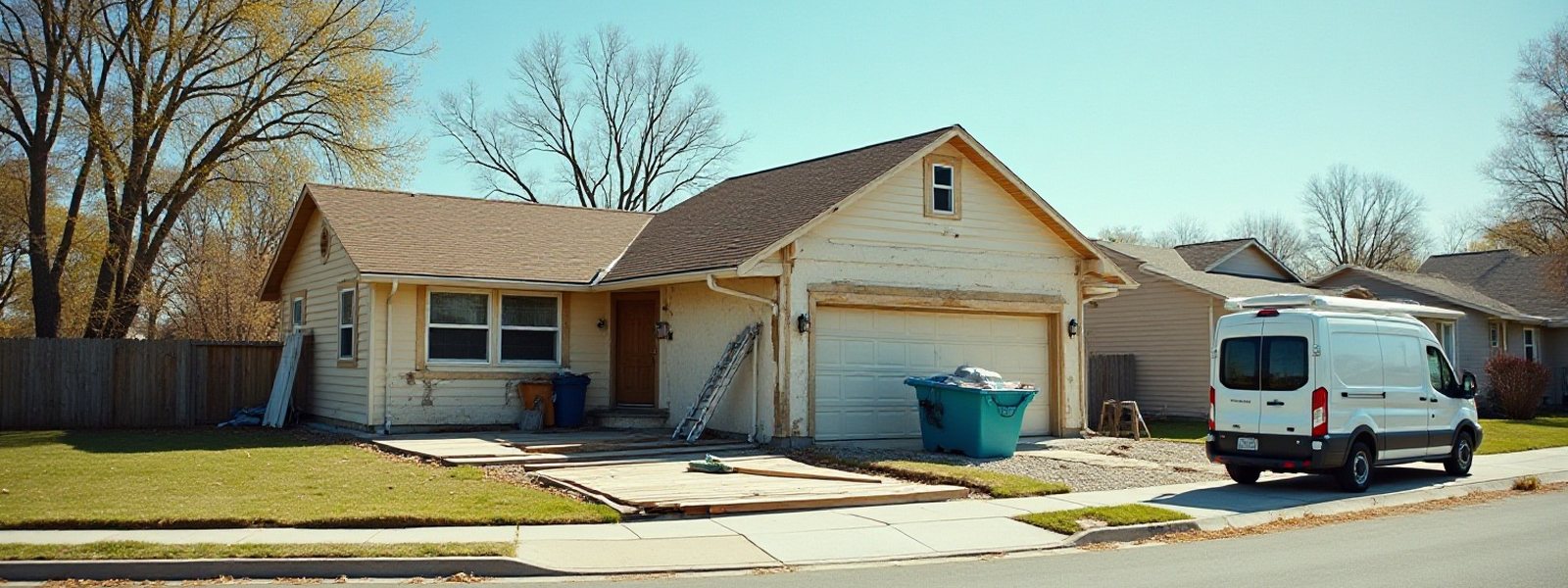
Missouri is one of the cheapest states in the country to get out of a deal: there is no tax on the transfer of real estate, and since 2025 an individual pays no state income tax on a capital gain. But the second break usually does not reach a flip, St. Louis runs on two separate governments with two sets of rules, and the lender caps loans in St. Louis County at half the property's value. Here is how to underwrite around all three.
Start with what Missouri does not charge. In 2010 voters added Article X, Section 25 to the state constitution, which bars the state, counties and cities from imposing any tax on the sale or transfer of real estate. Many states take a percentage of the price every time a property changes hands; Missouri cannot. On a flip, that is money that stays in the deal on the way in and on the way out.
Then, on July 10, 2025, Governor Mike Kehoe signed House Bill 594. For tax years beginning January 1, 2025, an individual can subtract 100 percent of the income reported as a capital gain on the federal return when working out Missouri taxable income. Missouri became the first state with an income tax to exempt capital gains entirely for individuals, and investors have understandably read it as a gift to real estate.
The phrase that matters is reported as a capital gain for federal purposes. A house bought, renovated and resold within months is usually treated federally as property held for sale to customers, and the profit is reported as ordinary business income, not as a capital gain. If that is how your flip is reported, the Missouri subtraction does not apply to it, and the state taxes the profit as usual. A rental you buy, hold and later sell is a different story: that sale generally does produce a capital gain, and the Missouri tax on it now falls away.
Two more details. The subtraction is for individuals; an LLC taxed as a partnership or a sole proprietorship passes its gain through to its owners, but a C corporation does not get the same treatment until Missouri's top individual rate falls to 4.5 percent (it was 4.7 percent for 2025). And federal tax still applies either way. How any particular sale is treated depends on its facts, so confirm it with a CPA before you count the saving. This is general information, not tax advice.
The practical reading: Missouri's new law rewards the buy-and-hold investor far more than the quick flipper. If your plan is to renovate, rent and refinance into a long-term DSCR loan, the eventual sale is where Missouri now leaves you alone.
Missouri taxes residential property on 19 percent of its market value, commercial property on 32 percent, and farmland on 12 percent, a split the State Tax Commission sets out in its own definitions. The assessed value is then multiplied by the combined levies of every district the property sits in, quoted per $100. On a house worth $200,000, the assessed value is $38,000, so every $1 of combined levy adds $380 a year to the bill. Look up the actual levies for the exact address; they vary widely between school districts.
The timing is what trips investors up. Missouri reassesses real property as of January 1 of every odd-numbered year, and that value carries through the following even year. A house you buy in 2026 is still carrying its 2025 value. The next countywide reassessment is January 1, 2027, and the assessor can also add value in any year for new construction or improvements, which is exactly what a heavy renovation looks like on paper.
And 2025 showed how big a reassessment can be. The State Tax Commission requires county assessments to land within 90 to 110 percent of market value. It issued memorandums to Greene County and more than 90 other counties that had fallen behind rising prices; Greene County, around Springfield, was measured at an assessment ratio of 77.71 percent and directed to raise values by at least 13 to 15 percent. Assessments in St. Louis City and County rose sharply that year as well.
So do not underwrite a Missouri rental on the seller's current tax bill. Budget for the 2027 reassessment, and for the value the assessor may add once your renovation shows up. If a notice comes in too high, the appeal goes to the county Board of Equalization first; deadlines differ by county, so check yours the day the notice arrives.

The single most important fact about investing in St. Louis is that the City of St. Louis is not in St. Louis County. It has been an independent city since 1876, with its own government, its own assessor and collector, its own courts and its own inspection rules. The County surrounds it and is made up of dozens of separate municipalities, many of which keep their own occupancy codes. Before you price a St. Louis deal, work out which of those jurisdictions the address actually sits in.
The loan size depends on it. Our lending partner's underwriting guidelines restrict loans in a short list of named markets to 50 percent of value instead of the usual 70, and St. Louis County, Missouri is on that list. That covers Florissant, Ferguson, Hazelwood, University City, Kirkwood, Webster Groves, Chesterfield, Clayton and the rest of the County. On a County house worth $180,000 after renovation, the maximum loan is $90,000. If purchase and renovation together cost $130,000, the investor brings $40,000 plus closing costs and reserves, compared with about $4,000 if the same house qualified at 70 percent. That is the whole difference between a thin-cash deal and a cash-heavy one, and it has to be in the plan from the first offer.
The guidelines name the County, not the City. Because the City is a separate jurisdiction, a City property is not literally on the restricted list, but do not assume that means 70 percent. The lender can restrict any market at its discretion, and we confirm the leverage on each City deal before you commit to it rather than promising it in advance. Just outside the County, St. Charles County (St. Charles, St. Peters, O'Fallon, Wentzville) and Jefferson County (Arnold, Festus) are not on the list, and standard terms apply there.
Prices depend on it too. The City and County are different markets, and the published figures vary with the source and the month. Reported 2026 median sale prices for the City range from roughly $215,000 to $261,000, and for the County from roughly $275,000 to $325,000, with Redfin's March 2026 figures putting the City at $250,000 and the County at $275,000. Inventory has been rising: St. Louis REALTORS figures reported active single-family listings across the City and County up about 15 percent in July 2026 from a year earlier. None of those medians is an ARV. Price each deal from renovated, comparable sales a few streets away.
And the paperwork depends on it. In the City, a rental unit needs a Certificate of Inspection from the Building Division before anyone moves in, and a unit being sold needs one before occupancy too. Rentals are reinspected every three years or whenever the occupant changes, and violations found at inspection must be fixed within 30 days. Many County municipalities run their own occupancy inspections on a sale or a new tenant: University City, for example, charges $80 per unit for a home-sale inspection and $60 for a rental unit, and St. Ann has County inspectors perform its re-occupancy inspections, which then stay valid for 120 days. Build the inspection, the fee and the repair list into the schedule before the renovation budget is final.
Kansas City, Missouri is the other big investor market, and it has its own rule to know. Since voters approved the Healthy Homes Rental Inspection Program in 2018, every rental property owner in the city must register and hold a permit under Ordinance 180248: a one-time $20 application per address and $20 per unit each year, with the application due before a new rental opens or when ownership or management changes. The Health Department inspects on complaint and can order repairs. Remember too that the metro straddles the state line; a house in Kansas City, Kansas is under Kansas law and Kansas property tax, not Missouri's. Both states are ones where our lending partners place loans.
Springfield and Greene County are where the 2025 reassessment bit hardest, which makes the tax line on any rental there worth checking twice. Across the smaller markets, the question is usually value rather than tax. The lender's guidelines require a minimum after-repair value of $100,000 and a property within roughly 45 minutes to an hour of a metro area of 200,000 people or more, so many of the cheapest houses in rural Missouri fall outside what a hard money loan will finance.

Missouri is one of the states where our lending partners pay placement fees. The published fix-and-flip and bridge programs lend up to 100 percent of cost and 70 percent of the after-repair value, with a minimum loan of $50,000, a minimum credit score of 600, and loans of up to twelve months; the lender's underwriting guidelines set a nine-month standard term, with extensions considered case by case. The published starting rate is 10.99 percent plus 1.99 origination points.
The 10.99 percent starting rate is available after two loans have been paid off in good standing with our lending partner; a first-time borrower should expect to start above it and earn the way down.
Four limits from the underwriting guidelines shape most Missouri deals. Loan-to-value drops to 50 percent in St. Louis County. The after-repair value must be at least $100,000. A borrower with zero or one completed project is limited to a $40,000 renovation budget, which matters in older St. Louis and Kansas City housing where a full gut can run well past that. And the borrower should show at least $15,000 in reserves, plus the cash to cover the down payment and closing costs.
Here is how the same numbers play out outside the restricted county. Take a St. Charles County house worth $260,000 after renovation. Seventy percent is $182,000. If purchase and renovation together cost $190,000, the investor brings about $8,000 plus closing costs and reserves, and on the eventual sale there is no transfer tax to pay. Move an identical house across the county line into St. Louis County and the loan ceiling falls to $130,000.
1. Confirm the jurisdiction. City of St. Louis, St. Louis County, St. Charles County or Jefferson County. It changes the loan size, the inspection and the tax.
2. In St. Louis County, size the deal at 50 percent of value. Work out the cash you will need before you make the offer, not after the appraisal.
3. Check the after-repair value clears $100,000. Below that, a hard money loan may not be available at all.
4. Budget the property tax for 2027, at 19 percent of the value you expect after renovation, times the real levies for that address.
5. Book the occupancy inspection early. City Certificate of Inspection, the municipality's own permit in the County, or the Healthy Homes registration in Kansas City.
6. Get written contractor bids and add at least ten percent for what century-old brick and plaster hide. If you have done one deal or none, keep the scope inside $40,000.
7. Decide the exit, and ask your CPA how it will be taxed. A quick flip is usually ordinary income; a rental held and sold later is where Missouri's capital gains exemption can apply.
A St. Louis County deal sized at 70 percent. The restricted-market cap is 50 percent, and the gap is usually tens of thousands of dollars.
An after-repair value under $100,000. Common in parts of the City and in smaller towns, and outside the lender's standard guidelines.
An ARV built from a metro median. City and County medians differ by tens of thousands of dollars, and neighborhoods within each differ by more.
A first deal with a gut renovation. Budgets over $40,000 need a track record of at least two completed projects.
A home you plan to live in. Our lending partners cannot finance an owner-occupied property. That is federal law, not preference.
Our lending partners publish rates starting at 10.99 percent plus 1.99 origination points, available to repeat borrowers with two loans paid off in good standing. A first-time borrower should expect to start higher. Appraisal, title and closing costs are additional, though Missouri charges no transfer tax on the sale.
Yes, in the City of St. Louis and across St. Louis, St. Charles and Jefferson counties. Loans on property in St. Louis County are limited to 50 percent of value under the lender's guidelines. City deals are underwritten individually, and we confirm the available leverage before you commit.
Usually not. The exemption covers income reported as a capital gain on the federal return, and a quick flip is normally reported as ordinary business income. A rental held and later sold generally does produce a capital gain. Confirm how your sale will be treated with a CPA; this is general information, not tax advice.
Yes. The deal carries most of the weight, but our lending partner pulls credit on every guarantor and sets a minimum middle score of 600. Recent bankruptcies, foreclosures or short sales within 36 months generally make a borrower ineligible, though they can be reviewed with an explanation.
Yes. Every loan needs a valuation that supports both the current as-is value and, for a renovation, the after-repair value. The appraisal is ordered through an approved appraisal management company.
Yes. Private, business-purpose loans secured by investment property are a normal part of the market. Lenders and anyone arranging loans are still subject to state and federal law, so ask any lender for its licensing details and confirm them. This is general information, not legal advice.
Want the long version? Two free landlord books cover what a rental really costs to hold and what the new federal housing law actually changed.
Answer these and we will tell you whether it is fundable, on what terms, and how fast it could close. Investment property only — our lending partners do not finance a home you will live in.
We will run the numbers and come back to you. If it is time-sensitive, call 903-636-7511.
Dominion Hard Money does not lend its own funds; it arranges financing through third-party lending partners. All financing is arranged for business purposes only and secured by non-owner-occupied investment property. Not a commitment to lend. All loans subject to underwriting, property review, and approval by the lender. Terms vary by property, borrower experience, and exit strategy.
Indiana · Ohio · DSCR loans · Fix and flip loans · Loan calculator · Rates and terms