
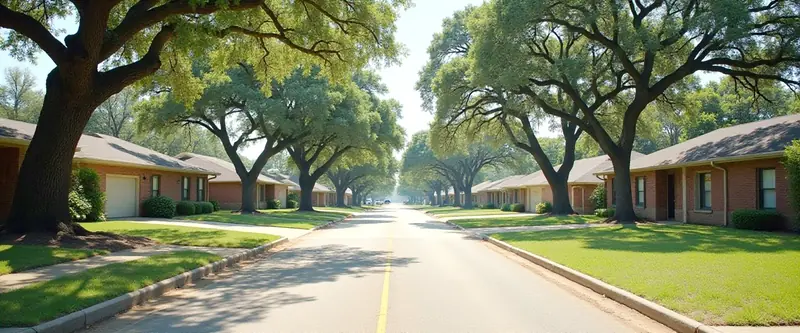
The flood map is a pricing document, not a warning label
Most advice about Houston treats flood risk as a reason to stay away. The market does not price it that way, and the gap between the two is where many Houston investors find their deals. Houses in mapped flood zones, and houses with a flood history, tend to sell at a discount and sit longer, because a large share of buyers will not look at them.
The discount is only real if you buy the insurance at the same time as the house. What hurts investors is taking the lower price and then discovering a flood premium that was never in the model. So the sequence on every Houston deal is the same: pull the FEMA flood map for the exact address, ask the seller about past flooding and claims, get a bindable flood and homeowners quote during your option period, and put both premiums in the operating numbers before you make a final offer. On a DSCR rental, the premiums sit inside the payment the rent has to cover.
Flood status also shapes your exit. Some buyers will not consider a house in a zone at any price, which thins the resale pool. Treat that as a days-on-market question and build it into your holding costs.
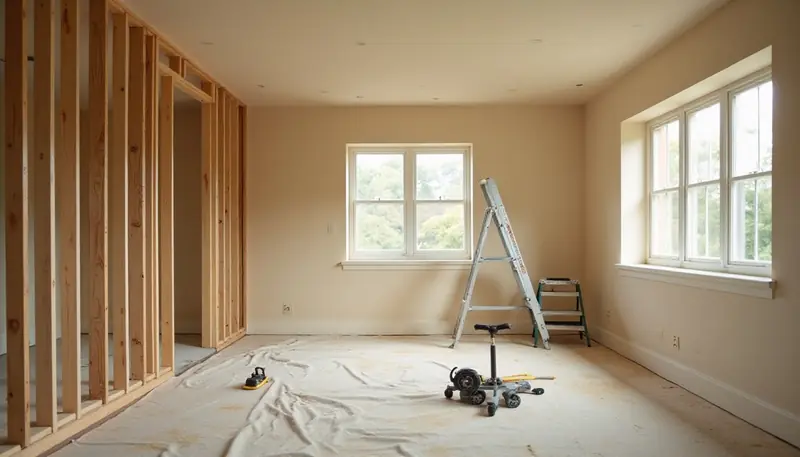
Chapter 19: when a rehab budget triggers elevation
This is the Houston rule that catches flippers. Under the National Flood Insurance Program, a substantial improvement is work whose cost equals or exceeds 50 percent of the market value of the structure before the work starts. When a house in a mapped floodplain crosses that line, it has to be brought up to the current floodplain standard, which can mean elevating it.
The City of Houston tightened that standard after Hurricane Harvey. Its Chapter 19 floodplain rules require new construction and substantial improvements in the 500-year floodplain, not just the 100-year one, to be built two feet above the 500-year flood elevation. A gut renovation on a cheap house in the floodplain can cross 50 percent of the structure's value quickly, because the land is not counted.
Before you price a heavy rehab inside city limits, check the floodplain status of the lot and ask the city's floodplain office how your scope of work will be counted. A scope that stays under the threshold, or a deal priced to absorb elevation, is a plan. Finding out after demolition is not.
No zoning means your comps have to be block-level
Houston is the largest American city without conventional zoning, and that changes how you value a house. A modest ranch house can sit a few streets from a new townhouse cluster, with a commercial use at the corner, and a ZIP-code median tells you almost nothing about either. An after-repair value pulled from a ZIP median is one of the most common ways a Houston flip comes in short at appraisal.
The working rule: comparables from the same street, or at least the same few blocks, with the same land-use pattern around them. Texas does not require sale prices to be disclosed publicly, so pull closed sales of renovated houses from the multiple listing service through an agent rather than relying on a website estimate.
No zoning does not mean no rules. Many Houston subdivisions carry recorded deed restrictions, and the City of Houston's Legal Department helps enforce restrictions on residential use, setbacks, and lot size and the number of structures on a lot. Restrictions follow subdivision lines and can vary section by section, or even lot by lot in parts of the Heights. If your plan involves adding a unit, splitting a lot or changing the use, get the recorded restrictions from the Harris County Clerk before you are under contract.
Have a deal on the table?
Send the address, the numbers and your exit. Our lending partner's team reviews it and tells you whether it fits and on what terms. The lender makes every credit decision.
Where the Houston numbers sit in 2026
The Houston Association of Realtors reported a median single-family sale price of $330,000 in August 2026, down 1.5 percent from a year earlier, with the average price at about $426,760. Rents have softened too: HAR data put the average single-family lease at $2,214 in January 2026, down 3.3 percent year over year and the lowest level since late 2023. Price softness and flat rents are a buyer's market for acquisitions, and a reason to underwrite rent on today's leases, not last year's.
A quick screen before you go deeper: purchase price divided by annual rent. A low ratio points to real cash flow; a high one means you are betting on appreciation, whatever the listing says. Because Houston prices change block by block, run the screen on the specific street.
How the main investor areas differ
Southwest Houston (Alief, Sharpstown, Westwood) has older, more affordable housing and a deep renter base, and draws buy-and-hold investors looking for monthly cash flow.
Southeast Houston and the east side (Pasadena, South Houston, Galena Park) has rental demand tied to petrochemical and port employment. Flood exposure is a genuine factor across much of this area, so check the map on every address.
The redevelopment corridors (Third Ward, Eastwood, Near Northside) are appreciation plays rather than day-one yield. Make sure you are not paying today for a renewal that has already happened.
Older Class C stock across the city offers the highest gross yields and the most work: deferred maintenance, more turnover and heavier management. It suits experienced landlords with local property management in place.
Foundations and HOA rules. Much of the Houston area sits on expansive clay soil that moves slabs, and much of the affordable stock dates from the 1950s to the 1970s with original plumbing, wiring and roofs. Never waive an inspection on older Houston stock, and budget foundation work as a real possibility. Then read the HOA documents before closing: a rental restriction turns a rental plan into a resale problem.
The tax bill on a Houston rental
Texas has no state income tax, and it funds local government with property tax instead. Inside the City of Houston and Houston ISD, the main 2025 rates add up to roughly 2 percent of taxable value before any other district: Houston ISD at $0.8783 per $100, the city at about $0.5192, and the Harris County group (county, flood control, hospital district and port) at $0.6241. Houston Community College and, in many suburbs, a municipal utility district add more on top.
On a rental appraised at $250,000, about 2 percent is roughly $5,000 a year, or $420 a month, inside the DSCR payment. Underwrite on the value the appraisal district will set after your purchase and renovation, not on the seller's bill. A long-held homestead with exemptions can carry a far lower bill than you will pay.
A cap that may not last. Texas currently limits yearly increases in the appraised value of non-homestead real property worth up to about $5 million to 20 percent, the so-called circuit breaker. Appraisal district notices warn that this limit expires on December 31, 2026 unless the Legislature extends it. Do not build a multi-year rental model on it.
Insurance is the other line. Get real quotes for both the homeowners policy and any flood policy during your option period; on the Gulf Coast those two premiums together can rival the tax bill.
What our lending partners offer in Houston
Fix and flip, bridge and short-term construction: standard pricing starts at 12.99 percent interest plus 2.99 points. Loans start at $50,000 with a 600 minimum credit score, and cover up to 100 percent of cost (purchase plus rehab) but no more than 70 percent of after-repair value, whichever limit is reached first. Leverage depends on the experience you can document over the past three years. Borrowers who have paid off two loans with the lending partner in good standing can qualify for loyalty pricing of 10.99 percent plus 1.99 points.
DSCR rental loans: no minimum credit score, from $75,000 to $2 million, up to 80 percent of value on a purchase or rate-and-term refinance. The loan is sized on the rent, so the Houston tax and insurance figures above matter.
All loans are for non-owner-occupied investment property held in an entity such as an LLC or corporation. The lender decides every file; terms are confirmed for your specific property before you commit.
One warning specific to flipping here. Houston's size and steady supply of distressed, inherited and flood-affected houses make it a good acquisition market, but the Texas resale numbers are thin right now. ATTOM's second-quarter 2026 report put the typical gross flip margin in the Houston metro at 3.7 percent, the fourth-thinnest of any metro of a million or more people, behind 1.8 percent in Dallas, 2.8 percent in Austin and a small loss in San Antonio, against 21.5 percent nationally. Short-term money is expensive, and a flip that runs a few months long can erase its profit. Model the real timeline, with the Chapter 19 question answered, before you choose the loan.
What gets a Houston deal declined
No flood determination. Not a formality here. Pull the FEMA map for the address and quote the insurance before you commit capital.
A floodplain rehab with no substantial improvement check. If the budget crosses 50 percent of the structure's value, the scope may change completely.
An after-repair value from a ZIP-code median. With no zoning, values change block to block. Block-level comps or nothing.
A waived inspection on older stock. Foundations, original systems and roofs. The inspection costs less than any one of them.
Taxes from the seller's bill. A roughly 2 percent rate on your post-purchase value is a different number from the one on the listing.
A primary residence. Our lending partners finance investment property only, not a home you intend to live in.
Send it through the form above and our lending partner's team will review it.
Keep reading
Texas · San Antonio · Dallas · DSCR loans · Loan calculator · How to vet a lender
Get your deal reviewed
Answer these and your deal goes to our lending partner's team, who will contact you about whether it is fundable and on what terms. By sending it you agree to your details being shared with them. Investment property only: our lending partners do not finance a home you will live in.
Got it.
Thank you. Your details are on their way to our lending partner's team, who will contact you shortly.
Questions Houston investors ask
Can I get a hard money loan on a Houston house in a flood zone?
Often, yes. A flood zone is a pricing and insurance question rather than an automatic decline. Expect the lender to want the flood determination and a real insurance quote so the deal is underwritten on its actual carrying costs. The lender makes the final decision.
Will my Houston rehab have to be elevated if it is in the floodplain?
It can. If the cost of the work reaches 50 percent of the structure's market value, it counts as a substantial improvement, and inside the City of Houston that means meeting the Chapter 19 standard of two feet above the 500-year flood elevation. Ask the city how your scope will be counted before you buy.
What property tax rate should I use for a Houston rental?
Inside the City of Houston and Houston ISD, the main 2025 rates add up to about 2 percent of taxable value, before Houston Community College and any utility district. Use your expected post-purchase value, not the seller's bill.
Houston has no zoning, so can I add units or split a lot?
Not automatically. Many subdivisions have recorded deed restrictions on use, setbacks, lot size and the number of structures, and the City of Houston helps enforce them. Read the restrictions for that lot before you go under contract.
Do I have to tell my Houston tenants about flooding?
Yes. Texas Property Code section 92.0135 requires a written flood notice with a residential lease, stating whether you know the home is in a 100-year floodplain and whether it has flooded in the last five years. TREC publishes a form for it.
What does a hard money loan for a Houston flip cost?
Standard pricing from our lending partners starts at 12.99 percent plus 2.99 points, from $50,000, up to 100 percent of cost and no more than 70 percent of after-repair value. Loyalty pricing of 10.99 percent plus 1.99 points applies only after two loans have been paid off with the lending partner in good standing.
Sources
- Hoodline, Houston home sales slide 11.5 percent (reporting HAR data), the $330,000 August 2026 median and $426,760 average price (accessed Oct 2026)
- HAR.com, Houston rental home prices ease to two-year low to start 2026, the $2,214 average single-family lease in January 2026 (accessed Oct 2026)
- Houston ISD, Tax information, the 2025 tax rate of $0.8783 per $100 (accessed Oct 2026)
- Community Impact, Harris County adopts FY 2025 to 26 property tax rates, the combined county, flood control, hospital and port rate of $0.6241 per $100 (accessed Oct 2026)
- Harbert Group, Property taxes in Harris County, the City of Houston rate of about $0.5192 per $100 (accessed Oct 2026)
- Bastrop Central Appraisal District, Circuit breaker limitation, the 20 percent cap under Tax Code section 23.231 and its December 31, 2026 expiry (accessed Oct 2026)
- City of Houston Legal Department, Deed restrictions FAQ, Houston has no zoning and the city enforces deed restrictions on use, setbacks and lot size (accessed Oct 2026)
- Freese and Nichols, New City of Houston floodplain regulations post-Harvey, the Chapter 19 requirement of two feet above the 500-year floodplain (accessed Oct 2026)
- FEMA, Substantial improvement, the 50 percent of market value definition (accessed Oct 2026)
- Texas Real Estate Commission, Landlord's floodplain and flood notice, the Property Code section 92.0135 lease disclosure (accessed Oct 2026)
- ATTOM, Q2 2026 home flipping report, the 21.5 percent national margin and Texas metro margins (accessed Oct 2026)
Dominion Hard Money does not lend its own funds; it arranges financing through third-party lending partners. All financing is arranged for business purposes only and secured by non-owner-occupied investment property. Not a commitment to lend. All loans subject to underwriting, property review, and approval by the lender. Terms vary by property, borrower experience, and exit strategy.