

Here is how Hampton Roads, Richmond and Northern Virginia differ, what the recordation and grantor taxes cost a flip, how trustee sales and landlord rules work, and how our lending partners size a loan.
Decide which Virginia you are buying before you pick a house
Most states have expensive corners and cheap ones. Virginia has three distinct investment markets, and a statewide median describes none of them.
Hampton Roads (Norfolk, Virginia Beach, Chesapeake, Portsmouth, Newport News and Hampton) has the lower entry prices and the higher rent-to-price ratios, which is why it is where a DSCR ratio usually clears most easily.
Richmond sits between the two on price, with a mix of older city neighborhoods and newer suburban stock in Henrico and Chesterfield counties.
Northern Virginia (Fairfax, Arlington, Loudoun and Prince William) carries the state's highest prices and household incomes. At today's prices it is mostly a price-level and appreciation market, not one where a rental pays well on day one.
Both strategies are legitimate. The mistake is underwriting one as if it were the other.
Who actually pays the rent here
Virginia's rental demand leans on the federal government and the military more than almost any other state. In Hampton Roads it is the Navy, with Naval Station Norfolk as the anchor, plus the shipyards and the port. In Northern Virginia it is federal employment and the contractors around it.
The upside is real: housing allowances put a floor under rents, and demand does not hinge on one private employer. The concentration is real too. Two of the state's biggest rental markets depend on federal budgets, and military tenants move on orders, so turnover follows the permanent-change-of-station calendar rather than your lease term. Put that in the vacancy and make-ready lines rather than in your optimism.
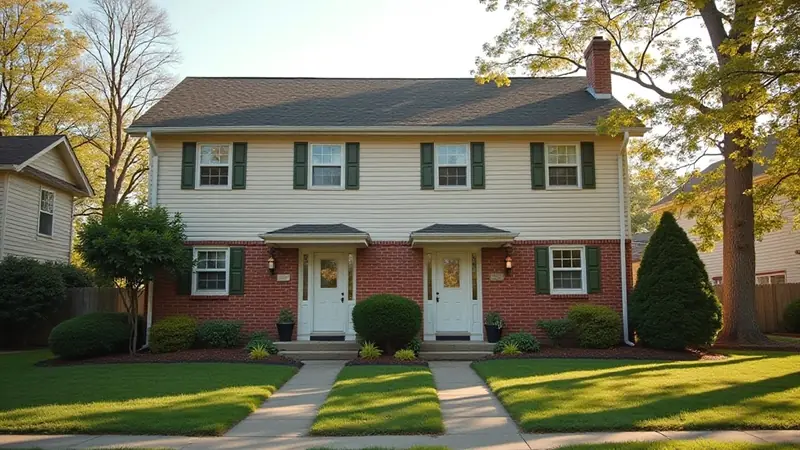
What a Virginia flip pays at closing
Virginia charges two separate taxes when a deed is recorded. The recordation tax, customarily paid by the buyer, is 25 cents per $100 of value at the state level, and cities and counties may add up to a third of that. The grantor tax, paid by the seller, is 50 cents per $500, or 0.1 percent. Localities in Northern Virginia and Hampton Roads also add a regional congestion relief fee to the grantor side.
On a flip you pay the buyer's side when you buy and the seller's side when you sell. A deed of trust securing the loan is also subject to recordation tax, so the hard money loan and any later refinance each add a line to the closing statement. None of these is large on its own; together on a thin flip they matter.
Property tax is set by each city and county as a rate per $100 of assessed value, with assessments at full market value and reassessed annually in many localities. A rental pays the same rate as an owner-occupied home, but check the locality's current rate and whether the purchase will trigger a new assessment.
Have a deal on the table?
Send the address, the numbers and your exit. Our lending partner's team reviews it and tells you whether it fits and on what terms. The lender makes every credit decision.
Foreclosure and landlord law in Virginia
Foreclosure is usually nonjudicial. Most Virginia loans are secured by a deed of trust, and the trustee sells after the required notice and advertisement without a court case. There is no right to redeem after the sale, so title at a trustee's sale is final once the sale closes and the deed is recorded.
Landlord rules. Most residential rentals fall under the Virginia Residential Landlord and Tenant Act. A security deposit may not exceed two months' rent and must be returned, with an itemized list of deductions, within 45 days after the tenancy ends. Nonpayment cases start with a written pay-or-quit notice and then go to general district court; the notice periods and tenant protections have been amended several times in recent sessions, so use current forms.
Rental inspections. Virginia law lets localities create rental inspection districts and require inspections of rentals within them. Several cities do, so check the address before you budget the make-ready.
Rent control. Virginia has not allowed local rent control, though proposals to change that have come up in recent legislative sessions. Check current law before you underwrite rent growth in a multifamily deal.

The markets, in the order most investors should look at them
Richmond: the all-round market
Prices well below Northern Virginia, a large university and state government employment base, and a choice of neighborhoods that lets you pick your risk: older city stock in Church Hill, Manchester and the Northside with renovation upside and management intensity to match, and suburban Henrico and Chesterfield with newer houses and longer tenancies.
Hampton Roads: the yield end
The easiest place in the state to build DSCR coverage. Model it honestly: higher turnover from military moves, older housing in parts of Norfolk and Portsmouth, and flood exposure in low-lying neighborhoods, where a flood zone check and a flood insurance quote belong in every file.
Northern Virginia: price level, not cash flow
High prices against rents mean few properties cash flow at market prices. The case is structural: constrained land, high incomes and a deep employment base. Buy it knowingly.
Roanoke, Lynchburg and the smaller markets
The cheapest entry points in the state, with less liquidity on the exit, which matters more on a flip than on a hold.
How our lending partners size a Virginia loan
For fix and flip, rehab and bridge loans, pricing starts at 12.99 percent plus 2.99 points. A borrower who has paid off two loans with the lending partner in good standing can qualify for loyalty pricing of 10.99 percent plus 1.99 points. Loans start at $50,000 with a 600 minimum credit score, and can cover up to 100 percent of cost and up to 70 percent of after-repair value, whichever binds first. Leverage depends on the experience you can document over the past three years. Property must be non-owner-occupied and held in an LLC or corporation.
Virginia is a state where one investor often uses both programs. The DSCR rental program qualifies on the property's rent rather than your income, so a Hampton Roads rental bought for coverage and a Northern Virginia townhouse bought for equity can both be financed on their own numbers: from $75,000 to $2 million, up to 80 percent of value on a purchase or rate-and-term refinance, with no minimum credit score.
A Richmond example: a house worth $340,000 after renovation supports up to $238,000 at 70 percent of value. If purchase and rehab cost $260,000, the investor brings about $22,000 plus closing costs and recordation tax. The lender decides the final terms.
What gets a Virginia deal declined
A state median used as a market figure. It describes none of the three markets.
A Northern Virginia rental underwritten for cash flow. At current prices most do not clear. Buy it for what it is.
Military turnover left out of the vacancy assumption. Orders move tenants on their own schedule.
No flood check in Hampton Roads. Flood zone and insurance can move the numbers by thousands a year.
A home you plan to live in. Our lending partners make business-purpose loans on investment property only.
Virginia's real spread is internal: city against county, on otherwise comparable property. See what a $400,000 rental costs to hold in Virginia, beside eleven other states.
Send it through the form above and our lending partner's team will review your deal.
Keep reading
Washington, DC · Maryland · West Virginia · DSCR loans · Loan calculator
Get your deal reviewed
Answer these and your deal goes to our lending partner's team, who will contact you about whether it is fundable and on what terms. By sending it you agree to your details being shared with them. Investment property only: our lending partners do not finance a home you will live in.
Got it.
Thank you. Your details are on their way to our lending partner's team, who will contact you shortly.
Questions investors ask
Who pays the recordation tax in Virginia?
By custom the buyer pays the recordation tax (25 cents per $100 at the state level, plus any local amount) and the seller pays the grantor tax (0.1 percent, plus a regional fee in Northern Virginia and Hampton Roads). On a flip you pay one going in and the other coming out.
Norfolk or Richmond for a first Virginia rental?
Hampton Roads if the goal is DSCR coverage and cash flow, since prices are lower relative to rent. Richmond if you want a balance of yield and a liquid resale market.
Is there a redemption period after a Virginia foreclosure?
No. Most Virginia foreclosures are trustee sales under a deed of trust, and there is no right to redeem after the sale.
How much security deposit can a Virginia landlord charge?
Up to two months' rent under the Virginia Residential Landlord and Tenant Act, returned with an itemized list of deductions within 45 days after the tenancy ends.
Can I get a hard money loan anywhere in Virginia?
Our lending partners review non-owner-occupied investment property across Virginia, including Richmond, Hampton Roads, Northern Virginia, Roanoke, Lynchburg and the Shenandoah Valley. The lender decides each deal on its numbers.
Sources
- Code of Virginia 58.1-801, state recordation tax of 25 cents per $100 (accessed Oct 2026)
- Code of Virginia 58.1-814, local recordation tax up to one third of the state tax (accessed Oct 2026)
- Code of Virginia 58.1-802, grantor tax of 50 cents per $500 (accessed Oct 2026)
- Code of Virginia 58.1-802.2, regional congestion relief fee (accessed Oct 2026)
- Code of Virginia 55.1-1226, security deposits capped at two months' rent and returned within 45 days (accessed Oct 2026)
- Code of Virginia 36-105.1:1, local rental inspection districts (accessed Oct 2026)
- Code of Virginia 55.1-320, trustee sales under a deed of trust (accessed Oct 2026)
- Navy Region Mid-Atlantic, Naval Station Norfolk, the Hampton Roads military anchor (accessed Oct 2026)
Dominion Hard Money does not lend its own funds; it arranges financing through third-party lending partners. All financing is arranged for business purposes only and secured by non-owner-occupied investment property. Not a commitment to lend. All loans subject to underwriting, property review, and approval by the lender. Terms vary by property, borrower experience, and exit strategy.