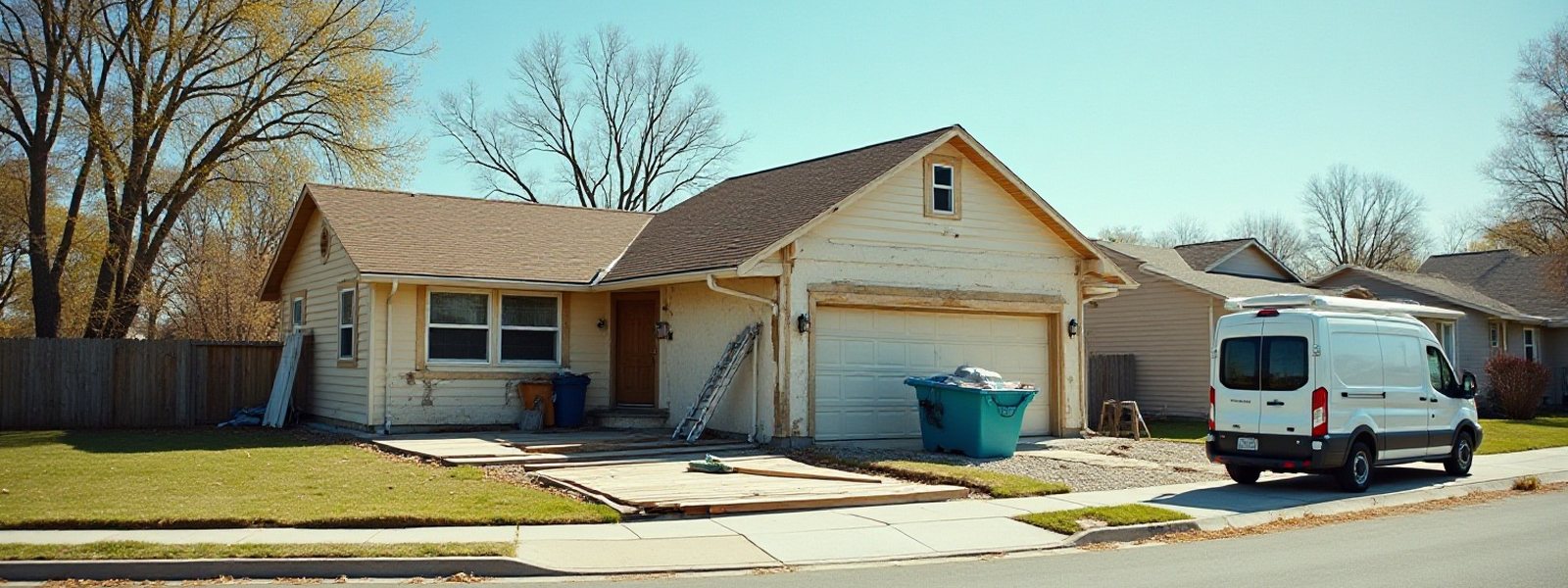
Louisiana changed two of the rules investors lean on most, and many haven't caught up. Since January 1, 2026, a parish tax sale no longer sells you the house; it sells you a lien. And by January 2027, insurers must discount the hurricane premium on homes with a FORTIFIED roof, in a state where insurance can decide whether a deal works at all. Here is how to underwrite a Louisiana deal around both, whether you need a hard money loan, a private money loan or a DSCR loan.
For decades, a Louisiana tax sale transferred an ownership interest to the winning bidder, subject to redemption. That changed on January 1, 2026. Voters approved the constitutional amendment in Act 409 of 2024 on December 7, 2024, and Act 774 of 2024 supplied the rules. Under the new system, the parish auctions a tax lien certificate, and bidders compete by accepting a lower interest rate.
The owner still has three years to redeem. If the lien is not paid, the lien holder can foreclose, and the property goes to a sheriff's sale. The lien holder is paid the lien plus fees and costs, and any surplus goes back to the former owner. A lien certificate that is not enforced within seven years expires. Property that draws no bid becomes adjudicated to the parish.
For a hard money deal, the lesson is simple. Buying at a Louisiana tax sale is now a years-long lien investment, not a way to acquire a house to renovate next month, and no lender will finance a renovation on a lien. If the goal is a property to fix and sell, buy the property itself, from an owner, a sheriff's sale that delivers title, or a parish selling adjudicated property, and get a title company's written view before you commit.
A Louisiana investor's biggest carrying cost is often the wind policy, not the loan. The Louisiana Legislative Auditor found that the median homeowner who received a state Fortify Homes grant and installed a FORTIFIED roof saw the annual premium fall from about $5,625 to $4,375, a saving of about 22 percent.
Three separate programs sit around that number, and investors need to know which apply to them.
The grant. The Louisiana Fortify Homes Program pays up to $10,000 toward a FORTIFIED roof, but only for a primary residence with a homestead exemption, chosen through registration windows. A flip or a rental does not qualify.
The tax credit. A state income tax credit of up to $10,000 covers FORTIFIED roofs installed from July 1, 2025. It too is limited to owner-occupied homes with a homestead exemption.
The insurance discount. This is the one that follows the house. Under the Department of Insurance's Regulation 136, insurers must apply set discounts to the hurricane portion of the premium for FORTIFIED properties, with implementation required by January 1, 2027. A FORTIFIED certificate stays with the roof, so an investor who builds to the standard at their own cost hands the next buyer a lower premium to point at, and a landlord keeps a lower carrying cost on a rental.
Get the wind and flood quotes on the exact address before the offer. If the property is in a special flood hazard area, flood insurance is part of the monthly cost, not an option.

Louisiana assesses residential property at 10 percent of its fair market value, and the homestead exemption removes the first $75,000 of value from taxation for an owner who lives in the home. A rental gets no homestead exemption. On a modest house, that exemption can wipe out most of the seller's bill, so the tax an investor will pay can be many times what the listing shows.
Parishes reappraise property every four years; the most recent statewide reappraisal year was 2024. Underwrite a rental on 10 percent of the value you expect after renovation, with no exemption, times the millage for that address.
New Orleans is the state's highest-priced market, and its averages can mislead. The New Orleans Metropolitan Association of Realtors reported an average August 2026 sale price of $369,344 across its ten-parish metro, up 8.7 percent, and $493,953 in Orleans Parish alone, up 16.4 percent. Zillow's typical home value for Orleans Parish, which measures the whole housing stock rather than what sold, was about $247,660 in mid-2026, down 2 percent. A few expensive sales pull an average up; neither figure is an after-repair value for your street.
In New Orleans, flood zone and elevation can change a house's insurable cost more than its neighborhood does, and a property that was declared blighted or abandoned before a tax sale can carry a shorter, 18-month redemption period. Check both before pricing a renovation.
Baton Rouge, Shreveport and Lafayette are the other investor markets. Across the state, the lender's guidelines set a minimum after-repair value of $100,000 and look for properties within roughly 45 minutes to an hour of a metro area of at least 200,000 people. Many of Louisiana's cheapest houses fall outside one or both.
More Louisiana investors search for a DSCR loan than for any other kind of investor financing. A DSCR loan qualifies the property rather than your income: the rent has to cover the payment, including principal, interest, taxes and insurance.
Our lending partners' DSCR rental program starts at rates as low as 5.99 percent, with origination points from 1.5 percent, loan amounts from $75,000 to $2 million at up to 80 percent of value, and no minimum credit score. Cross-collateral loans are allowed across two or more properties. The lowest rates go to files with strong rent coverage.
In Louisiana the DSCR calculation turns on insurance. The same rent that covers a payment in Shreveport may not cover it in a coastal parish once wind and flood premiums are in. That is exactly why a FORTIFIED roof and the 2027 discount rules matter to a buy-and-hold investor: every dollar off the premium is a dollar of debt service coverage.
Louisiana is one of the states where our lending partners pay placement fees, and none of its parishes is on the lender's restricted list. The published fix-and-flip and bridge programs lend up to 100 percent of cost and 70 percent of the after-repair value, with a minimum loan of $50,000, a minimum credit score of 600, and loans of up to twelve months; the lender's underwriting guidelines set a nine-month standard term, with extensions considered case by case. The published starting rate is 10.99 percent plus 1.99 origination points.
The 10.99 percent starting rate is available after two loans have been paid off in good standing with our lending partner; a first-time borrower should expect to start above it and earn the way down.
The guidelines also require at least $15,000 in reserves, cap the renovation budget at $40,000 for a borrower with zero or one completed project, and require builder's risk insurance while work is under way. A Baton Rouge example: a house worth $240,000 after renovation supports up to $168,000 at 70 percent. If purchase and renovation cost $180,000 together, the investor brings about $12,000 plus closing costs and reserves.
1. Get wind and flood quotes on the exact address. In many parishes they are the biggest carrying cost.
2. If the roof is being replaced, price the FORTIFIED upgrade. The certificate stays with the house.
3. Recalculate the property tax without the homestead exemption, at 10 percent of the value after renovation.
4. Don't plan a flip around a tax sale. Since 2026 it sells a lien with a three-year redemption period.
5. Check the after-repair value clears $100,000, and the property's distance from a qualifying metro.
6. Get written contractor bids, include the roof and any elevation or flood work, and hold back at least ten percent. First-time borrowers stay within a $40,000 renovation budget.
7. If you plan to rent, run the DSCR with the real premiums.
A tax sale purchase. A lien certificate is not title, and it cannot secure a renovation loan.
No insurance quote. Wind and flood can decide whether a rental covers its payment.
A tax figure that includes the seller's homestead exemption. A rental does not get it.
An after-repair value under $100,000.
A camp, second home or house for family. Property you or a close relative will live in is owner-occupied under the lender's guidelines, and our lending partners cannot finance it.
The published starting rate of 10.99 percent plus 1.99 points goes to borrowers who have repaid two loans in good standing. A first Louisiana deal usually prices higher. Appraisal, title and closing costs are extra, and wind and flood insurance are carrying costs to budget alongside the loan.
Yes. Yes, and in Louisiana it is often the best exit from a renovation: $75,000 to $2 million, up to 80 percent of value, rates from 5.99 percent and no minimum score. In Louisiana the insurance premium is usually the number that decides whether the rent covers the payment.
No. Since January 1, 2026, a Louisiana tax sale sells a tax lien certificate, not the property, and the owner has three years to redeem. A renovation loan needs title to the property as security.
Yes, and in Shreveport, Lafayette and the suburban parishes around New Orleans. No Louisiana parish is on the lender's restricted list, so leverage depends on the property and the $100,000 after-repair floor, not the parish.
Not in any way that changes the loan. Investors use both names for short-term, asset-based financing from non-bank lenders, secured by investment property. Whether you searched for a private money lender in Louisiana or a hard money lender, the same program terms apply.
Yes. Business-purpose loans secured by Louisiana investment property are a regular part of the market in New Orleans, Baton Rouge and beyond, though Louisiana's civil-law property system has its own closing customs. Anyone lending or arranging the loan must follow state and federal law, so ask for licensing details and confirm them. This is general information only.
Want the long version? Two free landlord books cover what a rental really costs to hold and what the new federal housing law actually changed.
Answer these and we will tell you whether it is fundable, on what terms, and how fast it could close. Investment property only — our lending partners do not finance a home you will live in.
We will run the numbers and come back to you. If it is time-sensitive, call 903-636-7511.
Dominion Hard Money does not lend its own funds; it arranges financing through third-party lending partners. All financing is arranged for business purposes only and secured by non-owner-occupied investment property. Not a commitment to lend. All loans subject to underwriting, property review, and approval by the lender. Terms vary by property, borrower experience, and exit strategy.
Texas · Alabama · DSCR loans · Fix and flip loans · Private money lenders · Loan calculator