
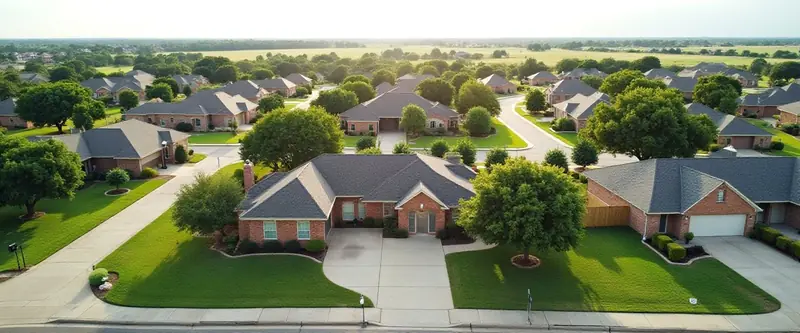
It has a huge metro, steady demand, no state transfer tax and fast foreclosure, but not easy flip margins. This page lays out what the 2026 numbers say about flipping in Dallas, how to value a deal when sale prices are private, what happens to a rental's property tax when you buy it, and our lending partners' terms.
Dallas is easy to finance and hard to flip
Location is never the problem in Dallas. Dallas, Collin, Denton, Tarrant, Rockwall, Kaufman and Ellis counties all sit inside one of the largest metros in the country, and lenders are comfortable lending in Texas.
The problem is the margin. ATTOM's report on the first quarter of 2026 put the typical gross flipping margin in the Dallas metro at 4.3 percent. In the second quarter, released in October 2026, it fell to 1.8 percent, the second-thinnest of any metro of a million people or more, behind only San Antonio. Gross means before a dollar of renovation, points, interest, insurance, taxes or commissions. Yet Dallas was also one of the most-flipped large metros that quarter, at 9.4 percent of all home sales: plenty of investors are chasing thin spreads.
A loan-level analysis by ATTOM and Backflip of first-quarter 2026 deals shows the same squeeze. The average Dallas-Fort Worth flip was bought for about $419,000 and resold for about $437,000, an average gross profit of roughly $18,000, or 4.3 percent, with an average construction budget near $69,000. ATTOM notes that flippers commonly estimate renovation, financing and selling costs at 20 to 33 percent of the resale price. At the typical Dallas spread, the typical flip lost money.
So a Dallas flip that works is one bought far below the typical discount: a probate sale, a house needing more work than retail buyers will take on, an off-market seller. Our lending partners can review it. The deal has to exist first.
Finding the after-repair value in a non-disclosure state
Texas is a non-disclosure state. Sale prices are not recorded publicly, so you cannot look up what the house down the street sold for, and automated estimates are guesses built on thin data. In a market where the whole profit can be a few percent of the price, that matters.
Build your after-repair value from closed sales pulled from the multiple listing service by an agent who works the neighborhood. Match square footage, age, lot and finish level. In Dallas, a mile can be the difference between two very different buyer pools, so resist comparables from the next ZIP code over.
Found a Dallas deal with real margin?
Send the address, the purchase price, the rehab budget and your exit. Our lending partner's team reviews it and tells you whether it fits.
Property taxes: the cap disappears when you buy
Texas has no state income tax, and it makes up for it with property taxes, which in Dallas County run high. For a buy-and-hold investor, one Texas rule deserves attention.
Texas currently limits how much the appraised value of non-homestead property can rise each year: to 20 percent, plus new improvements, for property worth up to $5.32 million in 2026. But the limit only applies after an owner has held the property for a full calendar year, and it is removed when the property sells. It is also scheduled to expire after the 2026 tax year unless the Legislature renews it.
So a rental the seller has held for years may carry a taxable value well below market, and when you buy it, that value resets. Estimate your taxes on market value, not on the seller's bill, before you size a DSCR loan. If the appraisal district overshoots after your purchase, the usual protest deadline is May 15, or 30 days after your notice is delivered, whichever is later.
What else Dallas investors should know
No transfer tax. Texas does not tax the sale itself, which helps a flip keep what margin it has.
Fast foreclosure. Texas generally forecloses outside court under a deed of trust, with sales on the first Tuesday of the month. For a lender that means less risk, and for an investor it means foreclosure auctions are a real source of deals.
City rental registration. The City of Dallas requires owners of non-owner-occupied single-family homes, duplex units and condominium units to register them as rentals every year, with a $74 fee per unit and an owner's self-inspection checklist, and the city inspects registered rentals periodically. Register before your first tenant moves in.
Where the buyers are. The Dallas metro stretches from Fort Worth to Rockwall and from Denton to Waxahachie. Your exit plan should name the buyer: a first-time buyer with an FHA loan in Mesquite needs a different finish, and a different timeline, than a relocating family in Frisco. If your likely buyer uses FHA, remember that FHA generally will not insure a purchase within 90 days of your own acquisition.
Our lending partners' terms in Dallas
Fix and flip and bridge loans: from $50,000, up to 100 percent of cost but no more than 70 percent of after-repair value, whichever limit is reached first, with a 600 minimum credit score. Standard pricing starts at 12.99 percent plus 2.99 points. Borrowers who have paid off two loans with the lending partner in good standing can qualify for loyalty pricing of 10.99 percent plus 1.99 points.
DSCR rental loans: no minimum credit score, from $75,000 to $2 million, up to 80 percent of value on a purchase or rate-and-term refinance, qualified on the rent.
Leverage depends on the experience you can document over the past three years. Loans are for non-owner-occupied investment property held in an entity such as an LLC or corporation. The lender decides the final terms for your property, so confirm them before you commit.
Holding a Dallas rental? Our two free landlord books compare what a rental costs to carry across the states, including Texas.
Send it through the form above and our lending partner's team will tell you which program fits.
Related guides
Texas · Houston · Your first flip · DSCR rental loans · Investment property rates
Get your deal reviewed
Answer these and your deal goes to our lending partner's team, who will contact you about whether it is fundable and on what terms. By sending it you agree to your details being shared with them. Investment property only: our lending partners do not finance a home you will live in.
Got it.
Thank you. Your details are on their way to our lending partner's team, who will contact you shortly.
Dallas hard money questions
Are Dallas house flips still profitable in 2026?
Some are, but the typical one is not. ATTOM put the typical gross flipping margin in the Dallas metro at 4.3 percent in the first quarter of 2026 and 1.8 percent in the second, before renovation, financing and selling costs. A Dallas flip has to be bought well below the usual discount to work.
How do I find comps in Dallas if sale prices are not public?
Texas is a non-disclosure state, so recorded deeds do not show prices. Work with an agent who can pull closed sales from the multiple listing service, and match size, age, lot and finish within a short distance of the property.
Why did my Dallas rental's property tax jump after I bought it?
Texas's 20 percent yearly limit on non-homestead appraisals only applies after a full calendar year of ownership and is removed when the property sells, so the value resets toward market. The limit is also scheduled to expire after 2026 unless renewed. You can protest by May 15 or 30 days after your notice, whichever is later.
Do I have to register a rental house in Dallas?
Yes. The City of Dallas requires annual registration of non-owner-occupied single-family homes, duplex units and condominium units, with a $74 fee per unit and a self-inspection checklist, and the city inspects registered rentals periodically.
What does a Dallas fix and flip loan cost?
Our lending partners' standard pricing starts at 12.99 percent plus 2.99 points, from $50,000, up to 70 percent of after-repair value and 100 percent of cost. After two loans paid off in good standing, loyalty pricing of 10.99 percent plus 1.99 points can apply. The lender sets the final terms.
Can I sell a Dallas flip to an FHA buyer right away?
Not within 90 days of your purchase. FHA's property flipping rule generally bars insuring a resale within 90 days of the seller's acquisition, and a resale within 91 to 180 days at double the price or more needs a second appraisal. Plan your listing date around it.
Sources
- ATTOM, Q1 2026 U.S. Home Flipping Report, Dallas 4.3 percent typical gross margin and 20 to 33 percent cost estimate (accessed Oct 2026)
- ATTOM, Q2 2026 U.S. Home Flipping Report, Dallas 1.8 percent margin and 9.4 percent flipping rate (accessed Oct 2026)
- ATTOM and Backflip, Special Analysis of Q1 2026 fix-and-flip returns, Dallas-Fort Worth average purchase, resale, gross profit and construction budget (accessed Oct 2026)
- Texas Comptroller, Valuing Property, 20 percent non-homestead circuit breaker limitation (accessed Oct 2026)
- Harris Central Appraisal District, Circuit Breaker Cap, $5.32 million 2026 threshold and scheduled expiration (accessed Oct 2026)
- Texas Tax Code, Section 41.44, protest deadline (accessed Oct 2026)
- City of Dallas Code Compliance, Single-Family Rental Registration FAQ, annual registration, $74 fee and inspections (accessed Oct 2026)
- 24 CFR 203.37a, FHA property flipping restrictions (accessed Oct 2026)
Dominion Hard Money does not lend its own funds; it arranges financing through third-party lending partners. All financing is arranged for business purposes only and secured by non-owner-occupied investment property. Not a commitment to lend. All loans subject to underwriting, property review, and approval by the lender. Terms vary by property, borrower experience, and exit strategy.