
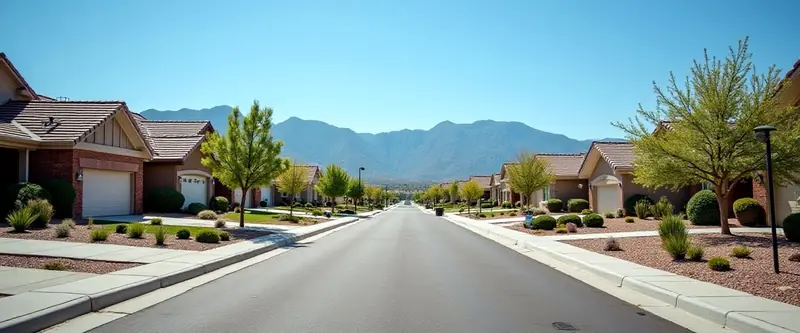
For a decade, rising prices bailed out Front Range investors who overpaid. That has stopped, and it changes which deals work. Here is where the yield is, how Colorado's property tax, foreclosure and landlord rules shape a file, and why hail matters more than wildfire to the insurance line.
The thing that made Colorado work has stopped
For most of the last decade, Front Range deals penciled because prices climbed. Thin cash flow did not matter much when the property gained value faster than it cost to hold. That arithmetic has changed: prices along the Front Range have flattened, more homes are sitting on the market, and rents have stopped rising the way they did.
So on the Front Range, buy-and-hold at full market price often runs at or near break-even on cash flow. That is not a crisis. It is a different game: the market now favors buyers who negotiate and add value rather than buyers who wait for the market to bail them out.
Two things follow, and they run through everything below. The yield is south, not north. And on the Front Range the money is in value-add rather than in buying at market and holding: Denver's 1980s and 1990s multifamily and single-family stock is where that work sits.
Drive south on I-25 and the yield climbs
One highway, about a hundred miles, and three different investments. This is the clearest structural fact in Colorado, and a statewide average hides it.
| Market | Entry price | Rental yield | Resale speed |
|---|---|---|---|
| Denver metro | Highest | Thinnest; value-add needed | Fastest |
| Colorado Springs | Middle | Middle | Middle |
| Pueblo | Lowest | Highest | Slowest |
The gap is driven by the price base more than by rents. Pueblo rents are lower than Colorado Springs rents in dollars, but the entry price falls faster than the rent does, so the yield rises.
The trade for that yield is liquidity. Pueblo homes generally take longer to sell than Denver homes. On a rental that barely matters. On a flip it can be most of your term, and it is the most common way a Pueblo deal goes wrong: an investor buys the yield and models a Denver exit. Pull days on market from closed sales in the exact neighborhood and budget the carry for it.
The markets, and what each one is for
Colorado Springs: the balance point
Fort Carson, Peterson and Schriever Space Force Base and the Air Force Academy give the city a steady military and defense-contractor tenant base. Submarket choice matters more than the city average: Fountain, near Fort Carson, trades on yield and a military tenant base, while Briargate on the north side trades on school quality and appreciation, with lower yields. Northgate picks up Denver commuters off I-25, which widens the tenant pool beyond the military.
Pueblo: the yield end
Low entry prices in established neighborhoods are why investors look here. The honest risk is economic concentration: Pueblo has fewer large employers than the northern Front Range, so underwrite the yield, then ask what happens to it if the biggest employer in town has a bad year.
Denver metro: value-add or nothing
At Denver prices, buying at market and holding rarely clears a lender's coverage test. What does work is older stock where rents can be moved by improving the asset. Aurora, Commerce City and Brighton offer lower entry prices than the core city: better, still thin, and dependent on buying below market. Denver also requires a residential rental license, with an inspection, before a property can be rented, so put it on the renovation timeline.
The northern Front Range
Fort Collins, Loveland, Longmont and Greeley run on university, tech and agricultural employment. Boulder is a high-barrier appreciation market and should be underwritten as one, not as a cash-flow rental.
The Western Slope
Grand Junction is the largest market west of the Divide, with small multifamily that most out-of-state investors never look at because they never look past the Front Range.
Have a deal on the table?
Send the address, the numbers and your exit. Our lending partner's team reviews it and tells you whether it fits and on what terms. The lender makes every credit decision.
Colorado property tax, transfer costs and foreclosure
Property tax. Colorado assesses residential property, including a long-term rental house, at a much lower percentage of value than commercial property, and the legislature has changed the residential rate almost every year since 2022. Counties reappraise every odd-numbered year, using sales from a set study period. Two consequences for an investor: a reappraisal year can move the tax bill sharply, and a purchase price well above the last appraisal will catch up at the next one. Use the county assessor's current rate and the expected value, not the seller's old bill.
Transfer cost. Colorado has no real estate transfer tax in the usual sense. The state charges a documentary fee of one cent per $100 of the price, so a $400,000 sale costs $40. A few mountain towns add their own real estate transfer tax, so check the municipality before you budget a resort-area flip.
Foreclosure. Most Colorado foreclosures run through the county public trustee rather than a full lawsuit, with a short court hearing under Rule 120 of the state's civil rules to authorize the sale. The owner can cure the default before the sale. Colorado removed the owner's right to redeem after the sale, though some junior lienholders still have one, so a public trustee purchase can reach insurable title faster than in states with a long redemption clock. Ask a title company what it will insure before you bid.

Colorado landlord rules that change a rental's numbers
Colorado's landlord law has moved toward tenants in the last few years, and each change shows up in a buy-and-hold underwriting.
For-cause eviction. Since 2024, most residential landlords need a stated cause, such as nonpayment or a lease violation, to remove a tenant who has been in place for 12 months, with limited exceptions. A buy-and-hold plan that counts on turning a tenant over to raise rent is harder to execute.
Nonpayment. A landlord must give a written 10-day demand for rent before filing an eviction for nonpayment, which lengthens the time a unit can sit without income.
Security deposits. Colorado caps deposits at two months' rent and requires their return within one month after the lease ends, or up to 60 days if the lease says so.
Local licensing. Denver requires a rental license and inspection, and other cities have their own registration and short-term rental rules. Mountain towns from Breckenridge to Steamboat limit short-term rentals tightly.
A DSCR loan is sized on the rent the property can carry. Budget the longer vacancy these rules create, and if the plan is a short-term rental, test the deal on long-term rent too, since a rule change can take the nightly revenue away.
Insurance here is a hail question first
Colorado gets described as a wildfire insurance market, but along the Front Range the larger cost driver is hail. Data the state's Division of Insurance collected from 20 carriers and published in February 2026 put hail at about half of the average homeowners premium along the Front Range and Eastern Plains, against roughly 1 percent for wildfire in Denver, and Colorado regularly ranks among the states with the most hail damage claims.
Wildfire still matters, but differently. It is an availability problem more than a price one: a house in a high-risk area of the wildland-urban interface can be declined by standard carriers altogether rather than merely quoted high. So the question on a given address is not only what the premium is, it is whether standard coverage can be bound at all.
Either way it is a due-diligence item rather than a budget guess. Get a bindable quote on the specific address during diligence, before you are committed, and ask what an impact-resistant roof would take off it. The premium sits inside the DSCR payment, so on a thin Front Range deal a premium taken from a national average rather than a quote can move the coverage ratio below the level you were counting on.
What our lending partners offer in Colorado
Dominion Hard Money does not lend its own funds; it arranges financing through third-party lending partners.
Fix and flip, rehab and bridge loans: standard pricing starts at 12.99 percent plus 2.99 points. Borrowers who have paid off two loans with the lending partner in good standing can qualify for loyalty pricing of 10.99 percent plus 1.99 points. Up to 70 percent of the after-repair value and up to 100 percent of cost, whichever limit is reached first, with leverage based on the projects you can document over the past three years. Minimum loan $50,000, minimum credit score 600.
DSCR rental loans: no minimum credit score, from $75,000 to $2 million, up to 80 percent of value on a purchase or rate-and-term refinance.
All loans are for non-owner-occupied investment property held in an LLC or corporation. The lender reviews each deal and makes every credit decision.
Colorado is a value-add market now, which suits this product. When the strategy is buying below market and improving the asset rather than riding appreciation, a short-term loan sized against cost with renovation draws fits, and a conventional loan usually does not: the property often will not appraise for what you need until the work is done.
What gets a Colorado deal declined
A Front Range purchase at market underwritten for cash flow. At Denver prices it rarely clears. Either buy below market or buy for value-add.
A Pueblo flip on a Denver timeline. Budget carry for the slower sale.
An insurance figure guessed rather than quoted. Hail drives the premium here; wildfire exposure can remove the coverage option entirely.
An appreciation assumption doing the heavy lifting. Anything that only works on future price growth is not a plan.
A mountain-town short-term rental qualified on nightly revenue alone. Breckenridge, Steamboat and Telluride can produce strong gross numbers and carry heavy local regulation. Test the deal on long-term rent.
A home you plan to live in. Our lending partners finance non-owner-occupied investment property only.
City guide: hard money in Denver.
Hail, not wildfire, is what drives a Front Range premium. See what a $400,000 rental costs to hold in Colorado, compared with eleven other states.
Send it through the form above and our lending partner's team will review your deal.
Keep reading
Pennsylvania · Maryland · DSCR loans · Loan calculator · How to vet a lender
Get your deal reviewed
Answer these and your deal goes to our lending partner's team, who will contact you about whether it is fundable and on what terms. By sending it you agree to your details being shared with them. Investment property only: our lending partners do not finance a home you will live in.
Got it.
Thank you. Your details are on their way to our lending partner's team, who will contact you shortly.
Questions investors ask
Can I get a hard money loan anywhere in Colorado?
Our lending partners review deals across Colorado: the Front Range from Fort Collins to Pueblo, the Western Slope and the mountain towns. Each deal is sized on its after-repair value, cost and your experience, and the lender decides.
Should I buy rentals in Colorado Springs or Pueblo?
Colorado Springs if you want a middle yield with a more liquid exit and a military tenant base. Pueblo if cash flow is the objective and you can carry a slower sale. The difference in entry price is the whole trade.
Is Denver still worth buying for an investor?
For value-add, yes: older housing where rents can be moved by improving the property is where the work is, and more inventory means negotiating room. For buying at market and holding, the cash flow rarely works.
Does Colorado have a transfer tax on a flip?
Not a large one. The state documentary fee is one cent per $100 of the price. Some mountain towns charge their own real estate transfer tax, so check the municipality.
Can a former owner redeem a Colorado house after a public trustee sale?
Colorado removed the owner's right to redeem after the sale, though certain junior lienholders can still redeem. Have a title company confirm what it will insure before you bid.
How do Colorado's new landlord laws affect a DSCR rental?
For-cause eviction rules, a 10-day demand before a nonpayment eviction and a two-month deposit cap all lengthen the time a unit can sit without income. Budget vacancy for them, and use a real insurance quote, since the premium sits inside the DSCR payment.
Sources
- Colorado General Assembly, HB24-1098 Cause Required for Eviction of Residential Tenant, for-cause eviction after 12 months of tenancy
- Colorado General Assembly, HB19-1118 Time Period to Cure Lease Violation, 10-day demand before a nonpayment eviction
- Colorado General Assembly, SB23-184 Protections for Residential Tenants, two-month security deposit cap
- Colorado Revised Statutes, Title 38 (property), public trustee foreclosure and security deposit return, via Justia
- Colorado Division of Property Taxation, residential assessment rates and the odd-year reappraisal cycle
- Colorado Public Radio, hail and homeowners insurance premiums in Colorado, Division of Insurance data putting hail at about half of Front Range premiums and wildfire near 1 percent in Denver (accessed Oct 2026)
- C.R.S. 39-13-102, state documentary fee of one cent per $100 of consideration (accessed Oct 2026)
- Adams County Public Trustee, redemption period, no owner redemption after the sale for foreclosures filed since 2008, junior lienor redemption only (accessed Oct 2026)
Dominion Hard Money does not lend its own funds; it arranges financing through third-party lending partners. All financing is arranged for business purposes only and secured by non-owner-occupied investment property. Not a commitment to lend. All loans subject to underwriting, property review, and approval by the lender. Terms vary by property, borrower experience, and exit strategy.