Short-term financing for buying, renovating and reselling — underwritten on the property's after-repair value rather than your income. Here is the 70% rule with the arithmetic done, how draws actually work, and what the money costs.
A conventional mortgage is written on the assumption that the property is habitable, that you will live in it or rent it, and that you will still own it in thirty years. A flip breaks all three assumptions on day one. Banks will not finance heavy repairs, and even if one would, the approval takes longer than the seller of a distressed property will wait.
Fix-and-flip loans exist to fill that gap. They are short-term, interest-only, and underwritten on the property's after-repair value rather than on your income — which is why a first-time flipper with a good deal can be funded the same way as somebody on their twentieth.
This is the single discipline that separates flippers who stay in business from those who do one deal and stop. The maximum you pay is 70% of the after-repair value, minus what the repairs will cost.
| ARV $300,000, repairs $50,000 | Max offer $160,000 |
| ARV $320,000, repairs $60,000 | Max offer $164,000 |
| ARV $400,000, repairs $50,000 | Max offer $230,000 |
Multiply the ARV by 0.70, then subtract the repair budget. That is the number you do not go above.
The thirty percent you are leaving on the table is not profit you are giving away. It covers your financing costs, your holding costs while you own it, agent commission and closing costs on the sale, and the things that go wrong. Take that margin out and a deal that looked fine on a spreadsheet loses money in the real world.
Adjust it to the market, not to your optimism. In tight, fast-moving markets experienced flippers stretch to 73 or 75% and make it work through speed and disciplined rehab management. In slower neighbourhoods where houses sit for months, 65% is the safer screen. What you should not do is stretch the rule because you want a particular deal to work.
Leverage scales with your track record, and lenders are explicit about it.
| Experience | Typical leverage | What you bring |
|---|---|---|
| First flip | Up to 85% of purchase 100% of rehab | 20–30% of total project cost, plus closing costs and the first phase of work before the first draw lands. |
| Five or more completed | Up to 95% of purchase 100% of rehab | Materially less. Documented completed deals over the past three years are worth real money at the term sheet. |
| The ceiling above both | 70–75% of ARV | Whatever the purchase and rehab percentages say, the total loan is capped against the finished value. This is the number that actually binds. |
Through our lending partners: up to 100% of cost and 70% of value, from $50,000, minimum credit 600, terms to twelve months, from 10.99% plus 1.99 points. Best pricing goes to borrowers who have paid off previous deals in good standing.
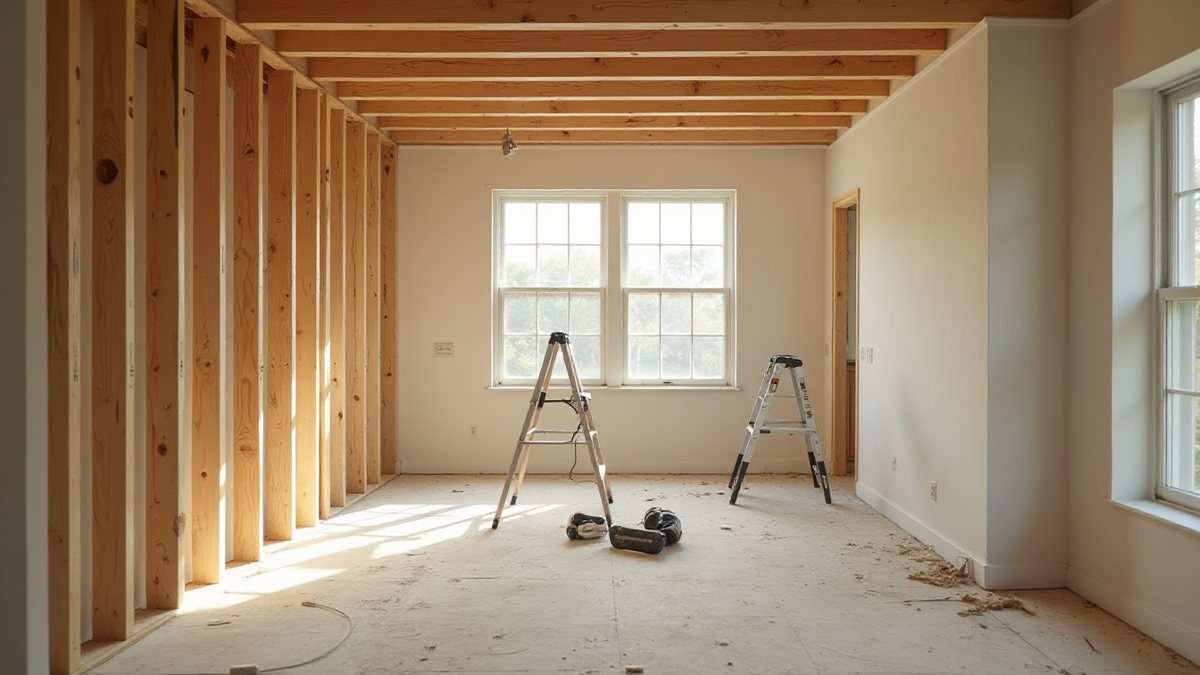
You do not receive the renovation budget on day one. It is released in stages as work is completed and verified. Most first-time flippers underestimate how much this shapes their cash flow.
The practical consequence: you fund each phase out of your own pocket first and get reimbursed. If you have budgeted to the last dollar, the gap between paying your framer and the draw landing is where projects stall. Build your scope of work in phases that align with the draw schedule, and hold cash to cover at least one phase ahead.
The upside of the same structure is that you are not paying interest on renovation money you have not yet drawn. On a slow-moving project that saves real money.
On a typical six to nine month flip, interest, points and fees together usually come to 6% to 10% of the loan amount. That figure needs to be in your profit analysis from the beginning, not discovered at the closing table.
Separately from the financing, industry data puts rehab and carrying costs together at roughly 20% to 33% of the after-repair value. If your numbers land well under that, check them again before you rely on them.
Lenders see the same handful over and over, and every one is avoidable.
Having these in order is the difference between closing in ten days and closing in thirty.
Pay no more than 70% of the after-repair value minus repair costs. On a property with a $300,000 ARV needing $50,000 of work, that is a $160,000 maximum offer. The remaining margin covers financing, holding costs, selling costs and the things that go wrong.
Yes. Lenders underwrite the deal rather than your track record, so a first-timer with strong numbers and a clear exit can be funded. Experience changes your leverage and pricing rather than your eligibility.
Commonly 20% to 30% of total project cost, plus closing costs and enough cash to fund the first phase of work before the first draw is released. Experienced flippers with completed deals bring materially less.
You complete a phase, submit photographs and invoices, the lender inspects, and funds release in about three to five business days. You pay for each phase first and are reimbursed, so hold cash to cover at least one phase ahead.
Most fix-and-flip programmes set a minimum between 600 and 660. Our lending partners are at 600. Higher scores improve pricing and leverage rather than deciding approval.
On a typical six to nine month flip, interest, points and fees together usually run 6% to 10% of the loan amount. Build that into the profit analysis at the outset.
Most fix-and-flip loans have none, which matters because you want to repay the day it sells. Confirm it in writing before closing rather than assuming.
Model that before you close. Refinancing into a DSCR loan and renting it converts the flip into a hold, which is a setback rather than a disaster. Having only one exit is what turns a slow sale into a foreclosure.
Answer these and we will tell you whether it is fundable, on what terms, and how fast it could close. Investment property only — we do not lend on a home you will live in.
We will run the numbers and come back to you. If it is time-sensitive, call 903-636-7511.
Dominion Hard Money arranges private and asset-based real estate financing for business purposes only. Not a commitment to lend. All loans subject to underwriting, property review, and approval. Terms vary by property, borrower experience, and exit strategy.